Best Time to Trek in Nepal: Month-by-Month Guide 2026
Nepal is home to eight of the world’s fourteen highest mountains, including the majestic Mount Everest (8,848.86 m), making it one of the most sought-after trekking destinations on Earth. Every year, thousands of adventurers travel to Nepal to explore breathtaking Himalayan landscapes, vibrant mountain villages, ancient monasteries, and some of the world’s most iconic trekking routes.
Whether you’re dreaming of standing at Everest Base Camp, witnessing the sunrise over the Annapurna range, exploring the peaceful Langtang Valley, or trekking through the remote Manaslu region, choosing the best time to trek in Nepal is one of the most important decisions you’ll make.
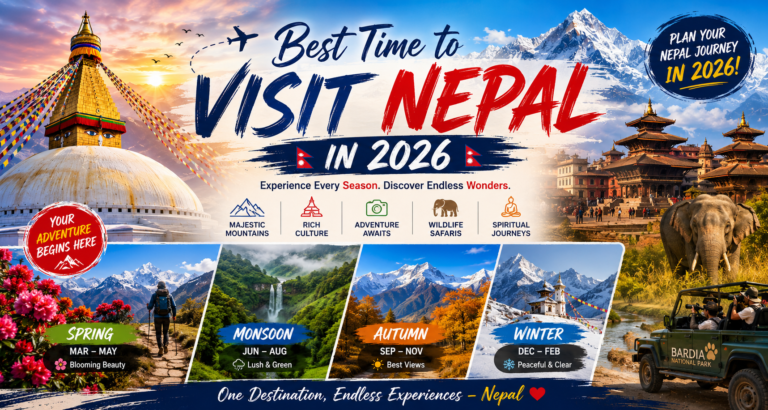
The weather in Nepal changes significantly throughout the year. Each season offers a unique experience, from colorful rhododendron forests in spring to crystal-clear mountain views in autumn, snow-covered landscapes in winter, and lush green valleys during the monsoon. Understanding these seasonal differences will help you enjoy safer trekking conditions, better visibility, and a more rewarding adventure.
In general, spring (March to May) and autumn (September to November) are considered the best trekking seasons because of stable weather, comfortable temperatures, and excellent mountain visibility. However, every season has its own advantages depending on the trekking route, your experience level, and what you hope to see during your journey.
This comprehensive guide explains everything you need to know about trekking in Nepal throughout the year. You’ll discover the best months for popular treks, seasonal weather patterns, temperature ranges, crowd levels, packing recommendations, and expert tips from our experienced local trekking team.
Whether you are planning your first Himalayan adventure or returning to explore another incredible trail, this guide will help you choose the perfect season for an unforgettable trekking experience in Nepal.
➡️ TOP FOUR POPULAR TREKS IN NEPAL 2026
Why Choosing the Right Trekking Season in Nepal Matters
Many first-time trekkers assume Nepal offers the same trekking conditions all year, but that’s far from the truth. The country’s dramatic elevation changes—from around 60 meters above sea level in the southern plains to the summit of Mount Everest at 8,848.86 meters—create a remarkable variety of climates and weather patterns.
Choosing the right season can influence nearly every aspect of your journey, including the quality of mountain views, trail conditions, accommodation availability, transportation reliability, and your overall safety and enjoyment.
Better Mountain Views
One of the main reasons travelers visit Nepal is to witness the spectacular Himalayan peaks. During autumn and spring, the skies are generally clearer, offering outstanding views of Everest, Ama Dablam, Annapurna, Manaslu, and many other famous mountains. In contrast, monsoon clouds can reduce visibility for days at a time.
Comfortable Temperatures
The right season allows you to enjoy pleasant daytime temperatures while trekking. Spring and autumn typically provide warm afternoons and cool nights, making long hiking days more comfortable. Winter brings freezing temperatures at higher elevations, while summer can be hot and humid in lower valleys.
Safer Trail Conditions
Weather also affects trail safety. Heavy monsoon rains can make paths muddy and increase the risk of landslides in some regions, while winter snow may block high mountain passes. Choosing a suitable season helps reduce these risks and creates a more enjoyable trekking experience.
Wildlife and Natural Beauty
Each season transforms Nepal’s landscapes. Spring is famous for blooming rhododendron forests, summer covers hillsides in vibrant greenery, autumn delivers crisp mountain panoramas, and winter offers peaceful snow-covered scenery.
Festivals and Cultural Experiences
Timing your trek can also allow you to experience Nepal’s rich culture. Major festivals such as Dashain, Tihar, Losar, and Mani Rimdu provide unique opportunities to witness local traditions and celebrations in mountain communities.
Budget and Crowds
Peak trekking seasons usually bring more visitors, making tea houses, flights, and guides busier. During quieter months, travelers may find lower prices and enjoy a more peaceful trekking experience, though weather conditions may require extra preparation.
Nepal’s Four Trekking Seasons
One of the reasons Nepal is considered the ultimate trekking destination in the world is that every season offers a different experience. From colorful rhododendron forests in spring to crystal-clear Himalayan views in autumn, each time of year has its own beauty and advantages.
Understanding Nepal’s four trekking seasons will help you choose the perfect time based on your interests, budget, weather preferences, and trekking experience.
| Season | Months | Weather | Best For | Crowd Level |
|---|---|---|---|---|
| 🌸 Spring |
|
Warm & Stable | Rhododendrons, Everest, Annapurna | ⭐⭐⭐⭐ |
| ☀ Summer | June–August | Rainy | Upper Mustang & Dolpo | ⭐ |
| 🍂 Autumn | September–November | Clear & Dry | All Treks | ⭐⭐⭐⭐⭐ |
| ❄ Winter | December–February | Cold | Quiet Trekking | ⭐⭐ |
🌸 Spring (March – May): The Season of Blooming Trails
Best for: Everest Base Camp Trek, Annapurna Base Camp Trek, Langtang Valley Trek, Mardi Himal Trek.
Spring is widely regarded as one of the best seasons to trek in Nepal. As winter snow begins to melt, the mountains come alive with blooming rhododendron forests, green hillsides, and comfortable temperatures. The weather is generally stable, making it an excellent choice for both first-time trekkers and experienced adventurers.
One of spring’s biggest attractions is the spectacular display of rhododendron flowers, Nepal’s national flower. Trails in the Annapurna and Langtang regions become covered with vibrant red, pink, and white blossoms, creating unforgettable scenery.
Mountain visibility is usually excellent during the mornings, while afternoons may occasionally bring light clouds. Wildlife is also more active, making spring a wonderful season for nature lovers and photographers.
Advantages of Spring
✔ Comfortable daytime temperatures
✔ Blooming rhododendron forests
✔ Excellent mountain views
✔ Ideal for photography
✔ Longer daylight hours
✔ Suitable for most trekking routes
Things to Consider
- Popular trekking routes become busier, especially in April.
- Tea houses may fill quickly, so booking in advance is recommended.
Recommended Treks
Image Suggestion
☀ Summer / Monsoon (June – August): Lush Landscapes and Hidden Gems
Best for: Upper Mustang Trek, Upper Dolpo Trek, Nar Phu Valley Trek
Summer in Nepal coincides with the monsoon season, bringing regular rainfall to much of the country. Although many travelers avoid trekking during these months, it doesn’t mean trekking is impossible.
The rain transforms hillsides into lush green landscapes, waterfalls become more impressive, and the countryside looks vibrant. However, trails in lower elevations can become muddy, and occasional landslides may affect transportation.
Fortunately, several regions lie in the rain shadow of the Himalayas, receiving very little rainfall. These include Upper Mustang, Upper Dolpo making them excellent trekking destinations even during the monsoon.
Advantages of Summer
✔ Fewer tourists
✔ Peaceful trekking experience
✔ Beautiful green landscapes
✔ Easier availability of guides and accommodation
✔ Great photography after rainfall
Challenges
- Heavy rain in many trekking regions
- Slippery trails
- Possible flight delays
- Leeches in forested areas
Recommended Treks
Travel Tip
Always pack a waterproof backpack cover, rain jacket, trekking poles, and quick-drying clothing if trekking during the monsoon season.
🍂 Autumn (September – November): The Best Overall Trekking Season
Best for: Almost Every Trek in Nepal
If someone asks, “What is the best time to trek in Nepal?”, the answer is often autumn.
After the monsoon ends, the skies become exceptionally clear, offering breathtaking views of the Himalayan peaks. The air feels fresh, temperatures are pleasant, and rainfall is minimal, creating ideal trekking conditions throughout the country.
Autumn is also Nepal’s busiest trekking season. Popular trails such as Everest Base Camp, Annapurna Circuit, Langtang Valley, and Manaslu Circuit welcome trekkers from around the world.
The season coincides with Nepal’s biggest festivals, Dashain and Tihar, giving visitors the chance to experience local traditions and celebrations.
Advantages of Autumn
✔ Crystal-clear mountain views
✔ Stable weather
✔ Comfortable temperatures
✔ Low chance of rain
✔ Best photography conditions
✔ Vibrant cultural festivals
Things to Consider
- Peak tourist season
- Flights and tea houses book out quickly
- Advance reservations are recommended
Recommended Treks
❄ Winter (December – February): Peaceful Trails and Snowy Landscapes
Best for: Poon Hill Trek, Langtang Valley Trek, Mardi Himal Trek (weather permitting)
Winter transforms Nepal into a peaceful wonderland. Snow covers the higher mountains, creating dramatic landscapes and attracting travelers who enjoy quieter trails.
While temperatures at high altitude can fall well below freezing, many lower-altitude trekking routes remain accessible. Clear skies during winter often provide excellent mountain views, especially in the mornings.
If you prefer avoiding crowds and don’t mind colder conditions, winter can be an incredibly rewarding time to trek.
Advantages of Winter
✔ Fewer trekkers
✔ Peaceful tea houses
✔ Snow-covered scenery
✔ Excellent mountain visibility
✔ Lower accommodation demand
Challenges
- Very cold temperatures at higher elevations
- Heavy snowfall may close high mountain passes
- Extra winter clothing is essential
Recommended Treks
Who Should Trek in Each Season?
Choosing the right trekking season depends on more than just the weather. Your trekking experience, travel goals, fitness level, and personal preferences all play an important role. Whether you’re looking for crystal-clear mountain views, peaceful trails, colorful forests, or a budget-friendly adventure, Nepal offers a season that’s perfect for you.
🌸 Spring (March–May): Perfect for First-Time Trekkers and Nature Lovers
Spring is one of the most recommended seasons for anyone visiting Nepal for the first time. Comfortable temperatures, blooming rhododendron forests, and stable weather create ideal trekking conditions across many regions.
Spring is ideal for:
✔ First-time trekkers
✔ Families with older children
✔ Nature and wildlife enthusiasts
✔ Photographers
✔ Couples and honeymoon travelers
During spring, colorful rhododendron forests transform the hillsides of the Annapurna and Langtang regions into one of Nepal’s most beautiful natural displays. Longer daylight hours also give trekkers more time to enjoy the scenery and explore local villages.
Local Tip: April is often considered the best month to experience Nepal’s famous rhododendron blooms, especially along the Annapurna trails.
☀ Summer / Monsoon (June–August): Best for Experienced Adventurers
Although monsoon brings frequent rainfall to much of Nepal, it can still be an excellent time for experienced trekkers who want to avoid crowds and explore remote rain-shadow regions.
Summer is ideal for:
✔ Experienced trekkers
✔ Adventure seekers
✔ Photographers looking for lush landscapes
✔ Travelers who prefer quieter trails
✔ Upper Mustang Trek
✔ Upper Dolpo Trek
✔ Nar Phu Valley Trek
These regions receive much less rainfall because they lie behind the Himalayan range, creating surprisingly good trekking conditions during the monsoon.
Local Tip: Carry waterproof clothing, trekking poles, and quick-drying layers. Trails in lower elevations can become muddy after heavy rain.
🍂 Autumn (September–November): The Best Season for Almost Everyone
Autumn is widely considered the best overall trekking season in Nepal. Clear skies, excellent visibility, comfortable temperatures, and vibrant local festivals make it the most popular time to visit.
Autumn is perfect for:
✔ Beginners
✔ Families
✔ Solo travelers
✔ Luxury trekkers
✔ Photography enthusiasts
✔ High-altitude trekkers
Whether you’re trekking for breathtaking Himalayan panoramas or experiencing Nepali culture during Dashain and Tihar, autumn offers exceptional conditions across most trekking regions.
Photography Tip: Sunrise between 6:00 a.m. and 8:30 a.m. often provides the clearest skies and the most beautiful golden light on the Himalayan peaks.
❄ Winter (December–February): Best for Quiet Trails and Budget Travelers
Winter offers a completely different trekking experience. While higher mountain passes may be covered with snow, many lower-altitude trails remain open and much quieter than during peak seasons.
Winter is recommended for:
✔ Experienced trekkers
✔ Budget travelers
✔ Couples seeking peaceful trails
✔ Photographers who enjoy snowy landscapes
✔ Poon Hill Trek
✔ Lower Annapurna region
Tea houses are less crowded, making it easier to enjoy local hospitality and a more relaxed trekking experience.
Local Tip: Dress in layers and carry a warm sleeping bag if trekking above 3,500 meters during winter.
Common Mistakes to Avoid When Trekking in Nepal
Even experienced hikers can make simple mistakes that affect their trekking experience. With proper planning and preparation, many of these challenges can be avoided.
1. Choosing the Wrong Season
Many travelers book their trek based only on vacation dates without considering Nepal’s weather. Visiting during the wrong season may lead to poor mountain visibility, muddy trails, or heavy snowfall.
Recommendation: Match your trekking destination with the most suitable season rather than choosing dates first.
2. Underestimating High Altitude
One of the biggest mistakes is assuming physical fitness alone prevents altitude sickness. In reality, anyone can experience altitude-related symptoms regardless of age or fitness level.
Always allow enough time for acclimatization, stay well hydrated, and avoid rushing to higher elevations.
3. Packing Too Much
Many first-time trekkers carry unnecessary clothing and equipment, making long trekking days more tiring.
Instead, pack lightweight layers, essential toiletries, and only the gear you’ll actually use.
4. Ignoring Weather Forecasts
Mountain weather can change quickly, especially in the Everest and Annapurna regions. Even during the best trekking seasons, occasional rain, snow, or strong winds are possible.
Always check local forecasts and listen to your guide’s advice before setting out each morning.
5. Booking at the Last Minute During Peak Season
October and April are extremely popular months for trekking in Nepal. Flights to Lukla, tea houses, and experienced guides may become fully booked.
Booking several months in advance gives you more accommodation choices and a smoother travel experience.
6. Wearing New Trekking Boots
Never begin a multi-day Himalayan trek wearing brand-new boots. Unbroken footwear often causes painful blisters that can affect the rest of your journey.
Wear your trekking boots on shorter hikes before arriving in Nepal.
7. Not Drinking Enough Water
High-altitude trekking increases the risk of dehydration, even when temperatures feel cool.
Aim to drink at least 3–4 liters of water each day, unless your guide or doctor advises otherwise.
8. Skipping Travel Insurance
Comprehensive travel insurance that covers high-altitude trekking and emergency helicopter evacuation is highly recommended for many popular Himalayan treks. It can provide important financial protection if unexpected medical or evacuation needs arise.
9. Forgetting Cash
Most remote trekking regions have limited or no ATM access. Bring enough Nepalese Rupees for snacks, hot showers, charging devices, Wi-Fi (where available), and personal expenses.
10. Rushing the Experience
Many visitors focus only on reaching the destination, but Nepal’s trekking routes are also about enjoying the journey. Take time to appreciate the mountain scenery, interact with local communities, and experience the unique culture of each region.
Expert Advice from Mountain Hiking & Trekking
The most memorable Himalayan adventures are rarely the fastest ones. Walking at a steady pace, allowing time to acclimatize, and appreciating each village, monastery, and viewpoint will make your trek both safer and more rewarding.