Kanchenjunga Trekking
Trip Facts
 Duration
22
Duration
22
 Trip Grade
Moderate
Trip Grade
Moderate
 Country
Nepal
Country
Nepal
 Maximum Altitude
5,143 meters (16,870 feet)
Maximum Altitude
5,143 meters (16,870 feet)
 Group Size
2
Group Size
2
 Starts
Kathmandu
Starts
Kathmandu
 Ends
Kathmandu
Ends
Kathmandu
 Activities
Trek, and sherpa culture
Activities
Trek, and sherpa culture
 Best Time
Sep, Oct, Nov Mar, Apr And May
Best Time
Sep, Oct, Nov Mar, Apr And May
Overview
Kanchenjunga trekking is getting more popular these days among nature addicts as it offers long adventure to remote and beautiful area of Himalayas in Nepal’s eastern regions. Trekking in Kanchenjunga offers trekkers the chance to explore the wilderness along with wonderful and amazing variety of scenery. Lush farmland and wooded valleys offer breathtaking mountain scenery, which includes near insight of Kanchenjunga and also beautiful panoramic Mountain View of the Khumbu Region. Since, the trekking is less crowded you can trek freely and get rewarded with a unique insight into the Nepali rural lifestyle and its rich tradition and culture.
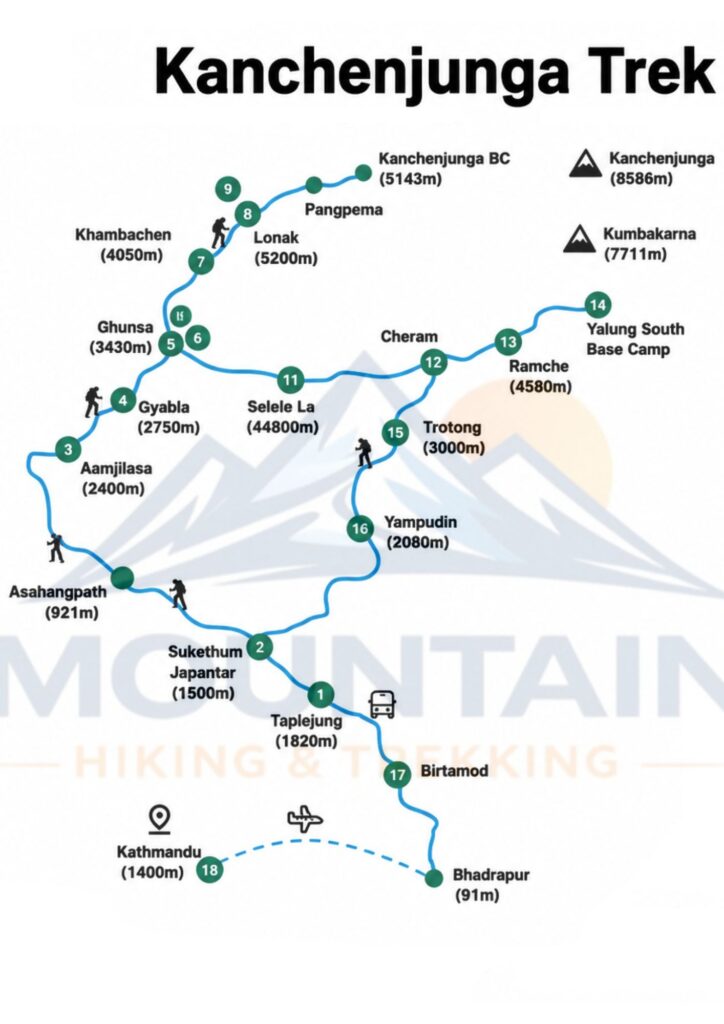
Kanchenjunga trekking trail starts right after landing on Taplejung and goes through the tropical lowlands through great rhododendron forests and lovely villages of east Nepal up to the overwhelming views of the glacier. Kanchenjunga trekking trail starts from an elevation of 1200 meters to 5180 meters above sea level. A trek to the south and north faces of Kanchenjunga offers fantastic mountain views, including Mount Everest, the highest mountain of the world. Kanchenjunga Trekking offers an adventurous trip that will stay in mind forever. Kanchenjunga Trekking covers the most remote and beautiful areas in Nepal that are unused to foreign visitors and still lies shrouded in mystery. The features of the walk includes visiting pleasant villages with different ethnic groups in the high regions together in combination with glorious mountains and abundant wildlife.
Highlights
- Explore the Kanchenjunga Base Camp and Yalung Ri Base Camp
- Magnificent views of Mt. Everest, Makalu and Kanchenjunga.
- The native Nepali communities such as Sherpa, Limbu, Rai and Gurung etc.
- Diverse flora and fauna and rich local culture.
Itinerary
Day 1: Arrive In Kathmandu (1,340m / 4,593ft)

Welcome to Nepal! Upon your arrival at Tribhuvan Intenational Airport, our airport representative will greet you and transfer you to your comfortable 3-star hotel in Kathmandu. After check-in, you can relax or explore the lively streets of Thamel, famous for its trekking shops, cafu00e9s, restaurants, and cultural atmosphere. In the evening, meet your trekking guide for a detailed trip briefing where you'll review your itinerary, equipment, permits, weather conditions, and safety procedures. This is also a great opportunity to ask any last-minute questions before your adventure begins.nnDriving Time: 20–30 minutes Accommodation: 3-Star HotelMeals: Welcome Dinner
Day 2: Fly to Bhadrapur (91m / 299ft) and Drive to Ilam (1,200m / 3,937ft)
After breakfast, take a scenic domestic flight from Kathmandu to Bhadrapur, offering spectacular views of the Himalayan range on clear days. Upon arrival, begin a picturesque drive through easten Nepal toward the beautiful hill town of Ilam, renowned for its lush tea gardens and peaceful landscapes. Along the jouney, you'll pass charming villages, rolling hills, cardamom farms, and winding mountain roads. Ilam is one of Nepal's most beautiful hill stations and provides a relaxing ovenight stop before heading deeper into the Kanchenjunga region.nnFlight: 45 minutes Drive: 4-5 hours Accommodation: HotelMeals: Breakfast
Day 3: Drive from Ilam to Sekathum (1,650m / 5,413ft)
Today's drive takes you through Taplejung, the gateway to the Kanchenjunga region. The road gradually climbs into remote mountain terrain with magnificent views of terraced hillsides, rivers, waterfalls, and traditional villages. After passing Taplejung Bazaar, continue on a rugged mountain road to Sekathum, the current road-head for most Kanchenjunga treks. Here, you'll experience your first taste of the region's peaceful mountain atmosphere before beginning the trek tomorrow.nnDrive: 8-9 hours Accommodation: Tea HouseMeals: Breakfast, Lunch & Dinner
Day 4: Trek from Sekathum to Amjilosa (2,510m / 8,235ft) Distance: 8 km Walking Time: 5/6 hours
Your trekking adventure officially begins today. Crossing several suspension bridges over the Ghunsa Khola, the trail follows a narrow river gorge through dense subtropical forests filled with bamboo, rhododendron, and oak trees. The path gradually ascends with occasional steep sections while offering beautiful waterfalls and opportunities to spot colorful Himalayan birds. By aftenoon, you'll reach the small Tibetan-influenced village of Amjilosa, surrounded by lush forested hills.nnAccommodation: Tea House Meals: Breakfast, Lunch & Dinner
Day 5: Trek from Amjilosa to Gyabla (2,730m / 8,957ft) Distance: 9 km Walking Time: 5-6 hours
Today's trail continues through enchanting forests rich with rhododendron, pine, and bamboo. As you gain altitude, the vegetation changes and the scenery becomes increasingly alpine. Pass several small settlements before arriving at Gyabla, a beautiful Tibetan village where traditional stone houses, colorful prayer flags, and peaceful mountain surroundings create an authentic Himalayan atmosphere. Wildlife enthusiasts may even spot red pandas in the surrounding forests.nnAccommodation: Tea House
Day 6
Today's route passes through Phale Village, known for its Tibetan refugee community and handwoven carpets. Continue alongside the Ghunsa River before reaching the picturesque Sherpa village of Ghunsa. This is one of the largest settlements in the Kanchenjunga region, featuring traditional wooden houses, ancient monasteries, yak pastures, and stunning mountain scenery. Ghunsa serves as an important acclimatization stop before ascending to higher elevations.nnAccommodation: Tea House Meals: Breakfast, Lunch & Dinner
Day 7: Acclimatization Day in Ghunsa (3,595m)
Proper acclimatization is essential for a safe and enjoyable trek. Spend the day exploring Ghunsa and taking a short hike to nearby viewpoints above the village. Visit the local monastery, observe traditional Sherpa culture, and enjoy panoramic views of snow-capped peaks. Your guide will explain the symptoms of altitude sickness and the importance of staying hydrated and walking slowly during the coming days.nnOptional Hike: 2/3 hours Accommodation: Tea HouseMeals: Breakfast, Lunch & Dinner
Day 8: Trek from Ghunsa to Khambachen (4,050m / 13,287ft) Distance: 11 km Walking Time: 5/6 hours
Walking Time: 5–6 hoursnn nnLeaving the forests behind, today's trail enters a dramatic alpine landscape. Walk alongside the Kanchenjunga Glacier with magnificent views of Mount Jannu (Kumbhakana), one of Nepal's most striking peaks. The route passes landslide-prone areas, glacial streams, and open yak grazing fields before reaching the small settlement of Khambachen.nnAccommodation: Tea House Meals: Breakfast, Lunch & Dinner
Day 9: Trek from Khambachen to Lhonak (4,780m / 15,682ft) Distance: 10 km Walking Time: 5/6 hours
Today's trek follows the rugged glacial valley with breathtaking views of towering Himalayan peaks. As you approach Lhonak, the landscape becomes more barren and dramatic, surrounded by glaciers and snow-covered mountains. This isolated settlement provides spectacular views of Kanchenjunga's northen massif.nnDistance: 10 km Walking Time: 5/6 hoursAccommodation: Tea House Meals: Breakfast, Lunch & Dinner
Day 10: Excursion to Pangpema (Kanchenjunga North Base Camp – 5,143m) and Return to Lhonak
This is one of the most rewarding days of the trek. Start early to hike across rocky glacial terrain to Pangpema, the North Base Camp of Mount Kanchenjunga. Here you'll enjoy unforgettable panoramic views of the world's third-highest mountain (8,586m), along with Chang Himal, Pyramid Peak, Tent Peak, and the massive Kanchenjunga Glacier. After spending time taking photographs and enjoying the incredible scenery, retun to Lhonak.
Walking Time: 7-8 hours
Day 11: Trek from Lhonak (4,780m / 15,682ft) to Ghunsa (3,595m / 11,795ft)
Distance: 19 km (11.8 miles) Walking Time: 7–8 hoursElevation Loss: 1,185m (3,888ft)nnAfter enjoying the unforgettable experience at Kanchenjunga North Base Camp, today's jouney retraces the trail back toward Ghunsa. Following breakfast, descend through the rugged glacial valley to Khambachen while taking in one last look at the towering north face of Mount Kanchenjunga. The descent is easier on the lungs than the ascent, allowing you to fully appreciate the dramatic alpine scenery, glacier moraines, and pristine mountain landscapes.
Continue through yak grazing pastures and rocky trails before re-entering the beautiful pine and juniper forests surrounding Ghunsa. The warmer temperatures and lower altitude make today's walk much more comfortable. Upon arrival in Ghunsa, relax in the cozy tea house and enjoy a hot meal while preparing for the next stage of the adventure toward Kanchenjunga South Base Camp.nnAccommodation: Tea House Meals: Breakfast, Lunch & Dinner
Day 12: Trek from Ghunsa (3,595m / 11,795ft) to Sele La Kharka (4,290m / 14,075ft)
Distance: 8 km (5 miles) Walking Time: 5–6 hours Elevation Gain: 695m (2,280ft)nnLeaving the main valley behind, today's trail heads south toward the remote Sele La region. The route climbs steadily through dense rhododendron, juniper, and larch forests before emerging into open alpine terrain. Along the way, you'll enjoy magnificent views of snow-covered peaks and peaceful mountain valleys.
Sele La Kharka is a small seasonal yak pasture where only a few basic tea houses operate during the trekking season. Because of its high altitude and remote location, temperatures can become very cold after sunset, especially during spring and autumn.
Spend the evening resting and preparing for tomorrow's exciting crossing of several high mountain passes.nnAccommodation: Tea House Meals: Breakfast, Lunch & Dinner
Day 13: Cross Sele La (4,290m), Sinion La (4,440m) & Mirgin La (4,663m) – Trek to Cheram (3,870m / 12,697ft)
Distance: 13 km (8 miles) Walking Time: 7–8 hours
Today is one of the most spectacular and adventurous days of the entire Kanchenjunga Circuit Trek. Begin early in the moning as you ascend to the beautiful Sele La Pass before continuing across Sinion La and the highest point of the day, Mirgin La.
Weather permitting, you'll enjoy breathtaking panoramic views of Kanchenjunga, Makalu, Jannu, Kabru, Everest (far in the distance), and numerous snow-capped Himalayan peaks stretching across easten Nepal.
After crossing the passes, descend carefully through rocky alpine trails into the Yalung Valley before reaching the peaceful village of Cheram.
This is undoubtedly one of the finest high-pass trekking days in Nepal.nnAccommodation: Tea House Meals: Breakfast, Lunch & Dinner
Day 14: Trek from Cheram (3,870m / 12,697ft) to Ramche (4,580m / 15,026ft) Distance: 10 km (6.2 miles) Walking Time: 5–6 hours
Today's trail follows the Yalung Glacier valley toward Ramche. The landscape becomes increasingly dramatic as glaciers, rocky cliffs, and towering Himalayan peaks surround the route. Walk through alpine meadows where blue sheep and Himalayan birds are occasionally spotted.
Ramche is a small seasonal settlement that serves as the final ovenight stop before visiting Kanchenjunga South Base Camp.
The aftenoon offers excellent opportunities to photograph the magnificent Yalung Glacier and surrounding mountains.nnAccommodation: Tea House Meals: Breakfast, Lunch & Dinner
Day 15: Hike to Oktang (Kanchenjunga South Base Camp –-4,730m / 15,518ft) and Trek to Cheram (3,870m)
Distance: 15 km (9.3 miles) Walking Time: 7–8 hoursnnToday marks another unforgettable highlight of your adventure. After an early breakfast, hike toward Oktang Viewpoint, widely regarded as the South Base Camp of Mount Kanchenjunga.
Standing before the massive south face of Kanchenjunga is an unforgettable experience. You'll witness close-up views of Kanchenjunga (8,586m), Kabru, Rathong Peak, Kokthang, Talung, and the immense Yalung Glacier.
After spending plenty of time enjoying the scenery and taking photographs, descend back through Ramche and continue to Cheram for the night.nnAccommodation: Tea House Meals: Breakfast, Lunch & Dinner
Day 16: Trek from Cheram (3,870m) to Tortong (2,995m / 9,826ft) Distance: 14 km (8.7 miles) Walking Time: 6–7 hours
Distance: 14 km (8.7 miles) Walking Time: 6–7 hoursnnLeaving the high alpine environment behind, descend through beautiful rhododendron forests, waterfalls, and peaceful river valleys. The trail follows the Simbuwa Khola while passing lush vegetation and colorful wildflowers during spring.
Tortong is a quiet forest settlement surrounded by dense woodland and offers a relaxing ovenight stay after several challenging days at high altitude.nnAccommodation: Tea House Meals: Breakfast, Lunch & Dinner
Day 17: Trek from Tortong (2,995m) to Yamphudin (2,080m / 6,824ft) Distance: 16 km (10 miles) Walking Time: 6–7 hours
Distance: 16 km (10 miles) Walking Time: 6–7 hoursnnToday's trail continues through forests before crossing several suspension bridges and climbing short hills toward Yamphudin. Along the route you'll encounter traditional Limbu villages, terraced farmland, and local schools.
Yamphudin is one of the largest villages in the region and provides an excellent opnnAccommodation: Tea House Meals: Breakfast, Lunch & Dinner
Day 18: Trek from Yamphudin (2,080m) to Khebang (1,915m / 6,283ft) Distance: 15 km (9.3 miles) Walking Time: 6–7 hours
The trail gradually descends through picturesque villages, cultivated farmland, and subtropical forests. Pass cardamom plantations, traditional houses, and friendly local communities before arriving at Khebang.
This peaceful village marks the final trekking destination before retuning by roadnnAccommodation: Tea House Meals: Breakfast, Lunch & Dinner
Day 19: Drive from Khebang to Bhadrapur (91m / 299ft) Driving Time: 10/11 hours
After breakfast, begin the scenic drive back toward Bhadrapur. The jouney passes through beautiful hill districts, tea gardens, rivers, and lively local towns before reaching the Terai plains.
After many days in the mountains, enjoy a comfortable hotel stay with moden facilities.nnAccommodation: Hotel Meals: Breakfast & Lunch
Day 20: Fly from Bhadrapur to Kathmandu (1,400m / 4,593ft) Flight Time: 45 minutes
Flight Time: 45 minutesnnTake a short moning flight back to Kathmandu. Upon arrival, transfer to your comfortable 3-star hotel. The rest of the day is free for shopping, relaxing, or exploring the vibrant streets of Thamel.nnAccommodation: 3-Star Hotel Meals: Breakfast
Day 21: Leisure Day in Kathmandu
Enjoy a free day to relax or explore Kathmandu at your own pace. You may visit UNESCO World Heritage Sites, purchase souvenirs, or simply unwind after your incredible Himalayan adventure. In the evening, join a traditional Nepalese farewell dinner featuring authentic cuisine and cultural performances while celebrating the successful completion of your Kanchenjunga Circuit Trek.
Optional Activities
Kathmandu Durbar Square / Swayambhunath (Monkey Temple) /Boudhanath Stupa
Pashupatinath Temple/ Thamel ShoppingnnAccommodation: 3-Star Hotel Meals: Breakfast & Farewell Dinner
Day 22: Final Departure

After breakfast, our representative will transfer you to Tribhuvan Intenational Airport according to your intenational flight schedule. As your remarkable jouney through the remote Kanchenjunga region comes to an end, you will depart Nepal with unforgettable memories of pristine Himalayan landscapes, welcoming mountain communities, and the achievement of visiting both the North and South Base Camps of the world's third-highest mountain.
We hope to welcome you back to Nepal for another Himalayan adventure in the future.nnMeals: Breakfast
Includes/Excludes
What's Included?
- All ground and air transport including Airport pick-up and drop services as per the itineary.
- kanchajanga special permit / Entry Permit for Conservation Area fees.
- 3 nights in a 3-Star Hotel in Kathmandu (Twin/Double Sharing) with breakfast
- Domestic flight Ticket kathamandu to Bhartpur-kathamandu
- 17 nights accommodation in the best available tea houses during the trek
- Sharing jeep from Bharatpur to Sekathum and Khebang to Bhadrapur
- All meals, three times a day (breakfast, lunch, dinner, ) Cup of Tea coffee
- One porter for every two trekkers (maximum 20u201325 kg)
- Necessary insurance for trekking staff
- Emergency Rescue assistance
- First aid kit and Emergency oxygen support carried for high-altitude safety
- Farewell dinner in Kathmandu
What's Excluded?
- Nature of personal expense.
- Lunch and Dinner in kathamandu
- International airfare
- Travel insurance (compulsory)
- Tips for Guide and Porers
- Extra costs due to delays, weather, illness, or rescue and early return from the trek
- nepal visa fee you can pay at nepal Airport imegration
Packing List
 Daily Wear
Upper Body
- Moisture-wicking T-shirts (2–3)
- Thermal base layer (top)
- Lightweight fleece jacket
- Warm down jacket (recommended: -10°C to -20°C)
- Waterproof and windproof shell jacket with hood
- Long-sleeve trekking shirts (2)
Lower Body
- Thermal base layer (bottom)
- Trekking pants (2 pairs)
- Waterproof over-trousers (rain pants)
- Comfortable shorts (optional)
Footwear
- High-quality waterproof trekking boots (well broken-in)
- Lightweight shoes or sandals for the evenings
- Warm wool trekking socks (3–4 pairs)
- Lightweight hiking socks (2–3 pairs)
- Gaiters (recommended in spring or after snowfall)
Headwear
- Warm wool hat or beanie
- Sun hat or wide-brim hiking hat
- Buff or neck gaiter
- Balaclava (recommended for high elevations)
Hand Protection
- Lightweight fleece gloves
- Insulated waterproof gloves for cold mornings and high passes
Sleeping Equipment
- Four-season sleeping bag (-15°C to -20°C comfort rating)
- Sleeping bag liner (optional but recommended)
- Inflatable travel pillow (optional)
Trekking Equipment
- Trekking backpack (30–40 liters)
- Duffel bag (60–80 liters, usually provided by the trekking company)
- Adjustable trekking poles
- Rain cover for backpack
- Dry bags or waterproof stuff sacks
Personal Essentials
- UV-protection sunglasses (Category 3 or 4)
- Headlamp with extra batteries
- Reusable water bottles (2 liters total capacity)
- Thermos flask (recommended)
- Water purification tablets or filter bottle
- Sunscreen (SPF 50+)
- Lip balm with SPF
- Quick-drying towel
- Personal toiletries
- Wet wipes and hand sanitizer
- Toilet paper
- Nail clippers
- Small sewing kit (optional)
Electronics
- Mobile phone
- Camera with extra batteries
- Power bank (20,000–30,000 mAh recommended)
- Charging cables
- Universal travel adapter
- Spare memory cards
Personal First Aid Kit
Bring any personal medications along with a basic first aid kit that may include:
- Pain relievers
- Medicine for stomach upset or diarrhea
- Cold and flu medication
- Antiseptic cream
- Bandages and blister treatment
- Elastic bandage
- Water purification tablets
- Diamox (Acetazolamide) only if recommended by your doctor for altitude sickness prevention
Essential Information
Planning ahead is key to enjoying a safe and rewarding adventure in the remote Kanchenjunga region. The following essential information will help you prepare for your trek and know what to expect before and during your journey.
Arrival in Nepal
Upon your arrival at Tribhuvan International Airport in Kathmandu, our representative will welcome you and transfer you to your 3-star hotel. During the evening, your trekking guide will conduct a detailed briefing covering the itinerary, permits, weather conditions, altitude awareness, safety procedures, and a final equipment check.
Trek Difficulty
The Kanchenjunga Circuit Trek is considered a challenging Himalayan adventure suitable for trekkers with good physical fitness and previous multi-day trekking experience.
The trek involves:
- Walking 5–8 hours daily
- Reaching a maximum elevation of 5,143m (16,873ft) at Pangpema (North Base Camp)
- Crossing Mirgin La Pass (4,663m / 15,298ft)
- Steep ascents and descents
- Remote mountain trails with limited facilities
No technical climbing experience is required, but strong endurance and proper preparation are essential.
Best Time to Trek
The best seasons for the Kanchenjunga Circuit Trek are:
Spring (March to May)
- Stable weather
- Blooming rhododendron forests
- Pleasant daytime temperatures
- Excellent mountain views
Autumn (September to November)
- Crystal-clear skies
- Dry trails
- Spectacular Himalayan panoramas
- Ideal trekking conditions
Winter (December to February) brings heavy snowfall and extremely cold temperatures, while the summer monsoon season (June to August) often causes slippery trails, leeches, and poor visibility.
Accommodation
During your trek, you'll stay in locally operated tea houses offering simple yet comfortable accommodation.
In Kathmandu:
- 3-Star Hotel
- Twin or double-sharing rooms
- Private bathroom
- Breakfast included
During the trek:
- Basic twin-sharing rooms
- Shared bathrooms in most villages
- Cozy dining halls heated by traditional stoves
- Blankets available (a sleeping bag is still recommended)
Meals
Our package includes three freshly prepared meals each day during the trek.
Typical menu options include:
- Dal Bhat (traditional Nepali meal)
- Fried rice
- Noodles
- Pasta
- Tibetan bread
- Pancakes
- Eggs
- Soup
- Potatoes
- Momos
- Tea, coffee, and hot chocolate
Vegetarian meals are widely available, while vegan and gluten-free options may be available with advance notice.
Drinking Water
Safe drinking water is essential during high-altitude trekking.
You can obtain drinking water by:
- Refilling boiled water at tea houses (small extra charge)
- Using water purification tablets
- Carrying a water filter bottle
We recommend avoiding single-use plastic bottles to help protect the mountain environment.
Altitude Sickness
Altitude sickness can affect anyone above 2,500 meters, regardless of age or fitness.
Common symptoms include:
- Headache
- Nausea
- Loss of appetite
- Dizziness
- Fatigue
- Difficulty sleeping
Our itinerary includes a dedicated acclimatization day in Ghunsa to help your body adjust gradually.
Your guide will monitor your oxygen saturation daily using a pulse oximeter.
If symptoms become severe, immediate descent is the safest treatment.
Trekking Permits
The Kanchenjunga region is a restricted trekking area, requiring special permits.
The required permits include:
- Kanchenjunga Restricted Area Permit (RAP)
- Kanchenjunga Conservation Area Permit (KCAP)
A licensed trekking guide is mandatory, and independent trekking is not permitted in the restricted area.
Transportation
Your journey includes:
- Domestic flight from Kathmandu to Bhadrapur
- Domestic flight from Bhadrapur to Kathmandu
- Private Jeep from Bhadrapur to Sekathum
- Private Jeep from Khebang to Bhadrapur
Road conditions in eastern Nepal are rough in some sections, making a four-wheel-drive vehicle the preferred option.
Internet & Mobile Network
Mobile network coverage is available in larger villages such as Ghunsa but becomes limited or unavailable at higher elevations.
Some tea houses offer Wi-Fi for an additional charge, although connections may be slow and weather-dependent.
Electricity & Charging
Most tea houses provide electricity or solar charging facilities.
Charging electronic devices usually costs between NPR 200–500 per device, depending on the location.
We recommend bringing:
- A power bank (20,000–30,000 mAh)
- Spare camera batteries
- A universal travel adapter
Travel Insurance
Comprehensive travel insurance is mandatory.
Your policy should include:
- High-altitude trekking coverage up to at least 5,500 meters
- Emergency helicopter evacuation
- Medical treatment
- Trip cancellation or interruption
- Lost or delayed baggage
Please carry a copy of your insurance policy during the trek.
Trekking Guide & Porter
For your safety and comfort, our package includes:
- Government-licensed, English-speaking trekking guide
- One porter for every two trekkers (maximum combined load of 20–25 kg)
Our experienced guides are trained in altitude awareness, first aid, and mountain safety, ensuring a safe and enjoyable trekking experience.
Cash & Personal Expenses
ATMs are available in Kathmandu and Bhadrapur but not along most of the trekking route.
We recommend carrying enough Nepalese Rupees for:
- Drinks
- Snacks
- Hot showers
- Battery charging
- Wi-Fi
- Tips for guides and porters
- Personal purchases
Responsible Trekking
We encourage all trekkers to travel responsibly by:
- Respecting local customs and traditions
- Asking permission before photographing local people
- Avoiding single-use plastics
- Carrying reusable water bottles
- Keeping trails clean by taking all non-biodegradable waste back with you
- Supporting local tea houses and communities
By following these principles, you help preserve the natural beauty and cultural heritage of the Kanchenjunga region for future generations.
Why Choose Our Kanchenjunga Circuit Trek?
- ✔ Complete 22-day itinerary from arrival to departure
- ✔ 3-star hotel accommodation in Kathmandu
- ✔ Domestic flights and private 4WD jeep transportation
- ✔ Experienced licensed trekking guide and porter service
- ✔ All required permits included
- ✔ Full-board meals during the trek
- ✔ Quality tea house accommodation
- ✔ Small group departures and personalized service
- ✔ 24/7 support from arrival to final departure
Our Kanchenjunga Circuit Trek offers an unforgettable journey through one of Nepal's most remote and spectacular Himalayan regions, combining breathtaking mountain scenery, authentic local culture, and a true wilderness trekking experience.
Route Map