Upper Mustang and Muktinath Tour by Road
Trip Facts
 Duration
10
Duration
10
 Trip Grade
Easy
Trip Grade
Easy
 Country
Nepal
Country
Nepal
 Maximum Altitude
3,840 meters (12,598 feet)
Maximum Altitude
3,840 meters (12,598 feet)
 Group Size
2-26
Group Size
2-26
 Starts
kathmandu
Starts
kathmandu
 Ends
kathmandu
Ends
kathmandu
 Activities
Trekking Sightseeing Culture Tours & Hiking
Activities
Trekking Sightseeing Culture Tours & Hiking
 Best Time
march/april/may/ oct/nov./Dec
Best Time
march/april/may/ oct/nov./Dec
Overview
The Upper Mustang and Muktinath tour by road offers a captivating journey through Nepal’s arid landscapes, ancient monasteries, and vibrant Tibetan culture. Below is a detailed itinerary for a road trip from Kathmandu to Upper Mustang and Muktinath:
Tour Highlights
Experience a memorable journey through Nepal starting from Pokhara with boating on Phewa Lake and visits to Davis Falls and World Peace Pagoda. Relax in the hot springs of Tatopani, explore the cultural village of Kagbeni, and discover the ancient walled city of Lo Manthang. Visit the sacred Muktinath Temple and the charming Marpha Village, then end your tour in Kathmandu exploring sites like Swayambhunath Stupa and the lively Thamel.
- 1. Pokhara: Phewa Lake: Enjoy boating and stunning reflections of the Annapurna range on this serene lake. Davis Falls: A dramatic waterfall with a fascinating underground section. World Peace Pagoda: Panoramic views of the Himalayas and Pokhara valley from this Buddhist stupa.
- 2. Tatopani: Natural Hot Springs: Relax in the therapeutic hot springs amidst beautiful river views. Scenic Beauty: Enjoy the lush greenery and views of the surrounding hills.
- 3. Kagbeni: Traditional Architecture: Explore this ancient village with its unique Tibetan-style houses. Gateway to Upper Mustang: Kagbeni serves as the entry point to the Upper Mustang region.
- 4. Lo Manthang: Ancient Kingdom: Discover the walled city of Lo Manthang, rich in Tibetan culture and history. Monasteries: Visit monasteries like Thubchen Monastery and Choede Monastery, and experience traditional Tibetan Buddhism. Cultural Heritage: Explore the royal palace and traditional Tibetan homes.
- 5. Muktinath: Sacred Temple: Visit the revered Muktinath Temple, known for its 108 water spouts and eternal flame. Spiritual Significance: A major pilgrimage site for both Hindus and Buddhists, offering a profound spiritual experience.
- 6. Marpha Village: Apple Orchards: Sample Marpha's renowned apples and apple-based products. Traditional Village: Wander through the charming village with its whitewashed buildings and traditional Tibetan influences. Monastery: Visit the local monastery and enjoy the serene atmosphere.
- 7. Kathmandu: Cultural Heritage: Explore UNESCO World Heritage Sites like Swayambhunath (Monkey Temple) and Kathmandu Durbar Square. Vibrant Markets: Experience the lively atmosphere of Thamel, with its shops, restaurants, and cultural attractions. Historical Sites: Visit important landmarks and temples in the historic heart of Nepal's capital.
Why Choose US?
Choose us for a seamless and unforgettable journey through Nepal, where every detail is carefully planned to give you the best travel experience. From exploring the serene beauty of Pokhara to discovering the hidden culture of Lo Manthang and the spiritual essence of Muktinath Temple, we ensure comfort, safety, and authenticity at every step. Our experienced team, personalized services, and deep local knowledge allow you to enjoy a stress-free adventure while fully immersing yourself in Nepal’s natural beauty, culture, and traditions.
- Experienced and professional guides
- Well-planned and hassle-free itineraries
- Comfortable transportation and accommodation
- Focus on safety and customer satisfaction
- Authentic cultural and local experiences
- Affordable pricing with great value 24/7 customer support during the tour
- Customizable travel packages
Itinerary
Day 1: Kathmandu to Pokhara

 Travel Duration: 6-7 hours
Start early from Kathmandu and drive to Pokhara. Enjoy the scenic drive with views of terraced farmlands, rivers, and the Trishuli River gorge. Upon arrival in Pokhara, check into your hotel and explore the lakeside area.
Day 2: Pokhara to Tatopani
Travel Duration: 5-6 hours
 Accommodation: Guesthouse in Tatopani
 Maximum Altitude: 1,190 meters / 3,904 feet
After breakfast, drive from Pokhara to Tatopani via Beni. Pass through lush green hills, rivers, and small villages. Relax in the natural hot springs at Tatopani. What to Expect in Tatopani: Natural Hot Springs: The main attraction of Tatopani is the natural hot springs, where you can relax and soothe your muscles after the drive. The hot springs are believed to have healing properties and are a popular spot for both locals and trekkers. Local Villages: Tatopani is a small village with a few guesthouses and tea houses. You can take a walk around the village, interact with the local people, and experience the rural lifestyle. Tatopani offers beautiful views of the surrounding hills and mountains. On a clear day, you can catch a glimpse of the Annapurna and Dhaulagiri ranges. Accommodation: There are several guesthouses and lodges in Tatopani, ranging from basic to comfortable. Most offer simple rooms with attached bathrooms, and some have their own small pools fed by the hot springs.r
Meals: The guesthouses and lodges in Tatopani offer traditional Nepali meals like dal bhat, as well as international dishes. The food is generally simple, hearty, and freshly prepared. Tips: Road Conditions: The road from Beni to Tatopani can be rough and narrow, so it is advisable to hire an experienced driver or use a sturdy vehicle like a 4WD. Permits: No special permits are required for this part of the journey. Packing: Bring a swimsuit for the hot springs, as well as comfortable clothing and good walking shoes for exploring the area.
Day 3: Tatopani to Kagbeni
Travel Duration: 6-7 hours
Accommodation: Lo Manthang
Maximum Altitude: 2,810 meters / 9,219 feet
 Highlights: Scenic Beauty: Dramatic cliffs and deep canyons. Cultural Immersion: Experience the unique Tibetan-influenced culture and architecture of Kagbeni.
Morning: Start Early: Depart from Tatopani to make the most of the day. Scenic Drive: Enjoy stunning views of the Kali Gandaki Gorge and the surrounding rugged landscapes. Afternoon: Cross Bridges: Traverse several suspension bridges over the Kali Gandaki River. Explore Kagbeni: Arrive at Kagbeni, a charming medieval village with narrow alleys and traditional Tibetan architecture. Highlights: Scenic Beauty: Dramatic cliffs and deep canyons. Cultural Immersion: Experience the unique Tibetan-influenced culture and architecture of Kagbeni. Evening: Relax: Check into your guesthouse and enjoy a leisurely evening exploring the village.
Day 4: Kagbeni to Lo Manthang
Travel Duration: 6-7 hours
Accommodation: Lo Manthang
Maximum Altitude: 3,840 meters (12,598 feet)
Morning: Permits: Secure your necessary permits for Upper Mustang and enter the restricted area.Scenic Drive: Travel through the extraordinary landscapes of Upper Mustang, featuring barren cliffs, deep canyons, and ancient cave dwellings. Afternoon: Arrive at Lo Manthang: Reach the capital of the former Kingdom of Lo, a walled city rich in history and Tibetan culture. Explore: Visit key sites like the Royal Palace, Thubchen Gompa, and Chhoede Gompa. Evening: Relax: Check into your guesthouse and enjoy the serene atmosphere of Lo Manthang.Overnight: Guesthouse in Lo Manthang
Day 5: Explore Lo Manthang
Accommodation: Lo Manthang
1. Lo Manthang Royal PalacernrnDescription: The palace, also known as the Chhosar Palace, was the residence of the former King of Mustang. It’s an important cultural and historical site. Highlights: Explore the palace’s architecture, which includes ancient murals, artifacts, and a stunning view of the surrounding landscape. 2. Thubchen Gomparn Description: One of the oldest and most significant monasteries in Lo Manthang.Highlights: Marvel at its traditional Tibetan architecture and intricate murals depicting Buddhist themes. It’s a great place to experience local Buddhist rituals and ceremonies. 3. Chhoede GomparnrnDescription: Another important monastery in Lo Manthang. Highlights: Visit to see its impressive statue of Maitreya Buddha and observe the monks' daily activities and prayers. 4. Jampa GomparnrnDescription: A monastery located slightly outside Lo Manthang. Highlights: Known for its ancient statues and beautiful frescoes. It’s less crowded and offers a peaceful atmosphere.rnrn5. Explore the Walled City Description: Wander through the narrow alleys and traditional Tibetan houses within the ancient city walls.Highlights: Discover local life, traditional crafts, and interact with the friendly locals. 6. Visit Local Villages Description: Take a short hike or drive to nearby villages like Chhoser and Nyphu.Highlights: Explore ancient cave dwellings, monasteries, and experience local culture in a more rustic setting. 7. Scenic View Description: Lo Manthang offers stunning views of the surrounding landscape, including the barren terrain and distant snow-capped peaks.Highlights: Enjoy the sunset or sunrise from vantage points around the city for breathtaking views. 8. Cultural Interaction Description: Engage with local residents and learn about their traditions and daily life. Highlights: Experience traditional Tibetan customs, festivals (if timing allows), and local cuisine.rnrn9. Photography Description: The unique architecture and dramatic landscapes provide excellent photography opportunities.Highlights: Capture the ancient monasteries, traditional homes, and picturesque mountain backdrop. Overnight: Guesthouse in Lo Manthang
Day 6: Lo Manthang to Muktinath
Travel Duration: 7-8 hours
Maximum Altitude: 3,710 meters (12,172 feet)
Morning: Departure: Start early from Lo Manthang to make the most of the day. Scenic Drive: Enjoy the drive through the rugged terrain of Upper Mustang and descend towards the Muktinath region. Afternoon: Arrival in Muktinath: Reach Muktinath, an important pilgrimage site for both Hindus and Buddhists. Visit the Muktinath Temple: Description: Explore the sacred Muktinath Temple, known for its eternal flame (Jwala Mai) and 108 water spouts. Highlights: Observe the religious rituals and soak in the spiritual atmosphere. The temple is considered a place of liberation and is a significant pilgrimage destination. Evening: Relax: Check into a guesthouse in Muktinath and rest after the long drive. Enjoy Views: Take in the stunning views of the surrounding mountains, including the Annapurna and Dhaulagiri ranges. Highlights: Scenic Journey: Experience the dramatic shift in landscapes from the high desert of Lo Manthang to the lush and rugged terrain around Muktinath. Cultural and Spiritual Significance: Explore the religious and cultural significance of Muktinath, a key destination for trekkers and pilgrims alike.
Day 7: Muktinath to Marpha Village
Travel Duration: 3-4 hours
Maximum Altitude: 2,670 meters (8,756 feet)
Morning: Departure: Begin your journey from Muktinath after breakfast. Scenic Drive: Enjoy the descent from Muktinath, passing through various landscapes including arid regions and lush river valleys. Afternoon: Arrival in Marpha: Reach Marpha, a picturesque village known for its traditional architecture and apple orchards. Explore Marpha Village: Description: Wander through Marpha’s charming streets with traditional whitewashed houses and well-maintained stone pathways. Highlights: Visit the local monastery, sample local apple products (Marpha is famous for its apples), and enjoy the serene ambiance of the village. Evening: Relax: Check into a guesthouse or lodge in Marpha. Take some time to unwind and enjoy the peaceful surroundings. Evening Stroll: Enjoy a leisurely walk around the village or explore the nearby apple orchards. Highlights: Scenic Drive: Experience the contrast between the high-altitude desert of Muktinath and the verdant valleys of Marpha. Cultural Experience: Explore the unique architecture and local lifestyle of Marpha, known for its Tibetan influences and traditional crafts.
Day 8: Marpha Village to Pokhara Marpha Village to Pokhara
Travel Duration: 6-7 hours
Accommodation: Pokhara
Maximum Altitude: Marpha: 2,670 meters (8,756 feet) Pokhara: 827 meters (2,713 feet)
Highlights: Scenic Views: The drive from Marpha to Pokhara provides scenic views of the Kali Gandaki River and the surrounding landscapes. Pokhara: Upon arrival, enjoy the natural beauty of Pokhara, including its serene lakes and stunning mountain vistas.
Morning: Departure: After breakfast in Marpha, begin your drive to Pokhara. Scenic Drive: Enjoy the descent from the high-altitude regions to the lush lowlands. The drive follows the Kali Gandaki River, offering beautiful river and valley views. Afternoon: Arrival in Pokhara: Reach Pokhara in the afternoon. Relax and Explore: Check into your hotel and take some time to relax or explore Pokhara’s lakeside area. You can stroll around Phewa Lake, visit the lakeside cafes, or enjoy some leisure activities. Tips: Road Conditions: Be prepared for a long drive with potentially rough road sections. A comfortable vehicle is recommended. Travel Essentials: Keep snacks, water, and any necessary travel documents handy for the journey. Rest: Upon arrival in Pokhara, take time to rest and recharge after the long drive.
Day 9: Pokhara to Kathmandu
Travel Duration: 6-7 hours
Accommodation: Kathmandu
Drive back to Kathmandu.rnrnEnjoy the scenic route, and upon arrival, transfer to your hotel.
Day 10: Depature from kahamandu to your sweet home

Morning: Check out of your hotel in Kathmandu. Transfer: Head to Tribhuvan International Airport for your flight. Departure: Board your flight and depart for home, carrying with you memories of an unforgettable journey through Nepal.
Tour Includes
What's Included?
- Accommodation: Hotels/guesthouses in Pokhara, Muktinath, Marpha, and Kathmandu.
- Transportation: Road transportation (bus or jeep) from Pokhara to Tatopani, Tatopani to Kagbeni, Kagbeni to Lo Manthang, Lo Manthang to Muktinath, Muktinath to Marpha, and Marpha to Pokhara. Optional domestic flight from Pokhara to Kathmandu.
- Meals: Breakfasts at hotels/guesthouses during your stay.
- Guide Services: Local guide (if applicable) for cultural or trekking activities.
- Permits: Necessary permits for Upper Mustang and Muktinath (e.g., Upper Mustang Permit, TIMS Card).
- Entrance Fees: Fees for visiting religious sites and cultural attractions (e.g., Muktinath Temple).
- Miscellaneous: Basic travel insurance (if included in the package).
What's Excluded?
- Flights: International flights to and from Kathmandu. Domestic flight from Pokhara to Kathmandu (if not included).
- Meals: Lunches and dinners not provided by accommodation. Meals in transit or at local restaurants.
- Personal Expenses: Souvenirs, personal shopping, and extra activities. Tips for guides, drivers, and hotel staff.
- Travel Insurance: Comprehensive travel insurance (if not included in the package).
- Visas: Visa fees for Nepal (if applicable).
- Emergency Costs: Any emergency evacuation or additional medical costs.
- Optional Activities: Extra excursions or activities not included in the standard itinerary.
Trip Packing List
 Daily Wear
Daily wear should be comfortable, weather-appropriate, and suitable for changing temperatures during your trip. Layering is important so you can easily adjust to cold mornings and warm afternoons, especially in higher altitudes.
- Base layers (moisture-wicking shirts, thermal wear)
- Mid layers (fleece or down jackets)
- Outer layers (waterproof & windproof jackets/pants)
- Trekking pants (lightweight & quick-drying)
- Warm hat and gloves Sun hat or cap
- Trekking socks (wool/moisture-wicking)
- Comfortable footwear (trekking boots/shoes)
 Trekking Gear
Trekking gear should be durable, lightweight, and easy to carry. It helps you stay comfortable, safe, and prepared during hikes and long walking days.
- Daypack (for daily essentials)
- Larger backpack (for main gear)
- Sleeping bag (3-season or higher)
- Sleeping pad Water bottle or hydration system
- Trekking poles (optional)
- Gaiters (optional)
 Personal Care
Personal care items are essential for maintaining hygiene and protecting yourself from harsh weather conditions like strong sun, wind, and cold.
- Sunglasses (UV protection)
- Sunblock (high SPF)
- Lip balm (with SPF)
- Personal hygiene items (toothbrush, toothpaste, sanitizer)
- Biodegradable soap
- Travel towel (quick-drying)
Essential Information
1.Health and Safety:
Altitude Sickness: Be aware of symptoms such as headaches, nausea, and dizziness. Acclimatize properly and consult your guide or a medical professional if symptoms arise.
Vaccinations: Check recommended vaccinations for Nepal, including Hepatitis A, Hepatitis B, Typhoid, and Tetanus.
Travel Insurance: Ensure it covers trekking activities, emergency evacuation, and medical treatment.
2. Cultural Etiquette:
Respect Local Customs: Dress modestly, especially when visiting religious sites. Remove shoes before entering temples or monasteries.
Photography: Ask permission before taking photos of people, especially in local villages or religious settings.
Greetings: A polite Namaste (pressing palms together) is a common greeting.
3. Currency and Payments:
Currency: Nepalese Rupee (NPR) is the local currency. It’s useful to carry some cash for small purchases, as credit cards may not be accepted everywhere.
ATMs: Available in major towns like Pokhara and Kathmandu. Be aware of potential fees and withdrawal limits.
4. Local Transport:
Road Conditions: Roads can be rough and travel times may vary. Prepare for potentially long and bumpy rides.
Domestic Flights: If flying from Pokhara to Kathmandu, book flights in advance and check for any baggage restrictions.
5. Communication:
SIM Cards: Local SIM cards can be purchased for mobile data and calls. Coverage can be limited in remote areas.
Internet: Wi-Fi is available in hotels and some guesthouses but may be limited or slow in remote areas.
6. Weather and Conditions:
Weather: Be prepared for varying weather conditions. Pack layers and be ready for both warm and cold temperatures.
Season: The best trekking seasons in Nepal are pre-monsoon (March to May) and post-monsoon (September to November).
7. Local Cuisine:
Food: Try local dishes like dal bhat (rice and lentils), momo (dumplings), and traditional Nepali tea. Ensure food is well-cooked and drink bottled or purified water.
8. Emergency Contacts:
Local Authorities: Keep a list of local emergency contacts and your embassy or consulate in Kathmandu.
Guide Services: Have contact information for your guide and local tour operators.
9. Sustainability:
Leave No Trace: Follow eco-friendly practices such as disposing of waste properly and minimizing your environmental impact.
Respect Wildlife: Avoid disturbing animals and stay on designated paths.
10. Preparation:
Pre-Trip Briefing: Attend any pre-trip briefings offered by your tour operator or guide to familiarize yourself with the itinerary and safety procedures.
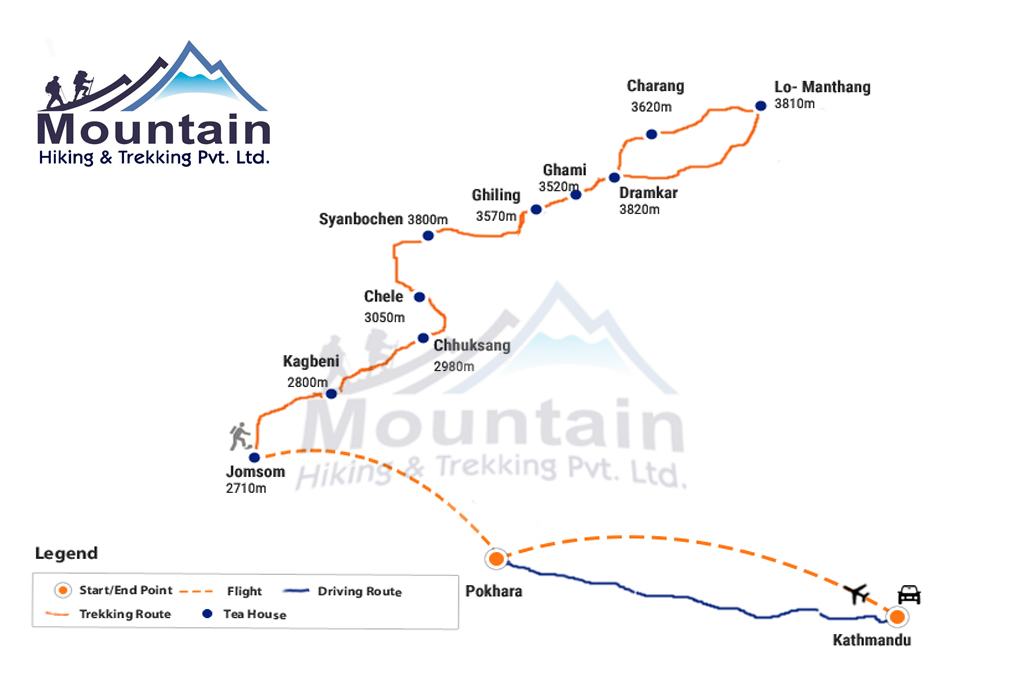
Trip Map
Trip FAQs
1. What is the best time to visit Upper Mustang?
The best time to visit is from March to November. Unlike other regions, Upper Mustang is a rain-shadow area, making it suitable even during the monsoon season.
2. Do I need special permits for Upper Mustang?
Yes, Upper Mustang is a restricted area, so you need a special permit along with your passport and travel documents.
3. Is this trip suitable for beginners?
Yes, the trip is suitable for beginners with a basic level of fitness. However, some trekking and high-altitude travel may require preparation.
4. What kind of accommodation can I expect?
You will stay in comfortable hotels in cities like Pokhara and Kathmandu, and in teahouses or lodges in trekking areas like Lo Manthang.
5. Is altitude sickness a concern?
Yes, as you will travel to high-altitude areas like Muktinath Temple, there is a chance of altitude sickness. Proper acclimatization, hydration, and guidance will help reduce risks.