Annapurna Expedition
Trip Facts
 Trip Grade
Moderate
Trip Grade
Moderate
 Maximum Altitude
8,091 meters (26,545 feet)
Maximum Altitude
8,091 meters (26,545 feet)
 Starts
Kathmandu
Starts
Kathmandu
 Ends
Kathmandu
Ends
Kathmandu
 Best Time
Feb/Mar/Apr/Aug/Sep/Oct/Nov/Dec
Best Time
Feb/Mar/Apr/Aug/Sep/Oct/Nov/Dec
Overview
The Annapurna Expedition is an exhilarating adventure that takes climbers to the heart of the Himalayas to attempt the summit of Annapurna I, the 10th highest peak in the world.
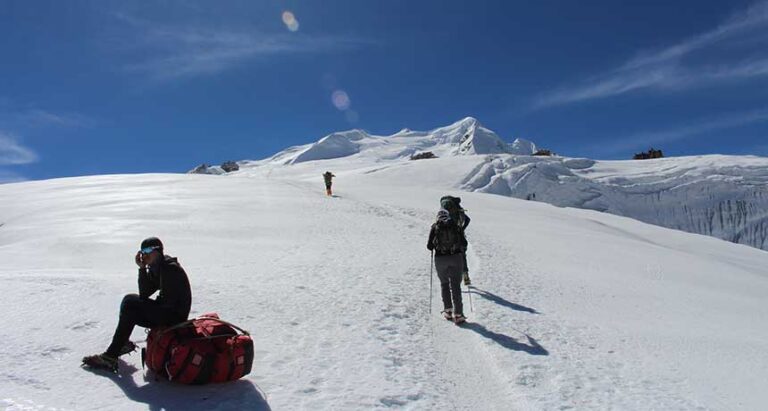
The expedition begins with a trek through diverse landscapes, including lush forests, alpine meadows, and glacial valleys, providing climbers with breathtaking views and cultural immersion in local villages. As climbers ascend towards base camp, they face challenging routes, high altitudes, and unpredictable weather conditions.
Upon reaching Annapurna Base Camp, climbers undergo rigorous acclimatization and preparation before attempting the summit push. The ultimate highlight of the expedition is reaching the summit of Annapurna I, standing at 8,091 meters (26,545 feet) above sea level, offering climbers an unparalleled sense of achievement and exhilaration.
Throughout the expedition, climbers forge strong bonds of camaraderie and teamwork, supported by experienced guides and support staff. The Annapurna Expedition is a transformative journey of personal growth, self-discovery, and unforgettable experiences in one of the world’s most spectacular mountain ranges.
Highlights
Includes/Excludes
What's Included?
- Airport pick-up and drop-off in Kathmandu
- Annapurna expedition permit and all required government fees
- Experienced climbing guides, Sherpas, and full support staff
- Full board meals during trek and expedition period
- Base camp setup with tents, kitchen, communication, and safety equipment
What's Excluded?
- International airfare to and from Nepal
- Nepal visa fee
- Travel and expedition insurance (including rescue)
- Personal climbing gear and equipment
- Tips and summit bonus for guides and Sherpas
Packing List
 Trekking Equipment
Preparing for an expedition to Annapurna I requires careful consideration of the equipment you'll need to ensure your safety, comfort, and success in challenging mountain conditions. Here's a comprehensive list of essential equipment for an Annapurna expedition:
Clothing:
Insulated jacket (down or synthetic)
Waterproof and breathable shell jacket
Insulated pants or bibs
Waterproof and breathable shell pants
Base layers (moisture-wicking tops and bottoms)
Mid-layer fleece or softshell jacket
Insulating hat or beanie
Balaclava or neck gaiter
Gloves or mittens (lightweight and insulated)
Warm socks (wool or synthetic)
Gaiters (to keep snow out of boots)
Footwear:
Mountaineering boots (insulated and crampon-compatible)
Gaiters (to keep snow out of boots)
Camp shoes or sandals (for use in base camp)
Climbing Gear:
Helmet
Climbing harness
Crampons
Ice axe
Climbing rope
Carabiners and quickdraws
Ascender and/or prusik cords
Rappel device
Mountaineering boots (insulated and crampon-compatible)
Safety Equipment:
Avalanche transceiver, probe, and shovel (if traveling in avalanche-prone areas)
First aid kit (including medications for altitude sickness)
Personal locator beacon (PLB) or satellite communication device
Whistle
Map, compass, and GPS device
Camping Gear:
Four-season tent
Sleeping bag (rated for cold temperatures)
Sleeping pad or mattress (insulated for warmth)
Camping stove and fuel
Cooking utensils and pots
Lightweight camping chair or sitting pad
Personal Items:
Sunglasses (with UV protection and side shields)
Sunscreen (high SPF)
Lip balm with SPF
Personal hygiene items (toothbrush, toothpaste, etc.)
Headlamp or flashlight (with extra batteries)
Trekking poles
Water bottles or hydration system
Snacks and energy bars
Camera or smartphone for capturing memories
Miscellaneous:
Duffel bag or backpack for carrying gear
Repair kit (for clothing, gear, and equipment)
Multi-tool or knife
Cash (for tipping guides, purchasing items, etc.)
Travel documents (passport, permits, insurance, etc.)
Essential Information
Travel Insurance is mandatory for all customers who looking to travel in Nepal with the Mountain Hiking & Trekking .The Travel Insurance must cover both the evacuation and medical cost
There are many insurance companies that offer travel insurance services over the internet. You can choose from a wide variety of insurance companies as per your convenience. Especially when it comes to trekking in Nepal, there is always a narrow chance of minor health issues, injuries and most importantly – altitude sickness.
It is essential that you prefer an insurance rule that covers the cost of the helicopter rescue from the mountains in case of main accidents and delicate mountain sickness (AMS). through such great cases of an emergency evacuation, a helicopter service is the only way out of the mountains. This includes a rescue team for both – ground evacuation and rescue. Which is why we need your travel insurances to cover the cost of helicopter services and evacuation from the Himalayas
It is forever recovered to be safe than apologetic.
Before you plan your trip with Mountain Hiking & Trekking do make sure that your travel insurance covers all the costs mentioned above from a reliable company.
Suggested Travel Insurance Companies:
https://www.mondial-assistance.ca
https://www.travelassistnetwork.com/
https://www.travelex-insurance.com/
https://www.hccmis.com/atlas-travel-insurance
Trip Cancellation By The Client
Any cancellation by a Client must be made in writing and acknowledged by the Company, the date on which the request to cancel is received by the Company, will determine the cancellation charge
Cancellation of Nepal,Bhutan and Tibet Trips deposit amount is ( Non- Refundable) But you can use That deposit anytime when you come to nepal.
a) The Client is strongly advised to take out cancellation insurance at the time of making the booking.
b) No refunds will be made if you voluntarily leave a trip for any reason after the trip has start on,No refunds will be made for any accommodation, transport, sightseeing, meals or services not utilized.
c) If you want to change the date of the tour, it is possible to change within our tour date (subject to availability) which may occur some additional cost for you.
d) We will take last minute booking till 5 day prior of tour date for Nepal trips and till 20 days prior for Bhutan and Tibet trips and you need to make full payment to book the tour in these cases.
Cancellation Of A Tour By The Company:
Mountain Hiking & Trekking P. Ltd reserves the right to cancel any trip, including a guaranteed trip, prior to departure due to reasons beyond our control (due to natural disasters, flight cancellation, , industrial action, Mountain sickness, weather conditions and Early back to kathamandu from Trek or any Tour in nepal,bhutan and Tibet trip. In such a case, Mountain Hiking & Trekking P. Ltd will not refund any money
Passport And Visas:
All clients must have a valid passport with at least 6 months validity from return date, Nepalese visas can be obtained from the Nepalese Embassies or Consulate in your country or arrival in Kathmandu Airport. Please visit our Nepal Visa for the detail info.
Complaints:
If you have complaints about the trip, you can tell to operator/leader/guide at the earliest opportunity then he will take the appropriate action.
Acceptance Of Risk:
We are committed to provide the best services by performing our duties honestly & seriously to make your journey very smooth & successful. However, Mountain Hiking & Trekking P. Ltd and its related organization shall not be responsible for any changes in the itinerary due to unavoidable circumstance beyond our control such as govt. restriction, Land slide, road blockage, flood, snow political unrest, cancellation of flight, delay, sickness or accident and The nature of some of our trips is adventurous and risky as well, therefore may involve a personal risk. We would like to inform you that you have to take all risk on yourself such as damages or injuries or death resulting from these inherent risks.
The Agreement:
We encourage you to read the terms and conditions carefully before booking any trips with us, by submitting the booking form you are agreeing to be bound by the conditions of the terms and please go through the following Terms and Conditions that govern the relationship between you (client) and Mountain Hiking & Trekking P. Ltd) (hereinafter referred as "The Company"), Registered Company Number 74068/066/067, both parties agree to these Terms and Conditions to resolve any legal or other disputes that may arise during the trip.
Trip Booking:
A 'trip' refers to any product itinerary or activities that are listed in our official website www.himalayaguide.com that you buy from us including Trekking, Tours, Expeditions, and/or other adventure and tour programs.
A booking is accepted and becomes definite only from the date when the Company sends a confirmation email then the contract between the Company and the Client comes into existence.
Before your booking is confirmed and a contract comes into force, the Company reserves the right to increase or decrease prices.
Please note that the company would not be liable to any warranty, collateral agreement, prior agreement, description of services, or conditions, other than as expressed herein.
Deposit Requirement For Booking Trip:
I) Nepal Trips: For Nepal Trips, you will have to make a deposit of 25% of trip cost at the time of booking. The Deposit amount is nonrefundable. the remaining 75% amount is payable upon your arrival in Kathmandu and before the trip departure from Kathmandu.
The deposit should be sent to the Company, The Tailor Made trips may require a higher deposit or full payment at the time of booking so, if deposit is different from that outlined in this clause, you will be advised by the company at the time of booking.
II) Tibet/ Bhutan Trips: For the Booking of Tibet and Bhutan Trips, you will make 35% of the trip cost at the time of Booking. The Deposit amount is nonrefundable. and the remaining 60% is payable upon arrival in Kathmandu and before the trip departure.
Method of Payment
Booking deposit can be made by bank transfer, by Credit Card (Visa or Mastercard) and western union:
Booking paying by any credit card is Free of charge
if you want to pay by credit card we are 100% online secure payment systems
Payment via Wire/Bank Transfer: Our Bank Details for wire Transfer:
- Name of the Account Holder: - Mountain Hiking & Trekking P. LTD
- Account Number: - 00207405260011
- Account Type: - Current
- Paying Bank- Himalayan Bank LTD.
- Bank Address:- Thamel, Kathamandu, Nepal
- Post Box No: - 14444
- Swift Code: - HIMANPKA
Note: Bank service charge should be paid by the clients themselves at the time of deposit.
Please note that we are not liable of any delay or loss during the transfer process, If in case due to use of mediator bank or any other reasons if the money received by us is less than the amount sent, you are requested upon arrival to pay accordingly so that the total is equivalent to the product cost.
E-mail us the bank reference number or remittance slipserence number/remittance slips and sender details, and it will be easy for us to check. after you initiate the transfer, sometimes bank forwards the money with different name; if we have ref
Final Payment:
(a) Nepal Trips: Final payment on trekking, tours, climbing, expedition or any kind of trips in Nepal can be made upon arrival in Nepal and before the trip departure; final payment can be made by bank transfer, cash or by Credit Card (Visa or Master Card) and there is 3% surcharge when the payment is made by cards (this applies to final balances and trip extension only.
b) Tibet and Bhutan Trips: Final payment of Tibet and Bhutan Trips should be made before the 30 days prior of the tour date and final payment can be made by bank transfer, or by Credit Card (Visa or Master Card) and there is 3% surcharge when the payment is made by cards (this applies to deposits, final balances and trip extension only.