Everest Marathon Trek
Trip Facts
 Duration
16
Duration
16
 Trip Grade
Strenuous
Trip Grade
Strenuous
 Country
Nepal
Country
Nepal
 Maximum Altitude
5,364 m (17,598 ft)
Maximum Altitude
5,364 m (17,598 ft)
 Group Size
2-16 People
Group Size
2-16 People
 Starts
Lukla
Starts
Lukla
 Ends
Lukla
Ends
Lukla
 Activities
Trekking
Activities
Trekking
 Best Time
May
Best Time
May
Overview
The Everest Marathon trek is a challenging and thrilling adventure that combines trekking in the Everest region with the experience of participating in one of the world’s highest marathons. Here’s a general overview of what the Everest Marathon trek entails:
Starting Point – Lukla (2,860 meters / 9,383 feet): The trek usually begins with a flight from Kathmandu to Lukla, the gateway to the Everest region. Lukla is a mountain town with the Tenzing-Hillary Airport.
Trek to Namche Bazaar (3,440 meters / 11,286 feet): The trek from Lukla typically leads to Namche Bazaar, a bustling Sherpa town and a significant acclimatization stop. The trail passes through picturesque landscapes and involves crossing suspension bridges over the Dudh Koshi River.
Acclimatization Days: To acclimatize to the increasing altitude, rest days are usually scheduled in Namche Bazaar or nearby villages like Khumjung or Thame. Acclimatization is crucial for preventing altitude-related illnesses.
Trek to Tengboche (3,867 meters / 12,687 feet): The trek continues through charming villages and dense forests to Tengboche, home to the famous Tengboche Monastery. This is a scenic part of the journey with panoramic views of Everest, Lhotse, and Ama Dablam.
Dingboche and Lobuche: The trail passes through Dingboche and Lobuche, each providing unique views of the surrounding peaks. These are important acclimatization stops as well.
Gorak Shep (5,140 meters / 16,863 feet): Gorak Shep serves as the base for the trek to Everest Base Camp. After reaching Gorak Shep, trekkers often visit Everest Base Camp to witness the iconic views of the Khumbu Icefall and surrounding peaks.
Everest Marathon Day: The marathon itself usually takes place on the return journey. The marathon starts from the Everest Base Camp or nearby Gorak Shep and descends to the village of Namche Bazaar, covering a challenging trail with varying terrains and altitudes.
Completion of the Trek: After the marathon, the trek typically continues back to Lukla, retracing the route through picturesque Sherpa villages and beautiful landscapes.
Flights from Lukla to Kathmandu: The trek concludes with a flight from Lukla to Kathmandu, offering stunning aerial views of the Himalayas.
It’s important to note that the Everest Marathon trek requires good physical fitness, acclimatization, and preparation for high-altitude conditions. Participants should be aware of the challenges associated with trekking in the Everest region, including altitude sickness and variable weather conditions. It’s advisable to undertake this trek with a reputable trekking agency that can provide experienced guides and support throughout the journey. Additionally, participating in the marathon itself requires prior registration and coordination with the organizers of the Everest
Tour Highlights
Experience the breathtaking beauty of the Everest region as you trek through the stunning landscapes of the Khumbu valley, surrounded by iconic peaks like Mount Everest, Lhotse, Nuptse, and Ama Dablam. Along the way, immerse yourself in rich Sherpa culture by visiting traditional villages, monasteries, prayer flags, and Mani walls. Explore the vibrant town of Namche Bazaar, a key hub for trekkers, and visit the spiritual Tengboche Monastery with its stunning mountain backdrop. Reach the iconic Everest Base Camp and experience the legendary Khumbu Icefall, then hike to Kala Patthar for unforgettable sunrise views over Everest. For adventure seekers, take part in the world-famous Everest Marathon, starting from Base Camp and finishing in Namche Bazaar, making this journey a powerful mix of endurance, culture, and personal achievement.
- Trek through the scenic Khumbu region with Himalayan views
- Views of Mount Everest and surrounding peaks
- Cultural exploration of Sherpa villages and traditions
- Visit Namche Bazaar u2013 main trekking hub
- Explore Tengboche Monastery
- Reach Everest Base Camp
- Hike to Kala Patthar for sunrise views
- Experience the Khumbu Icefall
- Participate in the Everest Marathon (Base Camp to Namche Bazaar)
- Acclimatization for high-altitude trekking safety
- Experience Sherpa hospitality and culture
- A once-in-a-lifetime adventure and personal achievement
Why Travel With Us
Travel with us for a safe, reliable, and unforgettable trekking experience in Nepal. We provide 24/7 customer support and prioritize your safety with full emergency equipment on every trek. As a certified operator under the Nepal Tourism Board, Trekking Agencies' Association of Nepal, and Nepal Mountaineering Association, we ensure trusted and professional service. With no hidden fees, free airport transfers, cultural cooking classes, and live social media updates, we offer a comfortable journey that connects you with nature, culture, and local communities.
- 24/7 customer support throughout the trip
- High priority safety system with full emergency equipment
- Certified tour operator (NTB, TAAN, NMA registered)
- Experienced local Sherpa trekking team
- No hidden charges or extra fees
- Free airport pick-up and drop-off
- All taxes and permits included
- Free Nepali & Sherpa cooking classes (momos, dal bhat, thukpa, etc.)
- Live social media updates during the trek
- Strong focus on local culture and community support
- Safe, comfortable, and well-organized trekking experience
Itinerary

Day 2: Full Day sightseeing of KTM Durbar Square
Day 3
Day 4: Trek to Namche Bazaar
 Accommodation: Namche Bazaar
 Maximum Altitude: 3,440m / 11,286ft
Day 5: Namche Bazaar - Rest and Acclimatize
Accommodation: Namche Bazaar
Day 6: Trek To Tyangboche
 Travel Duration: 4-5 hours
Accommodation: Tengboche
Maximum Altitude: 3870m/12,684ft
Travel Duration: 4-5 hours
Accommodation: Tengboche
Maximum Altitude: 3870m/12,684ft
Approximately 5-6 miles (8-10 kilometers) depending on the specific route you take. The trek typically takes around 4-5 hours to complete, but this can vary based on your pace.
Begin your trek from Namche Bazaar, gradually ascending through the trail that offers panoramic views of Everest, Lhotse, Nuptse, Ama Dablam, and other peaks. Pass through several villages and enjoy the lush greenery of the forested trails. You'll encounter mani stones, prayer flags, and chortens (Buddhist shrines) along the way. The trail leads to Kyangjuma, where you'll have fantastic views of Ama Dablam and Kangtega.
Continue on a relatively flat path until you reach Sanasa, a junction that connects trails to Gokyo, Everest Base Camp, and Tengboche.
From Sanasa, the trail descends to Phunki Thenga, where you'll cross a suspension bridge over the Dudh Koshi River.
After the bridge, begin a steep ascent through rhododendron forests to reach Tengboche. Tengboche is famous for its stunning Tengboche Monastery, the largest monastery in the Everest region. The monastery offers spiritual and cultural insights, and it's a great place to catch beautiful sunset views of the surrounding mountains.
Spend the night in Tengboche, enjoying the serene atmosphere and view
Day 7: Trek To Dingboche
Accommodation: Dingboche
Maximum Altitude: 4400m/14435ft
Day 8: Acclimatization day at Dingboche
Accommodation: Dingboche
Maximum Altitude: 4400m/14435ft
Day 9: Trek To Lobuche
Accommodation: Lobuche
Maximum Altitude: 4900m/16,076ft
Day 10: Trek To Gorakshep
Accommodation: Gorakshep
Maximum Altitude: 5,364 m./ 17,598 ft
Day 11: Trek to Kalapather and hike to Base camp overnight
Accommodation: Kala Patthar
Maximum Altitude: 5,164 meters / 16,942 feet
Day 12: Rest day at Everest Base Camp
Accommodation: Everest Base Camp
Maximum Altitude: 5364m
Day 13: MARATHON DAY: 42KM - Everest Base Camp to Namche Bazaar
Accommodation: Namche Bazaar
Maximum Altitude: 5,364 meters / 17,598 feet
Day 14: Namche to Monjo
Accommodation: Monjo
Day 15: Monju to Lukla
Accommodation: Lukla
Day 16: Lukla to kathmandu
Accommodation: Kathmandu
Early Breakfast:
Start your day with an early breakfast at your accommodation in Lukla.
Flight Check-In:
Head to the Tenzing-Hillary Airport for your flight back to Kathmandu. Be sure to check in early, as flights operate on a tight schedule.
Scenic Flight to Kathmandu:
Board a small aircraft for the scenic flight from Lukla to Kathmandu. The flight offers breathtaking views of the Himalayas, weather permitting.
Upon Arrival in Kathmandu:
Transfer to Accommodation:
Upon landing at Tribhuvan Intenational Airport in Kathmandu, you'll be transferred to your accommodation. The airport is approximately 6 kilometers (3.7 miles) from the city center.
Rest and Relaxation:
After the exhilarating flight and trek, take some time to rest and relax at your hotel. Freshen up and unwind.
Exploration in Kathmandu:
If time allows and you have the energy, you may choose to explore some of the cultural and historical sites in Kathmandu. Options include visiting temples, strolling through Durbar Square, or exploring the vibrant Thamel neighborhood.
Day 17: Final departure to your home

after breakfast we will transfer to intenational airport for departure
Tour Includes
What's Included?
- KTM International Airport Arrival & Departure Transfer by Private Comfortable Car/van/ Hiace
- Total 4 Nights DELUXE Accommodations on B/B Plan Twin Sharing in Kathmandu at similar to 3-star hotel
- (Kathamadu -Lukla - kathamandu domestic flight )
- All Round Trip Land Transportation (Hotel- international arrival and depatur, Domestic Airport- Hotel) by private Comfortable Car/Van/Hiace
- 1 English Speaking experienced Sherpa Govt. Trained/Licensed Holder Guide for whole Trek
- 1 porter Between 2 Person basis, Max 30 KGS per Porter) for Whole Trek
- Everest National Park Trek Permit, TIMS card & Any required permits or Official Documentation
- Full Board basis Meals (Breakfast, Lunch & Dinner- Self Lodges Menu Choice) as per above Itinerary
- Selected Tea house Lodge/Guest house Accommodations in Twin Sharing during Trek( Shared Toilets/ bathroom)
- Insurance, Daily Wages, Equipments and all meals & Lodges of Porters and Guide in Whole Trek
- Sightseeing in Kathmandu City on Day 2 (Swayambu nath, Buddha nath Stupa, pasupati nath , kathamandu Durber square durbar square & pasupati nath Temple by tour guide and car/driver( 5-6 hrs tour)
- Entrance fees of all sightseeing Monuments/temples/stupas during sightseeing in Kathmandu
- First Aid Kid Box (for Normal Treatment only) Government taxes & Other Applicable Fees
- Complementary from Company (to our Valued Guests)
- Sleeping bag,down jacket, water botther, walking stick
- Trip Certificate (for memory of Nepal trip)Porter Carrying kid Bag- Trekking bag for Porter
What's Excluded?
- International Airfare to and from your country
- Nepal Visa fee you will also require 2 passport size photos.)
- KTM Travel & Health Insurance- Emergency Helicopter Rescue Insurance (Most recommended)
- Lunch & Dinner in Kathmandu - keep $ 7 to 9 for per meal in Tourist Restaurant
- Any hot and colds drinks and Alcoholic Drinks,
- Boiled & Mineral Water, Beverages, deserts Etc in Trek
- Tips for Guide & Porter( expected) Hot Shower, Battery Charges( Available in Trek with Extra cost or Free in some lodges) Unforeseen Cost such as Flight Cancellation or Delayed, Sick in Trek, and Helicopter rescue in Trek. Cost due to bad weather etc which is out of our control
- Any Other Cost, which is not mentioned in Cost Includes Items as Above
- Early come back from Trek
Trip Packing List
 Daily Wear
Daily wear should be comfortable, layered, and suitable for changing weather conditions in the mountains. It helps you stay warm, dry, and protected during trekking.
- T-shirts (2)
- Hiking shorts (2)
- Lightweight cotton long pants
- Underwear (4)
- Sun hat or scarf
- Sunglasses with UV protection
- Hiking boots with spare laces
- Camp shoes (sneakers or sandals)
- Lightweight gloves
 Trekking Gear
Trekking gear includes essential clothing layers and equipment needed for high-altitude trekking and changing weather conditions.
- Thermal tops (light & expedition weight)
- Thermal bottoms (light & expedition weight)
- Fleece jacket or pullover
- Fleece wind-stopper jacket (optional)
- Waterproof breathable shell jacket
- Waterproof shell pants
 Personal Care
Personal care items help maintain hygiene, safety, and comfort during trekking.
- Toiletries (basic hygiene items)
- Small wash towel
- Basic first aid kit
- Large plastic bags (for keeping items dry)
Essential Information
Nepal Visa Information
All foreigners need visas, except people from India.
Visa Types: Nepal offers various types of visas, including tourist visas, business visas, student visas, and more.
Tourist Visa: Tourist visas are typically the most common type for travelers visiting Nepal for leisure or sightseeing purposes.
Visa on Arrival: Many nationalities can obtain a tourist visa upon arrival at Tribhuvan International Airport in Kathmandu and other entry points. You'll need to fill out a visa application form and provide a passport-sized photo along with the visa fee in USD or equivalent.
Online Visa Application: Some nationalities are eligible to apply for a tourist visa online through the Nepal Immigration website. https://nepaliport.immigration.gov.np/This allows you to complete the visa application in advance and obtain a visa approval letter, which you present upon arrival to receive your visa.
Print the Approval Letter: Print out the visa approval letter, as you'll need to present it upon arrival in Nepal along with your passport. Make sure to carry a copy of the approval letter with you during your travel.
Obtain Visa Stamp Upon Arrival: Upon arrival at Tribhuvan International Airport in Kathmandu or other entry points in Nepal, present your passport, printed visa approval letter, and any other required documents to the immigration officer. They will stamp your passport with the tourist visa, allowing you to enter Nepal.
Duration and Extension: Tourist visas are typically issued for 15, 30, or 90 days. Extensions are possible for up to 150 days per visa year (January-December) at the Immigration Office in Kathmandu and certain other locations.
Visa Fees: The visa fee varies depending on the duration of your stay. There may be additional fees for visa extensions.
15 Days – USD 30
30 Days – USD 50
90 Days – USD 125
Passport Validity: Your passport should be valid for at least six months beyond the intended date of departure from Nepal.
Travel Insurance: Purchase travel insurance that covers high-altitude trekking and helicopter evacuation in case of emergencies. Make sure to carry a copy of your insurance policy and emergency contact information.
Be Flexible: Weather conditions in the Himalayas can be unpredictable. Be prepared for flight delays or cancellations due to poor weather conditions in Lukla, which can affect your trekking schedule. Stay flexible and patient.
Advices for Everest Marathon Trek
Train Beforehand: Prepare yourself physically by doing cardio exercises and hiking regularly. This will help build your stamina and endurance for the trek, which involves long hours of walking each day.
Acclimatize Properly: Take your time to acclimatize to the high altitude. It's essential to ascend slowly and spend a few days at intermediate altitudes to allow your body to adjust to the reduced oxygen levels.
Stay Hydrated and Eat Well: Drink plenty of water throughout the day to prevent dehydration, but avoid alcohol and caffeine as they can contribute to dehydration and altitude sickness. Eat nutritious meals rich in carbohydrates, proteins, and fats to fuel your body for the trek.
Start Early: Begin your trek early in the day to take advantage of favorable weather conditions and to allow for sufficient rest breaks along the way. Early starts also help you avoid overcrowded trails and ensure you reach your destination before nightfall.
Pack Wisely: Keep your backpack light by packing only the essentials. This includes appropriate clothing for varying weather conditions, basic toiletries, a first aid kit, high-energy snacks, water purification tablets, and any personal medications you may need.
Dress in Layers: The weather in the Himalayas can be unpredictable, with temperature fluctuations throughout the day. Wear breathable, moisture-wicking layers that can be easily added or removed as needed. Don't forget to pack a warm jacket, hat, gloves, and a good pair of hiking boots.
Protect Yourself from the Sun: The sun's UV rays are stronger at higher altitudes. Wear sunscreen with a high SPF, sunglasses with UV protection, and a wide-brimmed hat to shield your face and eyes from the sun.
Respect Local Culture: Be respectful of the local Sherpa culture and customs. Learn a few basic Nepali phrases and greet locals with a friendly "Namaste." Ask for permission before taking photos of people or religious sites, and be mindful of cultural sensitivities.
Listen to Your Body: Pay attention to how your body is feeling throughout the trek. If you experience symptoms of altitude sickness such as headache, nausea, dizziness, or fatigue, descend to a lower altitude immediately and seek medical attention if necessary.
Be Prepared for Basic Accommodations: Accommodations along the Everest Base Camp trek are basic tea houses or lodges with shared facilities. Bring a sleeping bag for added warmth and comfort, and be prepared for rustic conditions.
Enjoy the Journey: Take time to appreciate the breathtaking scenery, unique culture, and camaraderie of fellow trekkers along the way. The Everest Base Camp trek is a once-in-a-lifetime experience, so savor every moment and create lasting memories.
Food and Water: Most teahouses along the Everest Base Camp trail offer a variety of meals, including traditional Nepali dishes like dal bhat (rice with lentil soup), noodles, soups, and Western options like pasta and pancakes.
Carry snacks like energy bars, nuts, and dried fruits for quick energy during the trek.
Drink plenty of water to stay hydrated. While bottled water is available at teahouses, consider using a water purification method like iodine tablets or a water filter to reduce plastic waste.
Electricity and Charging Devices: Most teahouses have electricity, but it may be limited to certain hours and subject to power outages. Bring a portable power bank to charge your devices during the day.
Charging electronic devices like cameras and phones usually incurs an additional fee. Consider bringing spare camera batteries or a solar charger for backup power.
Cash and Currency: Bring enough cash (Nepali rupees) to cover expenses along the trekking route, as credit cards are not widely accepted.
There are ATMs in Lukla and Namche Bazaar, but they may not always be reliable. It's advisable to withdraw cash in Kathmandu before starting the trek.
Travle insurance
Travel Insurance is mandatory for all customers who looking to travel in Nepal with the Mountain Hiking & Trekking .The Travel Insurance must cover both the evacuation and medical cost
There are many insurance companies that offer travel insurance services over the internet. You can choose from a wide variety of insurance companies as per your convenience. Especially when it comes to trekking in Nepal, there is always a narrow chance of minor health issues, injuries and most importantly – altitude sickness.
It is essential that you prefer an insurance rule that covers the cost of the helicopter rescue from the mountains in case of main accidents and delicate mountain sickness (AMS). through such great cases of an emergency evacuation, a helicopter service is the only way out of the mountains. This includes a rescue team for both – ground evacuation and rescue. Which is why we need your travel insurances to cover the cost of helicopter services and evacuation from the Himalayas
It is forever recovered to be safe than apologetic.
Before you plan your trip with Mountain Hiking & Trekking do make sure that your travel insurance covers all the costs mentioned above from a reliable company.
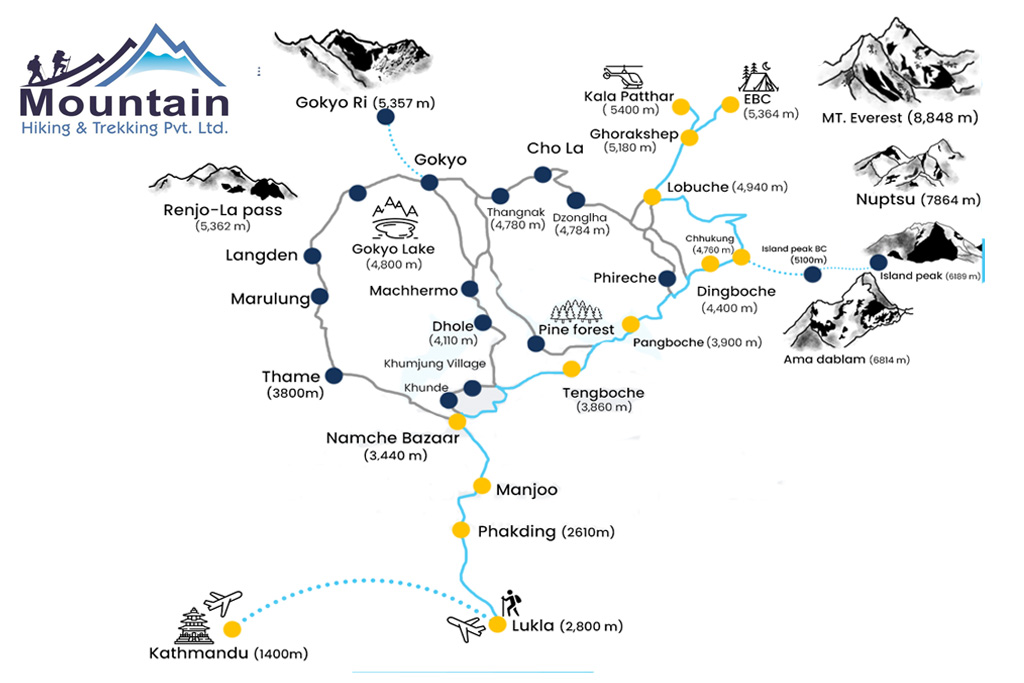
Route Map
Trip FAQs
What is the Everest Marathon Trek?
The Everest Marathon Trek is a trekking adventure in the Everest region of the Himalayas, culminating in participation in the world's highest marathon. The trek takes you through iconic landmarks like Everest Base Camp and offers breathtaking views of the world's highest peaks.
When is the best time to do the Everest Marathon Trek?
The best time for the Everest Marathon Trek is during the pre-monsoon (spring) season from April to early June and the post-monsoon (autumn) season from late September to November. These months offer stable weather and clear views.
How challenging is the trek?
The trek is considered challenging due to its high-altitude nature. It involves several days of walking at elevations above 3,000 meters (9,842 feet), requiring acclimatization. Participants should be in good physical condition and adequately prepared for high-altitude trekking.
What is the altitude of Everest Base Camp?
Everest Base Camp is located at an altitude of 5,364 meters (17,598 feet). Trekkers spend several days acclimatizing to the increasing altitude before reaching this point.
How high is Kala Patthar, and why is it a highlight?
Kala Patthar, a notable viewpoint, is located at an altitude of 5,545 meters (18,192 feet). It offers stunning panoramic views of the Everest massif, including a close-up view of Mount Everest. Many trekkers climb Kala Patthar for a breathtaking sunrise or sunset experience.
What is the Everest Marathon route?
The Everest Marathon starts from Everest Base Camp and descends to lower elevations, finishing in Namche Bazaar. The route passes through rugged mountain terrain, glaciers, and traditional Sherpa villages
Do I need prior marathon experience to participate?
While prior marathon experience is beneficial, it's not mandatory. However, participants should have a good level of fitness and endurance, as the marathon takes place at high altitude.
How do I prepare for high-altitude trekking?
Adequate preparation involves physical conditioning, cardiovascular training, and strength exercises. It's crucial to acclimatize gradually during the trek, staying hydrated and allowing your body to adjust to the altitude.
hat is the duration of the Everest Marathon Trek?
The duration varies depending on the specific itinerary, but a typical trek lasts around 16 to 18 days. This includes trekking to Everest Base Camp, participating in the marathon, and returning to lower elevations.
Is a permit required for the Everest Marathon Trek?
Yes, trekkers need permits to enter the Everest region. The required permits include the Sagarmatha National Park Permit and the TIMS (Trekkers' Information Management System) card.