Ama Dablam Base Camp Trekking
Trip Facts
 Duration
12
Duration
12
 Trip Grade
Moderate
Trip Grade
Moderate
 Country
Nepal
Country
Nepal
 Maximum Altitude
5,800 metres (19,029 ft)
Maximum Altitude
5,800 metres (19,029 ft)
 Group Size
2-16 People
Group Size
2-16 People
 Starts
Kathmandu
Starts
Kathmandu
 Ends
Kathmandu
Ends
Kathmandu
 Activities
Trekking
Activities
Trekking
 Best Time
Sep, Oct, Nov, Dec, Feb, Mar, Apr, May
Best Time
Sep, Oct, Nov, Dec, Feb, Mar, Apr, May
Overview
This is one of the most popular treks in the world, through the land of the Sherpa people, with views of the world’s great 8,000 meters peaks. It hold its place on the must do list for lot of people. This trek offers you a compact insight into the beautiful land of Nepal, the tallest mountains in the world including Ama Dablam and Lhotse, traditional Sherpa’s villages, Buddhist monasteries, and snow-capped peaks and offers viewing of a diverse range of wildlife and vegetation.
This trek offers you the opportunity to explore the lifestyle of the Himalayan people, their religion, customs and traditions. Alluring birds like the golden eagle, snow pigeon, red-billed and yellow-billed choughs and flowers like rhododendron, magnolias, blue pine, chir pine, juniper and hemlock make the trekking a delight for nature lovers.The Ama Dablam Base Camp is a breathtaking trek through this mountainous region to the foot of one of the more beautiful mountains in the Himalaya.
Tour Highlights
Explore the stunning Ama Dablam Base Camp trek in the Everest region, featuring breathtaking views of Ama Dablam and surrounding Himalayan peaks. Trek through beautiful Sherpa villages like Namche Bazaar and Pangboche, experiencing rich local culture and warm hospitality. Reach Ama Dablam Base Camp at high altitude, enjoy scenic landscapes, and stay in cozy teahouses along the trail, making it a perfect blend of adventure, nature, and culture.
- Stunning views of Ama Dablam and Himalayan peaks
- Trek to Ama Dablam Base Camp (4,576m)
- Explore Namche Bazaar u2013 Sherpa hub
- Experience Sherpa culture and traditions
- Walk through scenic villages like Pangboche
- Moderate trekking adventure (no technical climbing required)
- Stay in traditional teahouses and lodges
- Best seasons: Spring & Autumn
- High-altitude trekking experience with acclimatization
- Perfect mix of nature, culture, and adventure
Why Choose US?
Travel with us for a safe, reliable, and memorable trekking experience in Nepal. We offer 24/7 customer support and prioritize your safety with advanced medical and rescue equipment on every trek. As a certified operator under the Nepal Tourism Board, Trekking Agencies' Association of Nepal, and Nepal Mountaineering Association, we ensure trusted and professional service. With no hidden fees, free airport transfers, cultural cooking classes, and live updates during your trek, we provide a smooth journey that connects you with nature, culture, and local communities.
- 24/7 customer support
- Strong safety system with emergency equipment
- Certified and trusted tour operator (NTB, TAAN, NMA)
- No hidden costs or extra fees
- Free airport pick-up and drop-off
- All taxes and permits included
- Free Nepali & Sherpa cooking classes
- Social media updates during trek
- Experienced local Sherpa team
- Focus on safety, culture, and comfort
Tour Itinerary
Day 1: Arrival In Kathmandu transfer to hotel

Arrival in Kathmandu, transfer to the hotel( B/B plan )
Day 2: Fly from Kathmandu to Lukla
 Accommodation: Phakding
 Maximum Altitude: 2,886 m
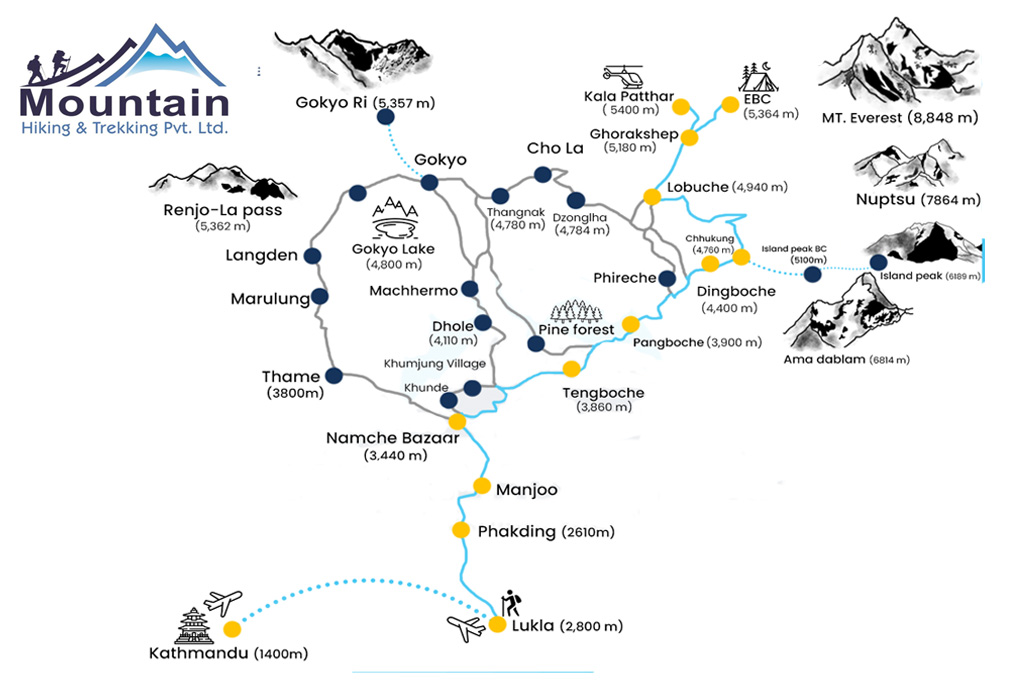
Fly from Kathmandu to Lukla (2886m.) takes about 35 minutes. Trek from Lukla to Phakding (2640 m.) takes approximately four hours. ( B/B ) plan
You begin your trek from Lukla, following a gentle climb up the mountainside on the left bank of the Dudh Koshi River. Nupla (5885m), which can be seen in the distance on the opposite bank, is a peak atop the Kongde Ridge. You descend a mountainside path that merges into your route to Everest, with views to a valley to your right, and at its far end, Kusum Kang (6367m.) Stay ovenight at the lodge.
Day 3: Trek from Phakding to Namche Bazaar
 Travel Duration: 5 hours
Accommodation: Namche Bazaar
Maximum Altitude: 3440m
Travel Duration: 5 hours
Accommodation: Namche Bazaar
Maximum Altitude: 3440m
Trek from Phakding to Namche Bazaar (3440m.) takes approximately five hours.
Namche Bazar (3440m) is surrounded on three sides by mountain ranges and opens out only where it faces the Bhote Koshi. Stay ovenight at the lodge.
Day 4: A day for rest at Namche Bazaar
Accommodation: Namche Bazaar
Maximum Altitude: 3,800 m
A day for rest at Namche Bazaar (3440m.) for acclimatization.
It is an ideal place to spend a rest day for acclimatization to the high altitude before heading off towards Tyangboche. For acclimatization, you walk up to Khumjung, where you can visit a monastery. You can also enjoy the splendid views of Everest, Ama Dablam, Thamserku, Nuptse, Lhotse, Tawoche, and Kwangde, and so on. Or you can take an hour's walk up to Syangboche (3800m.) where Everest View Hotel is situated above Namche for an outstanding view of Everest, Nuptse, Lhotse, Ama Dablam, Thamserku, and Kusum Kangaru. Stay ovenight at the lodge/camp.
Day 5: Trek from Namche Bazaar to Tyangboche
Accommodation: Tengboche
Maximum Altitude: 3,867 m
Trek from Namche Bazaar to Tyangboche (3867m.) takes about five hours.
As you climb through the forested zone, the incline eases and a splendid view appears. You continue climbing the mountainside diagonally until you come to the stone gate built by lamas which marks your entry into Tyangboche (3860m). Stay ovenight at lodge/camp.
Day 6: Trek from Tyangboche to pangboche
Accommodation: Pangboche
Maximum Altitude: 3,985m
Trek from Tyangboche to pangboche it takes about 2 and half hours.
After breakfast, trek to Pangbuche for about 2 hours. As you trek along, you see the deer, birds, and other wildlife animals. Enjoy and appreciate the beautiful hododendron, the river, and the views of Ama Dablam, Lhotse, and other mountains. Stay ovenight at the lodge.
Day 7: Trek from pangboche to Ama Dablam Base Camp
Accommodation: Pangbuche
Maximum Altitude: 4,572m
Trek from pangboche to Ama Dablam Base Camp (4572 m.).it takes about 6 hours
You choose a back country route away from the tourist trail, traveling through tiny yak herder settlements and over countless moraines as you circle around the base of Ama Dablam. Base camp sits in a beautiful grassy area at 14,500 feet. And back to Pangbuche ovenight at lodge.
Day 8: Trek from pangboche to Namche
Accommodation: Namche Bazaar
Maximum Altitude: 3,985m
Trek from pangboche to NamcheStay ovenight at lodge
The walk from pangboche is mostly downhill on the main busy trail with a few steep climbs for an hour from the bridge at Phungitenga, near to Shanasha. The walk to Namche is very scenic on a long winding path. En route you will visit traditional villages of Khumjung and Khunde. From Khumjung village another 30 minutes walk brings you to the village of Khunde, where you can visit the Khunde Hospital funded by Sir Edmund Hillary Trust. After Khunde, a scenic and pleasant walk brings you to Namche for an ovenight stay. Stay ovenight at lodge.
Day 9: Trek from Namche Bazaar to Lukla
Accommodation: Lukla
Maximum Altitude: 3,440
Trek from Namche Bazaar to Lukla (2886 m.) it takes about six hours.
The last day of your trek leads from Namche Bazaar via Monjo to Lukla. The trek is pleasant, except for few short uphill climbs and then down to the Bhote- Koshi River crossing it three times. The last uphill climb of 45 minutes will bring you to Lukla for your ovenight stay. Stay ovenight at lodge.
Day 10: Fly from Lukla to Kathmandu
Travel Duration: 35 min
Accommodation: Kathmandu
Fly from Lukla to Kathmandu takes 35 minutes.
You take an early moning flight back to Kathmandu. Stay ovenight at hotel accommodation in Kathmandu.
Day 11: Final departure to your home

Final departure to your home
Tour Includes
What's Included?
- Airport transfers (arrival & departure) by private car
- 3 nights hotel in Kathmandu (B/B plan, twin sharing)
- Kathmandu u2194 Lukla u2194 Kathmandu domestic flights
- Licensed English-speaking Sherpa guide + porter (1 porter for 2 people)
- All trekking permits (Sagarmatha National Park, TIMS, etc.)
- Full board meals during trek (breakfast, lunch, dinner)
- Teahouse/lodge accommodation during trek
- Insurance, wages, and support for guide & porters
- First aid kit and basic medical support
- Trekking gear (sleeping bag, down jacket, walking stick, water bottle)
- Trip completion certificate
What's Excluded?
- Nepal visa fee + passport photos
- Travel & health insurance (including helicopter rescue)
- Meals in Kathmandu (lunch & dinner)
- Drinks (alcoholic, soft drinks, bottled water, desserts)
- Tips for guide and porter
- Hot showers and battery charging in some lodges
- Costs from flight delay/cancellation or illness
- Emergency helicopter rescue or weather-related costs
- Any personal expenses not mentioned in u201cincludesu201d
Packing List
 Daily Wear
Daily wear should be comfortable and suitable for changing weather conditions during the trek. It includes basic clothing like shirts, trousers, socks, and footwear for everyday use.
- Comfortable T-shirts and shirts
- Lightweight trousers (no jeans)
- Warm hat / sunhat
- Socks (wool + cotton)
- Walking shoes / sandals
 Trekking Gear
Trekking gear is essential for protection against cold, wind, and rain in high-altitude conditions. It includes layered clothing, backpacks, sleeping gear, and other equipment needed for safety and comfort.
- Waterproof jacket & pants
- Fleece / warm layers
- Thermals (upper & lower)
- Backpack (25u201330L) + duffel bag
- Sleeping bag (provided)
- Headlamp / torch
- Water bottle (1L+)
 Personal Care
Personal care items are important for hygiene, health, and protection during the trek. They include first aid supplies, sun protection, insect repellent, and basic toiletries.
- First aid kit
- Sunscreen & lip balm
- Insect repellent
- Wet wipes
- Rehydration powder
- Small towel
Essential Information
Advices for Ama Dablam Base Camp Trek
Physical Fitness: Engage in regular cardio exercises such as running, cycling, and swimming.
Include strength training and hiking with a loaded backpack to simulate trekking conditions.
Altitude Acclimatization: Acclimatization is crucial. Follow the itinerary and do not rush.
Stay hydrated and avoid alcohol and smoking.
Gear and Equipment: Invest in high-quality trekking boots, preferably waterproof and well broken-in.
Bring layered clothing to adapt to changing weather conditions.
Essential items include a good quality sleeping bag, trekking poles, a sturdy backpack, and a down jacket.
Pack a comprehensive first aid kit, including medications for altitude sickness, pain relief, and gastrointestinal issues.
On the Trek: Stay Hydrated: Drink plenty of water (3-4 liters per day) to help with acclimatization.
Consider carrying water purification tablets or a filter.
Pace Yourself: Walk at a steady, comfortable pace to conserve energy.
Take regular breaks and listen to your body.
Nutrition: Eat a balanced diet with plenty of carbohydrates for energy.
Carry high-energy snacks like nuts, dried fruit, and energy bars.
Respect Local Culture: Be respectful of the local customs and traditions.
Ask for permission before taking photographs of people.
Safety: Always trek with a guide or in a group for safety.
Inform someone about your trekking plan and expected return date.
Be aware of signs of altitude sickness (headache, nausea, dizziness) and take necessary actions if symptoms occur.
Weather and Conditions:
Best Time to Trek: The best seasons are pre-monsoon (March to May) and post-monsoon (September to November).
Be prepared for cold nights and variable weather.
Weather Conditions: Mountain weather can change rapidly. Always carry rain gear and warm clothing. Check the weather forecast regularly.
Logistics:
Permits: Obtain the Sagarmatha National Park Permit and TIMS card.
Carry copies of your permits and passport.
Accommodation: Tea houses are available along the route. Book in advance during peak seasons.
Bring a sleeping bag as the provided bedding may not be sufficient.
Flights: Lukla flights can be delayed due to weather. Plan for potential delays in your itinerary.
Environmental Responsibility:
Leave No Trace: Dispose of waste properly and avoid using single-use plastics.
Respect the natural environment and wildlife.
Support Local Economy: Purchase goods and services from local vendors.
Tip guides and porters fairly.
Communication:
Connectivity: Mobile network coverage is limited. Consider carrying a satellite phone.
Wi-Fi is available at some tea houses but may be expensive and slow.
Travle insurance
Travel Insurance is mandatory for all customers who looking to travel in Nepal with the Mountain Hiking & Trekking .The Travel Insurance must cover both the evacuation and medical cost
There are many insurance companies that offer travel insurance services over the internet. You can choose from a wide variety of insurance companies as per your convenience. Especially when it comes to trekking in Nepal, there is always a narrow chance of minor health issues, injuries and most importantly – altitude sickness.
It is essential that you prefer an insurance rule that covers the cost of the helicopter rescue from the mountains in case of main accidents and delicate mountain sickness (AMS). through such great cases of an emergency evacuation, a helicopter service is the only way out of the mountains. This includes a rescue team for both – ground evacuation and rescue. Which is why we need your travel insurances to cover the cost of helicopter services and evacuation from the Himalayas
It is forever recovered to be safe than apologetic.
Before you plan your trip with Mountain Hiking & Trekking do make sure that your travel insurance covers all the costs mentioned above from a reliable company.
Route Map