Ama Dablam Expedition
Trip Facts
 Duration
27
Duration
27
 Trip Grade
Strenuous
Trip Grade
Strenuous
 Country
Nepal
Country
Nepal
 Maximum Altitude
6,812 meters (22,349 feet)
Maximum Altitude
6,812 meters (22,349 feet)
 Group Size
2
Group Size
2
 Starts
Kathmandu
Starts
Kathmandu
 Ends
Kathmandu
Ends
Kathmandu
 Activities
Trek and Climb
Activities
Trek and Climb
 Best Time
March, April, May and Sep, Oct, Nov
Best Time
March, April, May and Sep, Oct, Nov
Overview
The Ama Dablam Expedition is one of the world’s most iconic alpine climbing adventures. Standing at 6,812 meters (22,349 feet) in Nepal’s Everest region, Ama Dablam is often called the “Matterhorn of the Himalayas” because of its elegant pyramid-shaped peak and technical climbing routes.
Unlike trekking peaks, Ama Dablam is a technical mountaineering expedition requiring previous alpine climbing experience, the use of fixed ropes, and proficiency with crampons, ice axes, ascenders, and rappelling techniques.
The mountain’s name comes from the Sherpa language:
- Ama = Mother
- Dablam = Sacred pendant worn by Sherpa women
The long ridges resemble a mother’s protective arms, while the hanging glacier symbolizes the traditional pendant.
Highlights
- 🏔️ Summit Ama Dablam (6,812m) – One of Nepal’s most iconic and beautiful Himalayan peaks
- 🌄 Technical Himalayan Climbing Experience – Challenge yourself on rock, ice, and mixed climbing terrain
- 🏕️ Classic Everest Region Route – Trek through the legendary Khumbu Valley and Sherpa villages
- 🏔️ Spectacular Himalayan Views – Enjoy breathtaking views of Everest, Lhotse, Nuptse, Makalu, and other peaks
- 🧗 Professional Sherpa Support – Climb with experienced guides and high-altitude climbing specialists
- 🏡 Explore Sherpa Culture – Experience traditional villages, monasteries, and Himalayan lifestyles
- ✈️ Scenic Lukla Flight – Fly above stunning mountain landscapes on the gateway to Everest
- 🏕️ Adventure at Ama Dablam Base Camp – Experience a fully organized Himalayan expedition environment
- ❄️ Fixed Rope & High-Altitude Climbing – Test your mountaineering skills on one of Nepal’s most rewarding peaks
- 🌟 Unforgettable Himalayan Achievement – Create a lifetime memory by standing on the summit of Ama Dablam
Itinerary
Day 1: Arrival in Kathmandu (1,400 meters / 4,593 feet)

Arrive in Kathmandu and complete any necessary paperwork.
Attend a briefing with the expedition leader, who provides an overview of the expedition and checks equipment.
Day 2: Preparation for Expedition & briefing in Ministry of Tourism.
Preparation for Expedition & briefing in Ministry of Tourism.
Day 3: fly to Lukla, trek to Phakding (2,800 meters / 9,186 feet)
Moning Flight to Lukla:nnArrive at Tribhuvan Intenational Airport in Kathmandu.
Board an early moning flight to Lukla (2,860 meters / 9,383 feet).
Enjoy a scenic flight with breathtaking views of the Himalayas.nnLanding in Lukla:nnLand at Tenzing-Hillary Airport in Lukla, one of the most thrilling and challenging airports in the world.
Meet your trekking guide and begin preparations for the trek.nnStart Trek to Phakding:nnBegin the trek from Lukla, descending through beautiful villages and terraced fields.
Cross the Dudh Kosi River and follow the trail along its banks.
Pass through the village of Ghat and continue to Phakding (2,652 meters / 8,700 feet).nnLunch Break:nnStop for lunch in Phakding, enjoying local cuisine and taking a break.
The trek from Lukla to Phakding is approximately 8 kilometers and takes around 3-4 hours.nnAftenoon Exploration:nnExplore Phakding and its surroundings in the aftenoon.
Visit the local monasteries or take a short hike for acclimatization.nnNight in Phakding:nnCheck into a teahouse or lodge in Phakding for the night.
Rest and prepare for the trekking days ahead.nnOveniht At Guest House Meals: Breakfast -lunch And Dinner
Day 4: Trek to Namche Bazaar (3,440 meters / 11,286 feet)
Moning Departure:nnStart your trek after breakfast, following the Dudh Kosi River.
Cross several suspension bridges, and enjoy views of waterfalls and pine forests.nnJorsalle Village:nnReach the village of Jorsalle for a lunch break.
Complete necessary entry formalities at the Sagarmatha National Park entrance.nnSuspension Bridge and Ascent:nnCross another iconic suspension bridge and begin a challenging ascent to Namche Bazaar.
The trail offers panoramic views of Everest, Lhotse, and other surrounding peaks.nnNamche Bazaar Arrival:nnArrive in Namche Bazaar, the vibrant and bustling Sherpa market town.
Check into a teahouse or lodge, and take some time to rest.nnAcclimatization Hike:nnIn the late aftenoon, embark on a short acclimatization hike to the Everest View Hotel.
Enjoy stunning views of Everest and the surrounding peaks.nnExplore Namche:nnSpend the evening exploring Namche Bazaar.
Visit the local shops, bakeries, and the Sherpa Cultural Museum.nnNight in Namche Bazaar:nnStay ovenight in Namche Bazaar, nestled in the heart of the Khumbu region.nnOveniht At Guest House
Day 5: Acclimatization day in Namche Bazaar
Spending a rest day in Namche Bazaar is a crucial part of acclimatization during the Everest Base Camp trek. It allows your body to gradually adapt to the increasing altitude and reduces the risk of altitude-related illnesses. Here's how you might spend your rest day in Namche Bazaar:nnAcclimatization Activities:nnHike to Everest View Hotel: One of the popular acclimatization activities is to hike to the Everest View Hotel. This hike provides stunning panoramic views of Mount Everest, Lhotse, Ama Dablam, and other peaks. It's a relatively short hike from Namche Bazaar and offers an excellent opportunity to see the majestic mountains up close.nnExplore Namche Bazaar: Take a leisurely stroll around Namche Bazaar to explore the town's markets, shops, and bakeries. You can shop for souvenirs, interact with the local Sherpa people, and enjoy the unique atmosphere of this vibrant mountain town.nnVisit the Sagarmatha National Park Visitor Center: Spend some time at the visitor center to lean about the local culture, flora, fauna, and the challenges of the Everest region. It's an informative and educational experience that adds depth to your trek.nnRest and Relaxation: Utilize the day to rest, read, or simply relax. Catching up on sleep and allowing your body to recover is essential for a successful treknnOveniht At Guest HouseMeals: Breakfast -lunch And Dinner
Day 6: Trek to Tengboche (3,860 meters / 12,664 feet)
Moning Departure:nnStart your day with breakfast in Namche Bazaar.
Begin the trek, descending to the Dudh Kosi River before ascending towards Tengboche.nnKyajo Ri Viewpoint:nnAlong the trail, enjoy panoramic views of mountains like Ama Dablam and Kyajo Ri.
Take breaks to acclimatize and capture the stunning scenery.nnPhunki Tenga:nnDescend to the village of Phunki Tenga for lunch.
Cross the Dudh Kosi River and start the ascent towards Tengboche.nnTengboche Arrival:nnReach Tengboche, known for its picturesque location with the Tengboche Monastery against the backdrop of Ama Dablam.
Check into a teahouse or lodge, and take some time to rest.nnVisit Tengboche Monastery:nnIn the late aftenoon, visit the famous Tengboche Monastery.
Explore the monastery grounds and enjoy the serene atmosphere.nnEvening at Tengboche:nnSpend the evening in Tengboche, surrounded by the beauty of the Himalayas.
Enjoy dinner with views of the snow-capped peaks.nnNight in Tengboche:nnStay ovenight in Tengboche, immersed in the cultural and natural richness of the Khumbu region.nnOveniht At Guest House Meals: Breakfast -lunch And Dinner
Day 7: Thyanboche - Ama Dablam Base Camp (4,570m / 14,993ft)
Start early from Thyangboche after breakfast.
Begin the trek towards Ama Dablam Base Camp, following the trail through beautiful alpine scenery.
Pass through yak herding areas, rugged terrain, and possibly some snow patches depending on the season.
Enjoy breathtaking views of Ama Dablam and other surrounding peaks along the way.
Arrive at Ama Dablam Base Camp, set up camp, and rest.
Spend the evening admiring the majestic mountain and the surrounding Himalayan landscape.nnOvenight stay at Ama Dablam Base Camp.
Day 8-10: Rest day at Ammadblam base camp
Rest and AcclimatizationnnAfter arriving at Ama Dablam Base Camp, take the first day to rest and acclimatize to the altitude.
Stay hydrated and avoid strenuous activities.
Spend time exploring the base camp surroundings, enjoying the stunning views, and getting accustomed to the environment.nnDay 2: Training and PreparationnnUse the second day to focus on training and preparation for the climb.
Review climbing techniques with your guides and team members.
Practice using climbing equipment such as hanesses, ropes, and crampons.
Discuss the route, climbing strategy, and safety protocols with your team.
Conduct any necessary equipment checks and adjustments.nnDay 3: Final Preparation and RelaxationnnOn the third day, make final preparations for the climb.
Double-check all gear and supplies to ensure everything is in order.
Rest and relax to conserve energy for the upcoming ascent.
Mentally prepare for the climb, visualizing the route and success.
Spend time bonding with your team and enjoying the camaraderie of the expedition.nnGet a good night's sleep to be well-rested for the summit attempt.
Day 11-22: Climbing Period Of Ama Dablam
Day 11-12: Establishing CampsnnAscend from Ama Dablam Base Camp to establish Camp 1 (around 5,700m / 18,700ft).
Spend a day acclimatizing and organizing gear at Camp 1.
Prepare for the climb ahead and assess weather conditions.nnDay 13-15: Climbing to Camp 2nnAscend from Camp 1 to establish Camp 2 (around 6,000m / 19,685ft).
Negotiate technical terrain including steep rock and ice sections.
Set up tents and rest at Camp 2 to acclimatize further.nnDay 16-18: Climbing and AcclimatizationnnMake multiple rotations between Camp 2 and Camp 1 for further acclimatization.
Practice climbing techniques, including fixed-line ascents and rappelling.
Monitor weather forecasts and route conditions for the summit push.nnDay 19-20: Summit Push PreparationnnRetun to Ama Dablam Base Camp to rest and finalize preparations for the summit push.
Check equipment, review the route, and discuss the climbing strategy with your team.
Ensure proper nutrition, hydration, and rest for the upcoming summit attempt.nnDay 21-22: Summit AttemptnnDepart from Ama Dablam Base Camp for the summit push, typically in the early hours of the moning.
Navigate technical terrain, including the challenging Yellow Towerand Mushroom Ridge.
Reach the summit of Ama Dablam (6,812m / 22,349ft) and celebrate your achievement.
Descend safely back to lower camps or Base Camp, depending on conditions and team's pace.
Throughout the climbing period, safety is paramount, and decisions regarding weather, route conditions, and team health will influence the schedule. It's essential to have experienced guides and support staff, as well as proper equipment and communication systems, to ensure a successful and safe ascent of Ama Dablam.
Day 23: Amadblam base camp to namche bazzer
The trek from Ama Dablam Base Camp to Pangboche and Namche Bazaar typically involves descending from the higher altitudes of the base camp and retuning to lower elevations. Here's a suggested itinerary for this part of the jouney:
Continue descending from Pangboche to Tengboche.nnVisit the famous Tengboche Monastery and soak in the serene atmosphere.
Descend further to Phunki Tenga, crossing the Dudh Koshi River.
Begin the ascent back to Namche Bazaar, negotiating uphill sections.
Enjoy the familiar sights of Namche Bazaar as you retun to this bustling town.nnOvenight stay in Namche Bazaar.
Day 24: Namche to Lukla
he trek from Namche Bazaar to Lukla is often the final leg of the Everest Base Camp trek or other treks in the Khumbu region of Nepal. Lukla is the gateway to the Everest region and has an airport, making it a common starting and ending point for trekkers. Here's an overview of the trekking route from Namche Bazaar to Lukla:nnDistance: The distance between Namche Bazaar and Lukla is approximately 18-20 kilometers (11-12 miles), but keep in mind that the actual distance you cover each day might vary due to trail conditions and stops.nnTerrain: The trail includes a mix of well-marked paths, suspension bridges, and forested sections. The trail can be both uphill and downhill, as you navigate thennOvenight at Guest House. Meals: Breakfast - Lunch- Dinner
Day 25: Fly back from Lukla to Kathmandu
Take an early moning flight from Lukla to Kathmandu.
Enjoy the scenic flight back to Kathmandu, taking in aerial views of the Himalayas.
Transfer to your hotel in Kathmandu upon arrival.
Spend the rest of the day relaxing or exploring Kathmandu at your leisure.
Reflect on your trekking adventure and celebrate your achievements.nnOvenight stay in Kathmandu.
Day 26: Free day in kathamandu & Farewell Dinner Party
Spend some time shopping for souvenirs and local handicrafts in places like Thamel or Patan Durbar Square. You can find a variety of items such as traditional clothing, jewelry, pottery, and more.nnRelaxation: Treat yourself to a spa day or massage to unwind after your trek. Many spas and wellness centers in Kathmandu offer various treatments to rejuvenate your body and mind.
In the evening, gather with your trekking team, guides, and fellow trekkers for a memorable farewell dinner party
Day 27: Final departure from Nepal

After Breakfast our compnay represents will transfer to intenational airport for depature
Fixed Departures
Choose a scheduled departure date with live availability and direct booking access.
Private Trip
Looking for a personalized experience? We organize privately guided journeys tailored to your travel dates, group size, and pace. Please fill out the form below to get started.
Includes/Excludes
What's Included?
- 3-star hotel accommodation in Kathmandu on B/B basis
- Ama Dablam climbing permit (group joining basis)
- Lodges/guesthouse accommodation and meals from Lukla to Base Camp
- Expedition staff including guide, cook, and cook helper
- Base camp setup with tents, dining, toilet, table, chair, and sleeping mat (1 tent per climber)
- Climbing Sherpa guide support up to summit with high camp tents (Camp I, II, III)
- Solar panel and battery charging system at base camp
- Fixed ropes, climbing hardware, and technical equipment (ice gear, pitons, etc.)
- Flights Kathmanduu -Luklau-Kathmandu, cargo transport, porter/yak support, insurance, liaison officer, and welcome dinner
What's Excluded?
- International airfare to and from Nepal
- Nepal visa fee
- Personal climbing gear (boots, clothing, sleeping bag, etc.)
- Travel and expedition insurance (including rescue coverage)
- Personal expenses (snacks, drinks, shopping, extra services)
- Tips and gratuities for guides, Sherpas, cooks, and staff
- Climbing Sherpa summit bonus (minimum USD 800) per person
- Extra hotel nights or additional services outside itinerary
- Any costs not mentioned in the cIncludedu section
- Medical & emergency high altitude helicopter rescue insurance (Minimum coverage $50,000 This is mandatory for all the participants.
- US$300/- for cook & kitchen helpers must be hand over in cash at base camp after the successful ascent of the peak also please calculate some tips for trek guide & porters.
Packing List
 Daily Wear
Climbing Equipment
✅ Mountaineering boots (double insulated high-altitude boots)
✅ Crampons compatible with boots
✅ Ice axe (technical/alpine)
✅ Climbing harness
✅ Helmet
✅ Ascender (Jumar)
✅ Descender/belay device
✅ Locking carabiners (2–3)
✅ Non-locking carabiners
✅ Prusik cord
✅ Climbing slings
✅ Trekking poles
✅ Headlamp with extra batteries
✅ Goggles and glacier glasses
✅ Expedition backpack (50–70L)
✅ Daypack (30–40L)
✅ Water bottles and hydration system
Clothing & Personal Gear
✅ Base layers (thermal tops and bottoms)
✅ Mid-layer fleece jacket
✅ Insulated down jacket
✅ Waterproof and windproof jacket
✅ Waterproof trekking pants
✅ High-altitude climbing suit/down suit
✅ Softshell climbing pants
✅ Warm trekking trousers
✅ T-shirts and hiking shirts
✅ Fleece hat/beanie
✅ Balaclava or neck warmer
✅ Sun hat/cap
✅ Gloves (inner gloves + insulated high-altitude gloves)
✅ Warm socks (wool/synthetic)
✅ Underwear and personal clothing
Sleeping & Camp Gear
✅ Four-season sleeping bag (-20°C to -30°C recommended)
✅ Sleeping bag liner
✅ Headlamp
✅ Personal towel
✅ Sleeping clothes
✅ Duffel bag (expedition gear bag)
✅ Dry bags/plastic bags for waterproof packing
Trekking Essentials
✅ Trekking shoes/boots
✅ Lightweight sandals/slippers
✅ Sunglasses (UV protection)
✅ Sunscreen (SPF 50+)
✅ Lip balm with SPF
✅ Water purification tablets/filter
✅ Personal snacks (energy bars, chocolates, nuts)
✅ Travel wallet and passport pouch
Personal Medical & Toiletries
✅ Personal first aid kit
✅ Personal medicines
✅ Diamox (Acetazolamide) if prescribed
✅ Pain relievers and basic medication
✅ Hand sanitizer
✅ Toothbrush and toothpaste
✅ Wet wipes and biodegradable soap
✅ Toilet paper
✅ Personal hygiene items
Electronics & Documents
✅ Passport (valid for at least 6 months)
✅ Nepal visa
✅ Travel insurance documents (including helicopter evacuation coverage)
✅ Climbing permit documents
✅ Passport-size photos
✅ Mobile phone
✅ Camera (optional)
✅ Power bank
✅ Universal travel adapter
✅ Extra batteries
Recommended Personal Accessories
✅ Expedition watch
✅ Pocket knife/multi-tool
✅ Repair kit (tape, sewing kit, spare straps)
✅ Small backpack rain cover
✅ Earplugs
✅ Notebook and pen
Important Note:
Ama Dablam is a technical 6,812m peak. Climbers should bring high-quality mountaineering equipment suitable for extreme cold, snow, and mixed climbing conditions. Some expedition equipment may be provided by Mountain Hiking & Trekking, while personal climbing gear must be arranged by each climber.
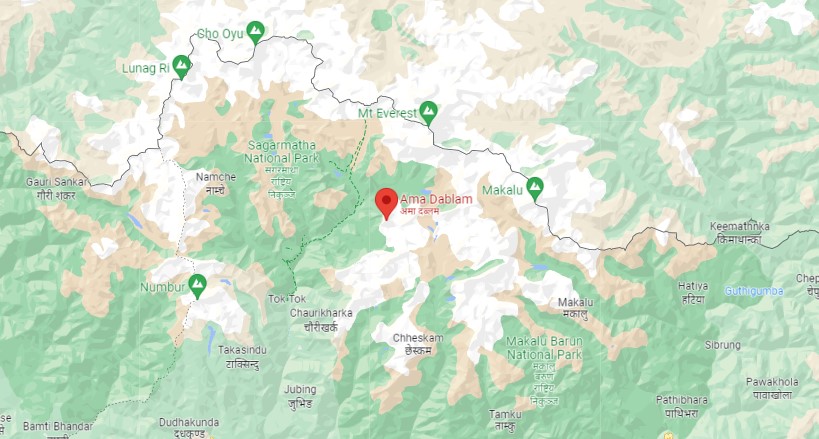
Route Map
FAQs
Where is Ama Dablam located?
Ama Dablam (6,812m/22,349ft) is located in the Everest (Khumbu) region of Nepal, south of Mount Everest.
How difficult is the Ama Dablam Expedition?
Ama Dablam is a technically challenging expedition requiring rock, ice, and mixed climbing experience.
How long does the Ama Dablam Expedition take?
Most expeditions take 28u201332 days, including acclimatization, climbing, and contingency days.
What is the best season to climb Ama Dablam?
The best climbing seasons are spring (Aprilu2013May) and autumn (Octoberu2013November).
Do I need previous climbing experience?
Yes. Previous experience climbing peaks above 6,000m and knowledge of fixed ropes, crampons, and ice axes are highly recommended.
What permits are required for Ama Dablam?
You need an Ama Dablam climbing permit, Sagarmatha National Park Entry Permit, and the Khumbu Pasang Lhamu Rural Municipality Permit.
What is the highest camp on Ama Dablam?
The highest camp is usually Camp III (around 6,300m) before the summit push.
Is oxygen required for Ama Dablam?
Supplemental oxygen is generally not required, but some climbers choose to use it for added safety.
What is the success rate of Ama Dablam?
The success rate depends on weather, fitness, and experience, but many well-prepared climbers successfully reach the summit each season.
. How fit should I be for the expedition?
You should have excellent cardiovascular fitness, strength, endurance, and previous high-altitude trekking or climbing experience.
Is travel insurance mandatory?
Yes. Comprehensive travel insurance covering high-altitude mountaineering, helicopter evacuation, and medical emergencies is mandatory.
What accommodation is provided?
Accommodation includes hotels in Kathmandu and teahouses and expedition tents during the climb.
What meals are included during the expedition?
Nutritious breakfast, lunch, and dinner are provided throughout the trek and expedition, with high-energy meals at base camp.
Is there a rescue service available?
Yes. In emergencies, helicopter evacuation can be arranged if covered by your travel insurance.
Why climb Ama Dablam?
Ama Dablam is considered one of the world's most beautiful mountains, offering a rewarding technical climb, spectacular Himalayan scenery, and an unforgettable mountaineering experience.