Everest Expedition
Trip Facts
 Trip Grade
Strenuous
Trip Grade
Strenuous
 Maximum Altitude
29,032 feet (8,849 meters)
Maximum Altitude
29,032 feet (8,849 meters)
 Starts
Kathmandu
Starts
Kathmandu
 Ends
Kathmandu
Ends
Kathmandu
 Best Time
, Apr , May jun
Best Time
, Apr , May jun
Overview
The Mount Everest is the highest peak of the World 29028 ft. (8848 m.) through which the climbing toppers feel themselves as the most proud and adventurous personnel of the World. Sir Edmond Hillary and Late Tenzing Norgay Sherpa first climbed this peak on May 29, 1953 , after a long time’s effort.
Everest Base camp is situated on the north of Khumbu glacier at a height of 18000ft. All the international Mt. Everest climbers assemble here during the starting and at the ending time of their climbing. Normally the climbing duration of this expedition lasts for 90 days. All the climbers who mass there at the base camp seem really busy with excitement for the preparation of their expedition to reach the summit.
Some climbers climb this mountain on their own risk without any climbing Sherpa guide; and some climbers go with their own climbing Sherpa guide. Most of the teams carry their own Internet, Satellite phone, Medical Doctor and rest of the modern requirements.
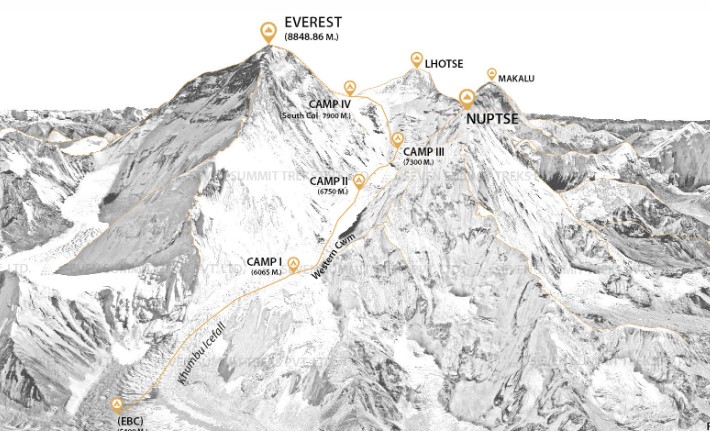
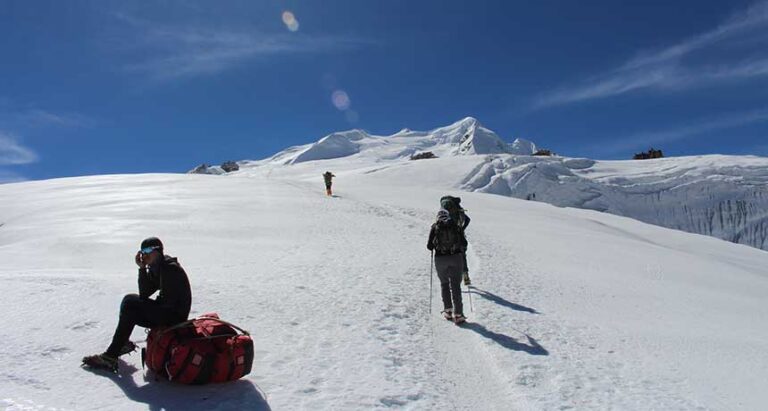
After the Base camp, we have to cross crevasses, Seracs and ice blocks. Similarly we should face the way up having Chunks of ice as large as our houses where we should use fixed ropes and aluminum ladders to climb ahead to camp 1st 6400m.
Camp 1: 20000ft. (6,400m)
This camp 1 is situated at the flat area of endless snow deep crevasses and mountain walls. Because of the Sun’s reflection from this place we get a warm and heated ambience at this place. In the night we listen to the deep murmuring cracking sounds of crevasses beneath our tent. These are the areas where we have to walk to reach camp 2.
Camp 2. 21000ft. (6,750m)
This camp 2 is situated at the height of the 21000ft, which is located at the foot of the icy mount Lhotse wall though where we have to go ahead. Weather here is good but bad clouds roll in from the low range of the Himalayan valleys to the bottom of our camp two. But the wind here sometimes seems very violent enough to destroy our tents. After climbing these palaces we reach camp 3.
Camp 3. 22300ft. (7,100m)
Camp 3 is located at the height of 22300ft, adjoining the Lhotse wall. After climbing the 4000ft. Lhotse wall by using fixed rope and with prior acclimatization it leads us to camp 4. Also on the way we have to ascend the steep allow bands (loose, down -sloping and rotten limestone). From their crossing short snowfield the route moves ahead up the Geneva Spur to the east before finishing the flats of the south col. (Another wells name meaning Saddle of pass). Oxygen should probably be used above base camp 3 incase of need to the climbers.
Camp 4. 26000ft. (8,400m)
Now we are on camp 4 which is located at the height of 26000ft; it is the last camp of the Expedition. From here the summit is about 500m, distance far. This is the final and dangerous part of the climbing. This place is besieged by ferocious and violent winds. The normal best way to reach the summit is via the narrow South – East Ridge and it precedes the South Summits 28710ft.
From here the way is easy to reach at the summit of the Everest 29028ft; and late Sir Edmond Hillary and l Tenzing Norge Sherpa used this route in 1953.
Highlights
Highest Peak in the World:
Everest, standing at 8,848 meters (29,029 feet), is the highest peak on Earth. Climbing it is a significant accomplishment and a dream for many mountaineers.
Challenging Climbing Routes:
Everest offers several challenging climbing routes, with the South Col route from Nepal being the most popular. The ascent involves technical climbing, icefalls, crevasses, and exposure to extreme weather conditions.
Cultural Experience:
The journey to Everest Base Camp involves trekking through the beautiful Khumbu region, providing an opportunity to experience the unique Sherpa culture and visit monasteries along the way.
Base Camp Atmosphere:
Everest Base Camp becomes a vibrant and bustling community during the climbing season, with expedition teams from around the world. The camaraderie among climbers, support staff, and the unique atmosphere create a memorable experience.
Acclimatization Process:
Climbers undergo a strategic acclimatization process, spending weeks at various altitudes to adapt their bodies to the thin air. This process helps reduce the risk of altitude-related illnesses during the final ascent.
Summit Push:
The summit push is the culmination of weeks of preparation. Climbers push their limits during the final ascent, often leaving for the summit from the high camps late in the evening to reach the top around dawn.
Panoramic Views:
The summit of Everest offers breathtaking panoramic views of the surrounding Himalayan peaks, including Lhotse, Nuptse, Makalu, and Cho Oyu. The sight from the top of the world is awe-inspiring.
Personal Growth and Challenge:
Climbing Everest is a test of physical and mental endurance. It requires determination, resilience, and the ability to cope with extreme conditions, making it a profound journey of personal growth and self-discovery.
Unique Challenges:
Climbers face unique challenges such as the Khumbu Icefall, Hillary Step, and the unpredictable weather of the "Death Zone" above 8,000 meters.
Cultural Impact:
Successfully summiting Everest often has a lasting impact on climbers' lives. It becomes a symbol of perseverance, achievement, and overcoming immense challenges.
Historical Significance:
Everest has a rich mountaineering history, and its summits are the result of decades of exploration and attempts by numerous climbers. Being part of this historical legacy adds to the significance of the climb.
Includes/Excludes
What's Included?
- Airport pick-up and drop-off in Kathmandu
- 3 nights hotel accommodation in Kathmandu on B/B plan
- All domestic flights with airport taxes included
- Everest expedition climbing permit and all government taxes
- National Park entry and Khumbu Icefall route fees
- Full board high-altitude meals during trek and climb
- Base camp staff including cook, helpers, leader, and manager
- Experienced expedition guides and porters with wages, insurance, and equipment
- Complete base camp setup including tents, dining, kitchen, and toilet facilities
- Emergency oxygen, regulator, masks, satellite phone, and high-altitude rescue equipment
What's Excluded?
- Lunch and dinner in Kathmandu (except farewell dinner)
- Personal climbing gear (boots, harness, crampons, helmet, etc.)
- International airfare to and from Kathmandu
- Travel and expedition insurance including evacuation coverage
- Personal expenses (laundry, calls, internet, etc.)
- Nepal visa fee
- Tips and gratuities for guides, Sherpas, and staff
- Extra oxygen beyond provided quota
- Additional accommodation or meals not in itinerary
- Summit bonus for Sherpas (minimum USD 1500) and optional personal climbing guide cost
Essential Information
Travel insurance
Travel Insurance is mandatory for all customers who looking to travel in Nepal with the Mountain Hiking & Trekking .The Travel Insurance must cover both the evacuation and medical cost
There are many insurance companies that offer travel insurance services over the internet. You can choose from a wide variety of insurance companies as per your convenience. Especially when it comes to trekking in Nepal, there is always a narrow chance of minor health issues, injuries and most importantly – altitude sickness.
It is essential that you prefer an insurance rule that covers the cost of the helicopter rescue from the mountains in case of main accidents and delicate mountain sickness (AMS). through such great cases of an emergency evacuation, a helicopter service is the only way out of the mountains. This includes a rescue team for both – ground evacuation and rescue. Which is why we need your travel insurances to cover the cost of helicopter services and evacuation from the Himalayas
It is forever recovered to be safe than apologetic.
Before you plan your trip with Mountain Hiking & Trekking do make sure that your travel insurance covers all the costs mentioned above from a reliable company.
Suggested Travel Insurance Companies:
https://www.mondial-assistance.ca
https://www.travelassistnetwork.com/
Route Map