Everest View Helicopter Tour
Trip Facts
 Trip Grade
Moderate
Trip Grade
Moderate
 Country
Nepal
Country
Nepal
 Maximum Altitude
5,545 meters (18,192 feet),
Maximum Altitude
5,545 meters (18,192 feet),
 Starts
Lukla
Starts
Lukla
 Ends
Lukla
Ends
Lukla
 Best Time
March, April, May And Sep, Oct ,Nov
Best Time
March, April, May And Sep, Oct ,Nov
Overview
Experience the breathtaking beauty of Mount Everest on a luxury Everest View Helicopter Tour from Kathmandu. This scenic helicopter journey takes you close to the world’s highest mountain, with a short landing at Kalapatthar (5,545 m)—the most famous viewpoint for panoramic Everest views. After enjoying the Himalayan scenery, the helicopter flies to Everest View Hotel (3,880 m) for a delicious breakfast with spectacular views of Mount Everest and surrounding peaks before returning via Lukla to Kathmandu on the same day.
This is the perfect one-day adventure for travelers who want to experience Everest without a long trek.
Highlights
- 🚁 Scenic helicopter flight from Kathmandu to the Everest region
- 🏔️ Short landing at Kalapatthar (5,545 m) for Everest views and photos
- 🌄 Stunning views of Mount Everest, Lhotse, Nuptse, Ama Dablam, and Himalayan peaks
- ☕ Breakfast at the famous Everest View Hotel
- ✈️ Visit Lukla Airport during the helicopter journey
- 📸 Luxury, time-saving Everest experience in a single day
- 🏨 Return to Kathmandu on the same day
Why Choose Us
- No long trekking required
- Ideal for families, seniors, and luxury travelers
- Experience Everest in a single day
- Safe, comfortable, and time-saving adventure
- Professional pilots and experienced mountain crew
Itinerary
Day 1: Early Morning: Hotel Pickup & Flight Preparation

Our team will pick you up from your hotel in Kathmandu and transfer you to the helicopter terminal.
Kathmandu - Everest Region - Kalapatthar Landing
Fly east towards the Everest region with amazing aerial views of the Himalayan range. The helicopter lands briefly at Kalapatthar (5,545 m), where you can enjoy incredible views of Mount Everest and take memorable photographs.
Kalapatthar -Everest View Hotel Breakfast Stop
After the Kalapatthar experience, continue the flight to Everest View Hotel for a Himalayan breakfast overlooking Mount Everest and the Khumbu Valley.
Everest View Hotel -Lukla -Kathmandu
After breakfast, fly back via Lukla Airport and enjoy more mountain scenery before landing in Kathmandu. Our vehicle will transfer you back to your hotel.
Total Duration: Approximately 4-5 hours (depending on weather and flight conditions)
Includes/Excludes
What's Included?
- Private hotel pickup and drop-off in Kathmandu
- Helicopter flight Kathmanduu2013Everest Regionu2013Kathmandu
- Kalapatthar landing (short stop)
- Breakfast at Everest View Hotel
- All airport and government permits Passenger insurance Experienced pilot
What's Excluded?
- Personal expenses
- Extra beverages and additional meals
- hotel in kathamdu
Essential Information
The following is a list of clothing and accessories that we recommend for treks and climbs in Nepal. This is not intended to be a comprehensive clothing and equipment list, rather it is intended to act as a reminder of those items that we feel are essential for your comfort and convenience. However we recognize that you may have your own personal preferences for clothing which may be equally as suitable.
For Head
Sun hat or scarf
Light balaclava or warm fleece hat
Sunglasses with UV protection
Upper Body
T-shirts (2)
Light and expedition weight thermal tops
Fleece jacket or pullover
Fleece Wind-Stopper jacket (optional)
Waterproof (preferably breathable fabric) shell jacket
Down vest and/or jacket (optional)
For Hands
Lightweight gloves
Heavyweight gloves or mittens with a waterproof shell outer
Lower Body
Underwear (4)
Hiking shorts (2)
Lightweight cotton long pants
Light and expedition weight thermal bottoms
Fleece or wool pants
Waterproof (preferably breathable fabric) shell pants
For Feet
Thin, lightweight inner socks (4)
Thick, warm wool hiking socks (4)
Hiking boots with spare laces
Camp shoes (sneakers and/or sandals)
Gaiters (Optional)
Accessories
Sleeping bag rated -10C. to -20C (Depending on trekking region)
Headlamp (e.g. Petzl Zoom) with spare bulbs and batteries
Small pad or combination lock-to-lock trek bag
Basic First Aid Kit (see Health and Medicinal)
Large plastic bags - for keeping items dry inside trek bags
Daypack (approximately 2500 to 3000 cubic inches)
Thermarest sleeping pad (Only Camping Trek)
Water bottles (2)
Toiletries
Small wash towel
Optional items
Binoculars
Books (Highly Recommended)
Compass
Playing cards/backgammon/chess set
Nepal Visa Information
All foreigners need visas, except people from India.
Visa Types: Nepal offers various types of visas, including tourist visas, business visas, student visas, and more.
Tourist Visa: Tourist visas are typically the most common type for travelers visiting Nepal for leisure or sightseeing purposes.
Visa on Arrival: Many nationalities can obtain a tourist visa upon arrival at Tribhuvan International Airport in Kathmandu and other entry points. You'll need to fill out a visa application form and provide a passport-sized photo along with the visa fee in USD or equivalent.
Online Visa Application: Some nationalities are eligible to apply for a tourist visa online through the Nepal Immigration website. https://nepaliport.immigration.gov.np/This allows you to complete the visa application in advance and obtain a visa approval letter, which you present upon arrival to receive your visa.
Print the Approval Letter: Print out the visa approval letter, as you'll need to present it upon arrival in Nepal along with your passport. Make sure to carry a copy of the approval letter with you during your travel.
Obtain Visa Stamp Upon Arrival: Upon arrival at Tribhuvan International Airport in Kathmandu or other entry points in Nepal, present your passport, printed visa approval letter, and any other required documents to the immigration officer. They will stamp your passport with the tourist visa, allowing you to enter Nepal.
Duration and Extension: Tourist visas are typically issued for 15, 30, or 90 days. Extensions are possible for up to 150 days per visa year (January-December) at the Immigration Office in Kathmandu and certain other locations.
Visa Fees: The visa fee varies depending on the duration of your stay. There may be additional fees for visa extensions.
15 Days – USD 30
30 Days – USD 50
90 Days – USD 125
Passport Validity: Your passport should be valid for at least six months beyond the intended date of departure from Nepal.
Travel Insurance: Purchase travel insurance that covers high-altitude trekking and helicopter evacuation in case of emergencies. Make sure to carry a copy of your insurance policy and emergency contact information.
Be Flexible: Weather conditions in the Himalayas can be unpredictable. Be prepared for flight delays or cancellations due to poor weather conditions in Lukla, which can affect your trekking schedule. Stay flexible and patient.
Advices for Everest Base Camp Trek
Train Beforehand: Prepare yourself physically by doing cardio exercises and hiking regularly. This will help build your stamina and endurance for the trek, which involves long hours of walking each day.
Acclimatize Properly: Take your time to acclimatize to the high altitude. It's essential to ascend slowly and spend a few days at intermediate altitudes to allow your body to adjust to the reduced oxygen levels.
Stay Hydrated and Eat Well: Drink plenty of water throughout the day to prevent dehydration, but avoid alcohol and caffeine as they can contribute to dehydration and altitude sickness. Eat nutritious meals rich in carbohydrates, proteins, and fats to fuel your body for the trek.
Start Early: Begin your trek early in the day to take advantage of favorable weather conditions and to allow for sufficient rest breaks along the way. Early starts also help you avoid overcrowded trails and ensure you reach your destination before nightfall.
Pack Wisely: Keep your backpack light by packing only the essentials. This includes appropriate clothing for varying weather conditions, basic toiletries, a first aid kit, high-energy snacks, water purification tablets, and any personal medications you may need.
Dress in Layers: The weather in the Himalayas can be unpredictable, with temperature fluctuations throughout the day. Wear breathable, moisture-wicking layers that can be easily added or removed as needed. Don't forget to pack a warm jacket, hat, gloves, and a good pair of hiking boots.
Protect Yourself from the Sun: The sun's UV rays are stronger at higher altitudes. Wear sunscreen with a high SPF, sunglasses with UV protection, and a wide-brimmed hat to shield your face and eyes from the sun.
Respect Local Culture: Be respectful of the local Sherpa culture and customs. Learn a few basic Nepali phrases and greet locals with a friendly "Namaste." Ask for permission before taking photos of people or religious sites, and be mindful of cultural sensitivities.
Listen to Your Body: Pay attention to how your body is feeling throughout the trek. If you experience symptoms of altitude sickness such as headache, nausea, dizziness, or fatigue, descend to a lower altitude immediately and seek medical attention if necessary.
Be Prepared for Basic Accommodations: Accommodations along the Everest Base Camp trek are basic tea houses or lodges with shared facilities. Bring a sleeping bag for added warmth and comfort, and be prepared for rustic conditions.
Enjoy the Journey: Take time to appreciate the breathtaking scenery, unique culture, and camaraderie of fellow trekkers along the way. The Everest Base Camp trek is a once-in-a-lifetime experience, so savor every moment and create lasting memories.
Food and Water: Most teahouses along the Everest Base Camp trail offer a variety of meals, including traditional Nepali dishes like dal bhat (rice with lentil soup), noodles, soups, and Western options like pasta and pancakes.
Carry snacks like energy bars, nuts, and dried fruits for quick energy during the trek.
Drink plenty of water to stay hydrated. While bottled water is available at teahouses, consider using a water purification method like iodine tablets or a water filter to reduce plastic waste.
Electricity and Charging Devices: Most teahouses have electricity, but it may be limited to certain hours and subject to power outages. Bring a portable power bank to charge your devices during the day.
Charging electronic devices like cameras and phones usually incurs an additional fee. Consider bringing spare camera batteries or a solar charger for backup power.
Cash and Currency: Bring enough cash (Nepali rupees) to cover expenses along the trekking route, as credit cards are not widely accepted.
There are ATMs in Lukla and Namche Bazaar, but they may not always be reliable. It's advisable to withdraw cash in Kathmandu before starting the trek.
Travel insurance
Travel Insurance is mandatory for all customers who looking to travel in Nepal with the Mountain Hiking & Trekking .The Travel Insurance must cover both the evacuation and medical cost
There are many insurance companies that offer travel insurance services over the internet. You can choose from a wide variety of insurance companies as per your convenience. Especially when it comes to trekking in Nepal, there is always a narrow chance of minor health issues, injuries and most importantly – altitude sickness.
It is essential that you prefer an insurance rule that covers the cost of the helicopter rescue from the mountains in case of main accidents and delicate mountain sickness (AMS). through such great cases of an emergency evacuation, a helicopter service is the only way out of the mountains. This includes a rescue team for both – ground evacuation and rescue. Which is why we need your travel insurances to cover the cost of helicopter services and evacuation from the Himalayas
It is forever recovered to be safe than apologetic.
Before you plan your trip with Mountain Hiking & Trekking do make sure that your travel insurance covers all the costs mentioned above from a reliable company.
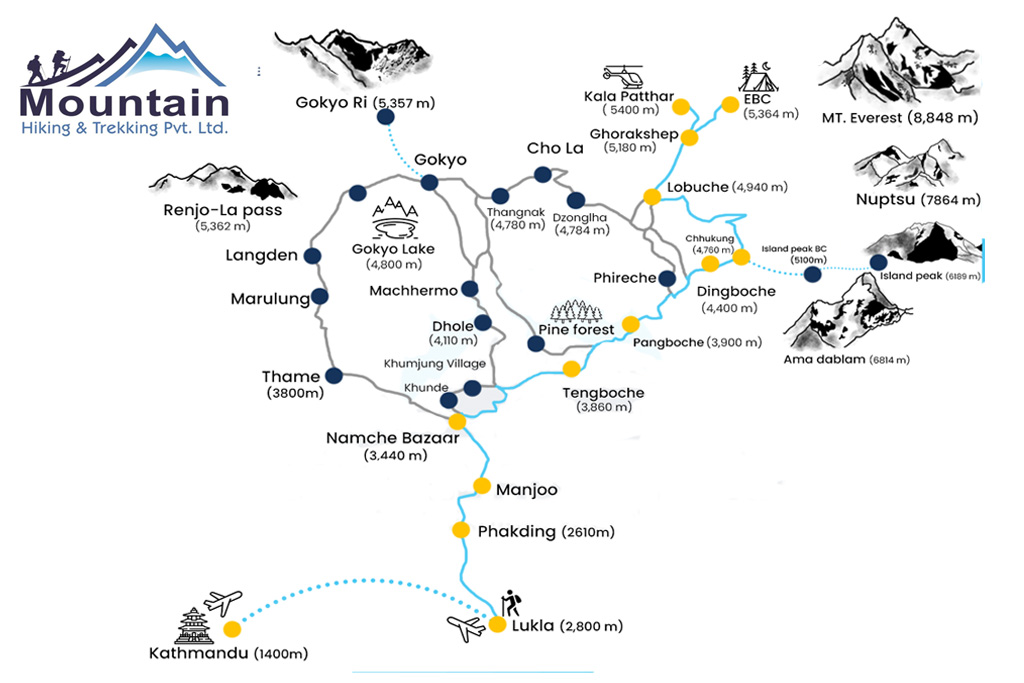
Route Map