Langtang Valley & Gosaikunda Lake Trek
Trip Facts
 Duration
16 days
Duration
16 days
 Trip Grade
Easy
Trip Grade
Easy
 Country
Nepal
Country
Nepal
 Maximum Altitude
4,984 meters (16,350 feet)
Maximum Altitude
4,984 meters (16,350 feet)
 Group Size
2-16 People
Group Size
2-16 People
 Starts
Kathmandu
Starts
Kathmandu
 Ends
Kathmandu
Ends
Kathmandu
 Activities
Trekking Sightseeing
Activities
Trekking Sightseeing
 Best Time
Sep-oct-nov-dec-march-April-may-june
Best Time
Sep-oct-nov-dec-march-April-may-june
Overview
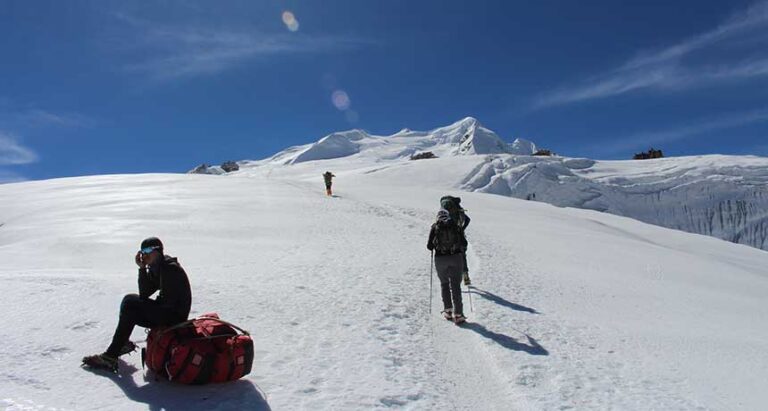
The Langtang Gosaikunda Trek is one of Nepal’s most spectacular Himalayan adventures, combining the stunning Langtang Valley, the panoramic summit of Tserko Ri (5,033m), the sacred Gosaikunda Lakes, and the scenic Helambu region. This 16-day journey offers breathtaking mountain views, rich Tamang culture, ancient monasteries, lush forests, glaciers, alpine meadows, and the unforgettable crossing of Lauribina Pass (4,610m).
Your adventure begins with a cultural tour of Kathmandu’s UNESCO World Heritage Sites before traveling by private jeep to Syabrubesi, the gateway to Langtang National Park. Trek through beautiful rhododendron and bamboo forests, traditional mountain villages, and glacial valleys to reach Kyanjin Gompa, where you’ll hike to Tserko Ri for incredible sunrise views over the Langtang Himalayas. The trail then leads to the sacred alpine lakes of Gosaikunda before crossing Lauribina Pass and descending through the peaceful Helambu region to Sundarijal.
With over 20 years of trekking experience, Mountain Hiking & Trekking provides professional local Sherpa guides, experienced porters, comfortable tea house accommodation, hygienic meals, 3-star hotel accommodation in Kathmandu, private transportation, and carefully planned itineraries for safe acclimatization. From your arrival in Kathmandu to your final departure, every detail is professionally arranged, ensuring a safe, comfortable, and unforgettable Himalayan trekking experience.
Tour Highlights
The Langtang Valley offers beautiful mountain views, peaceful forests, and rich local culture. You can see peaks like Langtang Lirung, explore Langtang National Park, and visit the scenic village of Kyanjin Gompa. The trek also gives you a chance to experience Tamang and Sherpa traditions.
Explore beautiful Langtang National Park
Visit traditional Tamang villages
Enjoy stunning Himalayan views
Hike to spectacular Tserko Ri (5,033m)
Visit ancient Kyanjin Gompa
Experience local cheese factory
Cross the famous Lauribina Pass
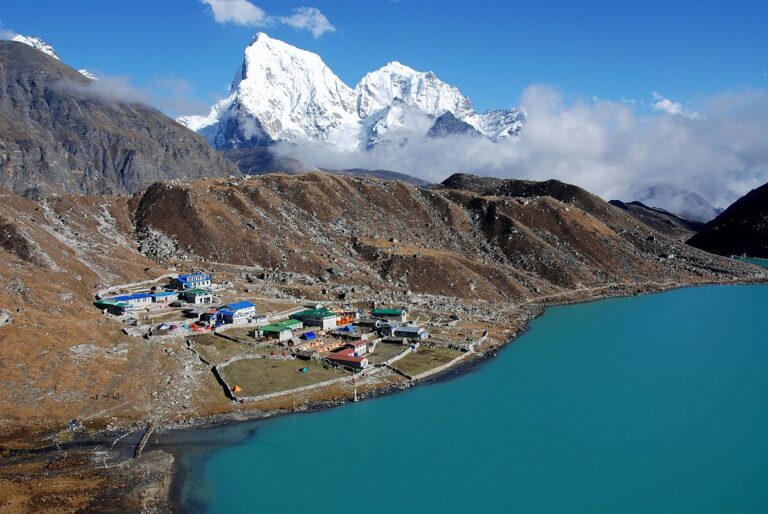
Visit the sacred Gosainkunda Lakes
Trek through Helambu's forests and villages
UNESCO World Heritage sightseeing in Kathmandu
Comfortable 3-Star hotel accommodation in Kathmandu
Why choose us?
We provide a safe and well-organized trekking experience in the Langtang Valley with a focus on comfort and local connection. Our experienced guides ensure your journey is smooth, while our carefully planned itineraries help you enjoy every moment without stress. Starting from Kathmandu, we handle permits, accommodation, and logistics so you can focus on the adventure.
- Experienced and friendly local guides
- Safe and well-planned itineraries
- Permit and logistics handled for you
- Comfortable teahouse arrangements
- Affordable and transparent pricing 24/7 support during the trek
- Focus on local culture and authentic experience
- Easy booking and reliable service
Itinerary
Day 1: Arrive In Kathmandu (1,340m / 4,593ft)

 Transportation: by car
 Travel Duration: 30 minutes
 Accommodation: 3 star hotel
 Maximum Altitude: 1340M.
Day 2: Full day city Sightseeing of Kathmandu
Accommodation: Kathmandu
Day 3: Drive to Syabru Besi (1,460m) Distance: 122 km Driving Time: 7-8 Hours
Accommodation: Syabrubesi.
Maximum Altitude: 1,460 meters.
Day 4: Trek to Lama Hotel altitude of 2,470 meters.
Accommodation: Lama Hotel.
Maximum Altitude: 2,470 meters.
Day 5: Lama Hotel to Langtang Village (3,430m)
Accommodation: Langtang Village
Maximum Altitude: 3,430 meters
Day 6: Langtang Village to Kyanjin Gompa (3900m) 3-4 hrs.
Accommodation: Kyanjin Gompa
Maximum Altitude: 3,900 meters
Day 7: Tserko Ri (5033m) climbing back to Kyanjin Gompa.
Accommodation: Kyanjin Gompa
Maximum Altitude: 5033m
Day 8: Kyanjin Gompa to Lama Hotel (2480M) 4 hrs trek
Accommodation: Lama Hotel
Maximum Altitude: 2480 meters
Day 9: Lama Hotel to Thulo Syabru (2,230m) Walking Time: 6-7 Hours
Accommodation: Thulo Syabru
Maximum Altitude: 2,223 meters
Day 10: Thulo Syabru to Shin Gompa (3,330m) Walking Time: 5-6 Hours
Accommodation: Shin Gompa
Maximum Altitude: 3,330 meters
Day 11: Shin Gompa to Gosainkunda (4,380m) Walking Time: 6 Hours
Accommodation: Gosainkunda
Maximum Altitude: 4,380 meters
Day 12: Gosainkunda to Cross Lauribina Pass (4,610m) - Thadepati (3,650m)
Accommodation: Thadepati
Maximum Altitude: 4,610 meters
Day 13: Thadepati to Kutumsang (2,470m) Walking Time: 6-7 Hours
Maximum Altitude: 3,650 m / 11,975 ft
After breakfast, start your trek early in the moning from Thadepati, after enjoying the sunrise views of the surrounding mountains.
Thadepati serves as a high-altitude pass with stunning panoramic vistas.
Descend to Mangengoth:
Begin the day with a steep descent from Thadepati, following the trail that winds down through rhododendron and juniper forests.
Pass by Mangengoth, a small settlement with tea houses, where you can take a short break and enjoy refreshments.
Ascend to Magen Goth and Panghu:
After Mangengoth, the trail gradually ascends towards Magen Goth, offering occasional views of distant peaks.
Continue hiking uphill to Panghu (3,050 meters / 10,006 feet), where you can rest and take in the surrounding scenery.
Descend to Kutumsang:
From Panghu, the trail descends steadily through forests and terraced fields, passing small villages along the way.
Kutumsang is a picturesque village nestled amidst green hills, with traditional stone houses and terraced fields.
Day 14: Kutumsang to chisopani (2,165m) Walking Time: 6-7 Hours
Accommodation: Chisapani
Maximum Altitude: 2,165 meters / 7,103 feet
Starting Point: Kutumsang (2,470 meters / 8,104 feet)
Ending Point: Chisapani (2,165 meters / 7,103 feet)
Duration: Approximately 5-7 hours, depending on your pace and trail conditions
Difficulty: Moderate, with some steep ascents and descents
Detailed Itinerary:
Kutumsang to Chisapani:
Departure from Kutumsang:
Begin your trek in the moning from Kutumsang, after enjoying breakfast and preparing your daypack.
Kutumsang is a charming village surrounded by terraced fields and lush forests.
Ascend to Gul Bhanjyang:
Start the day with a gradual ascent through rhododendron and oak forests, with occasional clearings offering glimpses of distant peaks.
Pass by the small settlement of Gul Bhanjyang (2,125 meters / 6,972 feet), where you can rest and enjoy refreshments.
Continue Uphill to Chipling:
From Gul Bhanjyang, the trail ascends further through forests and pastures, with occasional stone steps and switchbacks.
Arrive at Chipling (2,170 meters / 7,119 feet), another small village with tea houses and lodges, where you can take a break and refuel.
Final Ascent to Chisapani:
After Chipling, the trail continues uphill, passing through rhododendron and pine forests.
Chisapani is situated on a ridge with panoramic views of the Himalayan range, including Langtang, Dorje Lakpa, and Ganesh Himal
Day 15: Chisopani to sundarijal trek and drive to kathamandu
Maximum Altitude: 1,460 m / 4,790 ft
Day 16: Drive to Kathmandu

From Sundarijal, you can arrange transportation (local bus, microbus, or taxi) for the approximately 1-hour drive back to Kathmandu.
Enjoy the scenic drive through the countryside and suburbs as you retun to the bustling capital city.
Tour Includes
What's Included?
- Airport arrival & departure transfer in Tribhuvan International Airport by private vehicle
- 3 nights deluxe stay in Kathmandu (3-star hotel, B/B plan, twin sharing)
- Transportation from Kathmandu to Syabrubesi by Jeep/Land Cruiser (4WD)
- Return transport from Sundarijal to Kathmandu by private vehicle
- Experienced, English-speaking licensed trekking guide
- Porter service (1 porter for 2 people, max 25kg)
- Langtang National Park permit & TIMS card
- All meals (Breakfast, Lunch, Dinner) during the trek
- Teahouse/lodge accommodation during the trek (twin sharing)
- Guide & porter insurance, meals, salary, and equipment
- Kathmandu sightseeing (Swayambhunath, Boudhanath Stupa, Pashupatinath Temple, Durbar Square, Kumari Temple)
- Entry fees for all monuments during sightseeing
- Welcome dinner with Nepali cultural show
- First aid kit (basic treatment)
- Government taxes and service charges
- Trip certificate
- Complimentary trekking bag for porter use
- 1 hours massage after the trek
What's Excluded?
- International airfare
- Nepal visa fee
- Travel & medical insurance (including helicopter rescue)
- Lunch & dinner in Kathmandu
- Drinks (alcoholic, cold drinks, mineral water, etc.) during trek
- Personal expenses (desserts, extra food, etc.)
- Tips for guide and porter Hot showers & battery charging (may cost extra)
- Extra costs due to delays, weather, illness, or rescue and early return from the trek
Trip Packaging Lists
 Daily Wear
These are comfortable clothes for use in lodges, villages, and while relaxing before or after trekking.
- T-shirts (2)
- Underwear (4)
- Camp shoes (sandals/sneakers)
- Lightweight cotton pants
- Sun hat or scarf
- Hiking shorts (2)
 Trekking Gear
These items are essential for protection against cold, wind, and changing weather during the trek in regions like Langtang Valley.
- Thermal tops & bottoms
- Fleece jacket or pullover
- Waterproof jacket & pants
- Down jacket/vest (optional)
- Hiking boots with spare laces
- Warm wool socks & inner socks
- Gloves (light & heavy)
- Sunglasses (UV protection)
- Sleeping bag (-10u00b0C to -20u00b0C)
- Headlamp with batteries
- Daypack (small backpack)
- Water bottles (2)
 Personal Care
These items help maintain hygiene and basic health during the trek.
- Toiletries (toothbrush, toothpaste, soap, etc.)
- Small wash towel Basic first aid kit
- Hand sanitizer & wet wipes
- Sunscreen & lip balm
- Personal medications
- Plastic bags (to keep items dry)
Essential Information
Travel insurance
Travel Insurance is mandatory for all customers who looking to travel in Nepal with the Mountain Hiking & Trekking .The Travel Insurance must cover both the evacuation and medical cost
There are many insurance companies that offer travel insurance services over the internet. You can choose from a wide variety of insurance companies as per your convenience. Especially when it comes to trekking in Nepal, there is always a narrow chance of minor health issues, injuries and most importantly – altitude sickness.
It is essential that you prefer an insurance rule that covers the cost of the helicopter rescue from the mountains in case of main accidents and delicate mountain sickness (AMS). through such great cases of an emergency evacuation, a helicopter service is the only way out of the mountains. This includes a rescue team for both – ground evacuation and rescue. Which is why we need your travel insurances to cover the cost of helicopter services and evacuation from the Himalayas
It is forever recovered to be safe than apologetic.
Before you plan your trip with Mountain Hiking & Trekking do make sure that your travel insurance covers all the costs mentioned above from a reliable company.
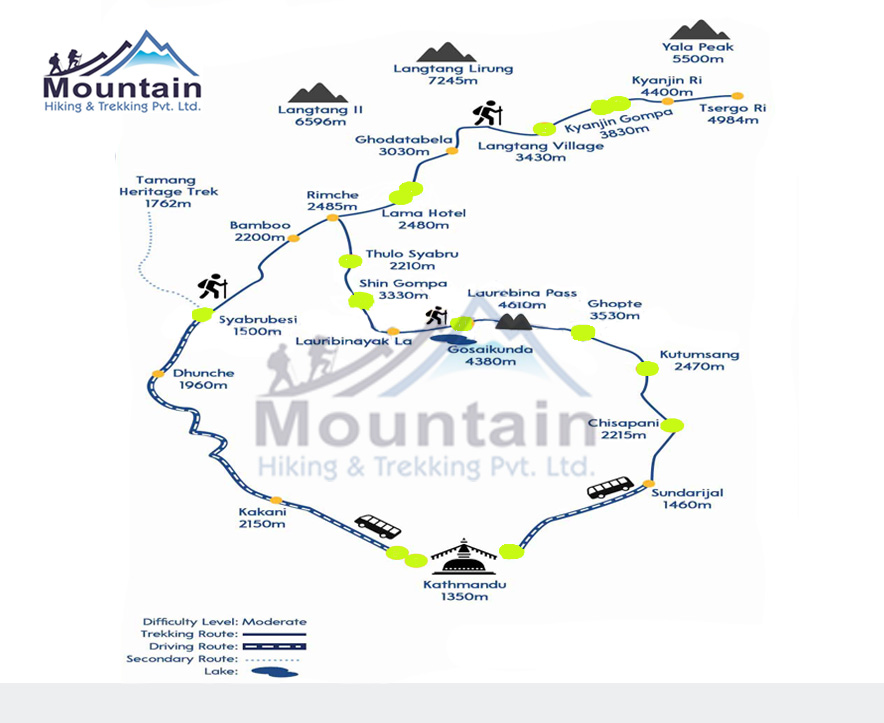
Route Map
FAQs
Where is the Langtang Valley located?
It lies north of Kathmandu near the Tibetan border. It is one of the closest trekking regions to the capital.
How difficult is the trek?
It is a moderate trek suitable for beginners with good fitness. No technical climbing is required.
How many days does it take?
The trek usually takes 7u201310 days. Duration can vary depending on your itinerary.
What is the best time to visit?
Spring and autumn offer the best weather and views. These seasons are also the most popular.
Do I need permits?
Yes, you need a TIMS card and a permit for Langtang National Park. These can be arranged in Kathmandu.
Can I trek without a guide?
Yes, but hiring a guide is recommended. It improves safety and overall experience.
What type of accommodation is available?
Teahouses and lodges are available along the route. They provide basic but comfortable stays.
Is food available during the trek?
Yes, meals are served at teahouses. You can find both local and simple international dishes.
What is the highest point?
Kyanjin Gompa is a key highlight at around 3,870 meters. Nearby hikes can take you even higher.
Is altitude sickness a risk?
Yes, especially at higher elevations. Proper acclimatization helps reduce the risk.
How do I reach the starting point?
You can drive from Kathmandu to Syabrubesi. The journey takes around 6u20137 hours.
Is Wi-Fi available?
Limited Wi-Fi is available in some lodges. It may require an extra fee.
Are there ATMs on the route?
No, ATMs are not available on the trek. Carry enough cash from Kathmandu.