Everest Three Passes Trek 19 days
Trip Facts
 Duration
19 days
Duration
19 days
 Trip Grade
Strenuous
Trip Grade
Strenuous
 Country
Nepal
Country
Nepal
 Maximum Altitude
5,535 meters/18,159 feet)
Maximum Altitude
5,535 meters/18,159 feet)
 Group Size
2-15 People
Group Size
2-15 People
 Starts
Lukla
Starts
Lukla
 Ends
Lukla
Ends
Lukla
 Activities
Trekking Culture Tours & Hiking
Activities
Trekking Culture Tours & Hiking
 Best Time
Sep, Oct, Nov, Dec, Mar, Apr, May
Best Time
Sep, Oct, Nov, Dec, Mar, Apr, May
Overview
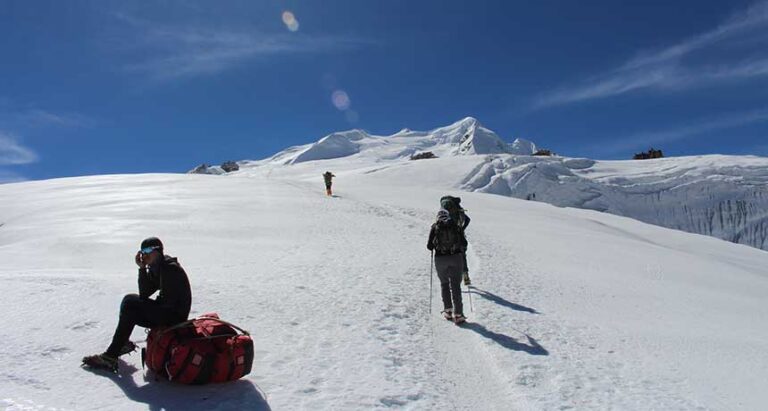
The Everest Three Passes Trek 19 Days is one of the most challenging and rewarding trekking adventures in Nepal, designed for trekkers seeking an unforgettable Himalayan experience beyond the classic Everest Base Camp route. This adventurous journey takes you across the three spectacular high mountain passes of the Khumbu region — Kongma La Pass (5,535m), Cho La Pass (5,420m), and Renjo La Pass (5,360m) — while exploring the hidden valleys, remote Sherpa villages, and breathtaking landscapes of the Everest region.
During this Everest Three Passes Trek in Nepal, you will visit the legendary Everest Base Camp (5,364m), hike to Kala Patthar (5,545m) for incredible sunrise views over Mount Everest, and explore the beautiful Gokyo Lakes and Gokyo Ri (5,357m). The trail offers magnificent views of the world’s highest peaks, including Mount Everest, Lhotse, Nuptse, Ama Dablam, Makalu, Cho Oyu, and Pumori.
The trek combines adventure, culture, and natural beauty as you walk through Sagarmatha National Park (UNESCO World Heritage Site), cross dramatic glaciers and suspension bridges, and experience authentic Sherpa traditions, monasteries, and mountain hospitality. With experienced local guides, comfortable tea house accommodation, and proper acclimatization, the Everest Three Passes Trek 19 Days is the perfect choice for adventure lovers looking for the ultimate Everest region trekking experience.
Tour Highlights
- 🏔️ Complete Nepal's Ultimate Everest Three Passes Trek on the most adventurous route in the Everest region.
- ⛰️ Cross Three Iconic High Passes – Kongma La (5,535m), Cho La (5,420m), and Renjo La (5,360m).
- 🏕️ Reach Everest Base Camp (5,364m) and stand at the foot of the world's highest mountain.
- 🌅 Hike to Kala Patthar (5,545m) for the best sunrise and panoramic views of Mount Everest.
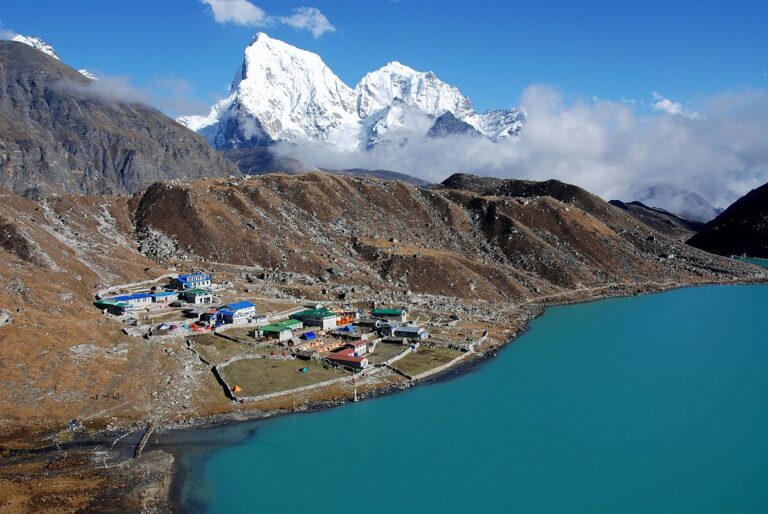
- 💙 Explore the Stunning Gokyo Lakes and witness their crystal-clear turquoise waters.
- 🏞️ Climb Gokyo Ri (5,357m) for one of the finest panoramic viewpoints in the Himalayas.
- ✈️ Experience the Scenic Flight to Lukla, the gateway to the Everest region.
- 🏘️ Visit Traditional Sherpa Villages including Namche Bazaar, Dingboche, Lobuche, Gokyo, and Thame.
- 🛕 Explore Tengboche Monastery, the largest and most famous monastery in the Khumbu region.
- 🌲 Trek Through Sagarmatha National Park, a UNESCO World Heritage Site rich in Himalayan wildlife.
- 🏔️ Enjoy Spectacular Views of Everest, Lhotse, Nuptse, Ama Dablam, Makalu, Cho Oyu, Pumori, Thamserku, and many other Himalayan giants.
- 🌉 Cross Thrilling Suspension Bridges over deep Himalayan valleys and glacial rivers.
- 🧊 Walk Across Glaciers and Moraines, including the famous Ngozumpa Glacier—the longest glacier in Nepal.
- 📸 Capture Incredible Himalayan Landscapes, glaciers, alpine lakes, and unforgettable mountain panoramas.
- 🛌 Stay in Traditional Tea Houses with warm Sherpa hospitality throughout the journey.
- 👨🏫 Professional Local Guide & Porter Support for a safe, well-organized, and memorable trekking experience.
- 🏅 Receive an Everest Three Passes Trek Completion Certificate as a lasting memory of your achievement.
Why Choose us ?
- 🏔️ Experienced Local Sherpa Team – Trek with professional, knowledgeable, and friendly local guides who understand the Everest region, culture, and high-altitude conditions.
- 🛡️ Safety First Approach – Your safety is our priority with proper acclimatization planning, first aid support, experienced staff, and careful trekking management.
- 🗻 Expertly Designed Itinerary – Our Everest Three Passes Trek 19 Days itinerary is carefully planned with enough acclimatization days to maximize comfort and success.
- 🏡 Quality Tea House Accommodation – Stay in selected mountain lodges offering comfortable rooms, warm hospitality, and authentic Himalayan experiences.
- 🍽️ Healthy Meals During the Trek – Enjoy nutritious and hygienic meals prepared to support your energy throughout the challenging mountain journey.
- 👣 Small & Personalized Groups – We provide personalized attention, better communication, and a more enjoyable trekking experience.
- 📍 Local Knowledge & Authentic Experience – Discover hidden trails, Sherpa villages, monasteries, and the true beauty of the Everest region with our local expertise.
- 💰 Transparent Pricing – No hidden costs. We provide clear packages with detailed inclusions and exclusions.
- 🚑 High-Altitude Support – Our team is prepared with essential safety equipment and emergency planning for high Himalayan trekking.
- 📸 Complete Trekking Support – From airport pickup, permits, and accommodation to trekking arrangements and farewell, we handle every detail.
- 🌟 Trusted Nepal Trekking Company – We are committed to providing reliable service, unforgettable experiences, and lifelong memories in the Himalayas.
Choose us for your Everest Three Passes Trek 19 Days and experience the Himalayas with a trusted local trekking partner. 🏔️
Itinerary
Day 1: Arrival in Kathmandu (1,400 meters / 4,593 feet) trasfer to hotel

 Accommodation: Kathmandu
 Maximum Altitude: 1350m/4428ft
Arrive in Kathmandu (1,400m / 4,593ft)
Arrive at Tribhuvan Intenational Airport in Kathmandu.
Transfer to your hotel.
Rest, recover from your jouney, and prepare for your trek.
Day 2: Full day city Tour in Kathmandu and trek preparation
 Travel Duration: 5-6 hrs.
Accommodation: Kathmandu
Travel Duration: 5-6 hrs.
Accommodation: Kathmandu
A full day city tour in Kathmandu provides an opportunity to explore the rich cultural, historical, and architectural heritage of Nepal's capital. Here's a suggested itinerary for a day of sightseeing in Kathmandu:
Moning:
Kathmandu Durbar Square:
Start your day at Kathmandu Durbar Square, a UNESCO World Heritage Site and the historic heart of the city.
Explore the intricately designed temples, courtyards, and palaces, including Hanuman Dhoka Durbar Square, Taleju Temple, and the Kumari Ghar, the residence of the Living Goddess Kumari.
Kumari Ghar (Kumari's Living Goddess Residence):
Try to time your visit to Kumari Ghar during the moning when Kumari (the Living Goddess) makes her appearance at one of the windows.
Asan Tole:
Walk to nearby Asan Tole, a bustling market square where you can experience the vibrant atmosphere of daily life in Kathmandu.
Lunch:
Enjoy a traditional Nepali lunch at a local restaurant in the Thamel or Basantapur area.
Aftenoon:
Swayambhunath Stupa (Monkey Temple):
Drive or take a taxi to Swayambhunath Stupa, also known as the Monkey Temple, situated atop a hill.
Explore the stupa, its shrines, prayer wheels, and enjoy panoramic views of the Kathmandu Valley.
Patan Durbar Square:
Head to Patan, a neighboring city also known for its cultural heritage.
Visit Patan Durbar Square, another UNESCO World Heritage Site, and admire the beautifully carved temples, palaces, and courtyards.
Evening:
Dinner in Patan or Thamel:
Enjoy dinner at a restaurant in Patan or retun to Thamel for a wide range of dining options, including Nepali, Tibetan, Indian, and intenational cuisines.
Ovenight At Hotel Breakfast Only
Day 3: Fly to lukla 2,860 meters and trek to Phakding 2,610 meters (8,562 feet)
Travel Duration: 3-4 Hrs.
Accommodation: Phakding
Maximum Altitude: 2,610 m. 8,562 ft
The trek from Lukla to Phakding is the starting point of the Everest Base Camp trek. It's a relatively short and scenic trek that takes you through picturesque landscapes and Sherpa villages. Here's a detailed overview of the Lukla to Phakding trek:
Distance: Approximately 9 kilometers (5.6 miles) Elevation:
Lukla: 2,860 meters (9,383 feet) Phakding: 2,610 meters (8,562 feet) Duration: Around 3-4 hours, depending on your pace and stops.
Start your day with an early moning flight from Kathmandu to Lukla. The flight offers breathtaking views of the Himalayas.
After landing in Lukla's Tenzing-Hillary Airport (one of the world's most challenging airports), you'll meet your trekking crew and begin your trek.
The trail starts with a descent towards the Dudh Koshi River and passes through small villages, prayer wheels, and mani stones.
You'll cross suspension bridges over the river and enjoy the lush green scenery of the Khumbu region.
Reach Phakding, a charming village located along the river. It's a popular stop for trekkers and climbers on their way to Everest Base Camp.
Spend the night in one of the tea houses or lodges in Phakding. These accommodations provide basic amenities for trekkers. ovenight At Guest House Meals: Breakfast -lunch And Dinner
Day 4: Trek To Namche Bazaar: 3,440 meters (11,286 feet ) Approximately 10.4 kilometers (6.5 miles)
Travel Duration: 6-7 hrs.
Accommodation: Namche Bazaar
Maximum Altitude: 3,440 m. 11,286 ft
The trek from Phakding to Namche Bazaar is a crucial part of the Everest Base Camp trek. This segment takes you deeper into the Khumbu region, with changing landscapes, river crossings, and the gradual ascent towards Namche Bazaar, the bustling gateway to the Everest region.
Distance: Approximately 10.4 kilometers (6.5 miles) Elevation:
Phakding: 2,610 meters (8,562 feet)
Namche Bazaar: 3,440 meters (11,286 feet)
Duration: Around 6-7 hours, considering your pace, stops, and acclimatization.
Begin your day by following the Dudh Koshi River and crossing suspension bridges.
You'll pass through the Sagarmatha National Park entrance and climb to Monjo, where you'll stop for permit checks.
Continue along the river, ascending gradually through pine forests and enjoying glimpses of Everest and other peaks.
Cross the iconic Hillary Suspension Bridge and start the steep climb towards Namche Bazaar.
As you approach Namche, the trail offers stunning panoramic views of Everest, Lhotse, and other mountains.
Reach Namche Bazaar, the largest Sherpa village in the region, nestled within the mountains. This bustling town has various amenities, including shops, restaurants, lodges,nnSpend the night in Namche Bazaar to acclimatize to the altitude.
Ovenight at the Guest house Meals: Breakfast, Lunch, and Dinner
Day 5: Namche Bazaar-acclimatize Day 3/4 hrs hike to everest view hotel etc
Travel Duration: 2-3 hrs
Accommodation: Namche Bazaar
Start your day with a hike to the Everest View Hotel, which offers stunning panoramic views of Everest, Lhotse, Ama Dablam, and other peaks.
The hike takes about 2-3 hours one way, and the altitude gain helps your body acclimatize.
Explore Namche Bazaar:
After retuning from your hike, take some time to explore the town. Visit the local market, shops, and bakeries.
You can also check out the Sherpa Culture Museum and the Everest Photo Gallery to lean more about the region's history and culture.
Rest and Relaxation:
Use the aftenoon to rest and relax. Spend some quiet time reading, jounaling, or simply enjoying the views from your lodge.
Since you're at a higher altitude, your body needs time to adjust. Listen to your body and avoid strenuous activities.
Oveniht At Guest House Meals: Breakfast -lunch And Dinner
Day 6: Trek To Thame Altitude 3,800 meters (12,467 feet) Approximately 8-9 kilometers (5-5.6 miles)
Travel Duration: 4-5 hrs.
Accommodation: Thame
Maximum Altitude: 3,800 m.12,467 ft
The trek from Namche Bazaar to Thame is a scenic and culturally rich jouney in the Everest region of Nepal. Thame is a beautiful Sherpa village known for its stunning landscapes and its association with famous mountaineers.
Distance: Approximately 8-9 kilometers (5-5.6 miles) Elevation:
Namche Bazaar: 3,440 meters (11,286 feet) Thame: 3,800 meters (12,467 feet)
Duration: Around 4-5 hours, depending on your pace and stops.
Depart from Namche Bazaar and follow the trail that runs alongside the Bhote Koshi River.
The trek gradually ascends, offering stunning views of the surrounding mountains, including Kongde Ri and Thamserku.
As you approach Thame, you'll pass through forests and charming Sherpa villages, including Samde, where you can visit a monastery.
Arrive in Thame, a picturesque Sherpa village with traditional stone houses and prayer flags fluttering in the wind.
Visit the historic Thame Monastery, which is over 500 years old and has strong ties to the famous Sherpa mountaineer Tenzing Norgay.
Spend the night in Thame, enjoying the peaceful atmosphere and the hospitality of the sherpa people.
Ovenight at the Guest House
Meals: Breakfast, Lunch, and Dinner
Day 7: Trek To Lumde 4,380 meters (14,370 feet) Approximately 7-8 kilometers (4.3-5 miles)
Travel Duration: 4-5 hrs.
Accommodation: Lumde
Maximum Altitude: 4,380 m. 14,370 ft
The trek from Thame to Lumde is a segment in the Everest region of Nepal that offers stunning views of the Himalayas and takes you through beautiful landscapes. Lumde is a small village that serves as a stopping point for trekkers and climbers on their way to higher altitudes. Here's a detailed overview of the Thame to Lumde trek:
Distance: Approximately 7-8 kilometers (4.3-5 miles) Elevation:
Thame: 3,800 meters (12,467 feet) Lumde: Approximately 4,380 meters (14,370 feet) Duration: Around 4-5 hours, depending on your pace and stops.
Start your day by leaving Thame and following the trail that ascends gradually.
You'll continue along the Bhote Koshi River, with stunning views of the surrounding mountains, including Thamserku and Kangtega.
As you trek higher, you'll enter more remote and less-visited areas.
Reach the village of Lumde, which serves as a stopping point for trekkers and climbers on their way to Renjo La Pass and Gokyo.
The village offers basic teahouses for accommodation
Oveniht At Guest Hours Meals: Breakfast -lunch And Dinner
Day 8: Trek To Gokyo Via Ranjo La Pass 5,340 meters (17,520 feet) approximately 14-16 km. (8.7-9.9 miles)
Travel Duration: 8-9 hrs.
Accommodation: Gokyo
Maximum Altitude: 4,750 m. 15,583 ft
The trek from Lumde to Gokyo via Renjo La Pass is a challenging and high-altitude adventure in the Everest region of Nepal. Renjo La Pass stands at an elevation of approximately 5,340 meters (17,520 feet), and this trek offers breathtaking mountain views and the chance to explore the beautiful Gokyo Valley. Here's a detailed overview of the Lumde to Gokyo via Renjo La Pass trek:
Distance: The exact distance can vary depending on the specific route and side trips, but it's approximately 14-16 kilometers (8.7-9.9 miles).
Elevation:
Lumde: Approximately 4,380 meters (14,370 feet)
Renjo La Pass: Approximately 5,340 meters (17,520 feet)
Gokyo: Approximately 4,750 meters (15,583 feet)
Duration: This trek can take about 8-10 hours, depending on your pace, weather conditions, and stops along the way.
Start your day early, as this is a challenging and long trek.
Begin by ascending towards Renjo La Pass. The trail is steep and rocky, and you'll have to cross snowfields, so proper gear and trekking poles are essential.
Upon reaching Renjo La Pass, you'll be rewarded with panoramic views of Everest, Lhotse, Makalu, and other peaks, making the strenuous climb worthwhile.
Descend carefully on the other side of the pass into the Gokyo Valley.
Trek to Gokyo, which is known for its serene lakes, including the famous Gokyo Lake.
Enjoy the stunning mountain scenery and relax in Gokyo for the night.
Oveniht At Guest House
Meals: Breakfast -lunch And Dinner
Day 9: Trek To Thaknak 4,700 meter (15,419 feet) Approximately 5 kilometers (3.1 miles)
Travel Duration: 2-3 hrs.
Accommodation: Thaknak
Maximum Altitude: 4,700 m.15,419 ft
The trek from Gokyo to Thaknak is a relatively short and straightforward segment along the Gokyo Valley trek. This part of the jouney takes you through the beautiful Gokyo Valley, past glacial lakes and stunning mountain views.
Distance: Approximately 5 kilometers (3.1 miles)
Elevation:
Gokyo: Approximately 4,750 meters (15,583 feet) Thaknak: Approximately 4,700 meters (15,419 feet) Duration: About 2-3 hours, depending on your pace and stops.
Start your day by leaving Gokyo and following the well-marked trail along the Gokyo Lakes.
You'll pass by the pristine glacial lakes, including the main Gokyo Lake, which offers stunning reflections of the surrounding mountains.
Continue trekking along the lateral moraine of the Ngozumpa Glacier.
Reach the village of Thaknak, a small settlement with basic teahouses.
Thaknak serves as a common stop for trekkers on their way to and from Cho La Pass, which connects the Gokyo Valley with the Everest Base Camp trail.
Oveniht At Guest House. Meals: Breakfast -lunch And Dinner
Day 10: Trek To Zungla Via Chola 5,420 meters (17,782 feet) approximately 6-7 km. (3.7-4.3 miles)
Travel Duration: 6-7 hrs.
Accommodation: Zungla
Maximum Altitude: 4,700 m. 15,419 ft
The trek from Thaknak to Zungla via Cho La Pass is a challenging and high-altitude adventure in the Everest region of Nepal. Cho La Pass stands at an elevation of approximately 5,420 meters (17,782 feet), and this trek involves crossing a high mountain pass with stunning views of the surrounding peaks.
Distance: The exact distance can vary depending on the specific route and side trips, but it's approximately 6-7 kilometers (3.7-4.3 miles).
Elevation:
Thaknak: Approximately 4,700 meters (15,419 feet)
Cho La Pass: Approximately 5,420 meters (17,782 feet) Zungla: Approximately 4,700 meters (15,419 feet) Duration: This trek can take about 6-8 hours, depending on your pace, weather conditions, and stops along the way.
Start your day early, as crossing Cho La Pass is a challenging and long trek.
Begin by following the trail towards Cho La Pass. The ascent to the pass is steep and rocky, and you'll need proper gear and trekking poles for stability.
As you approach the pass, you'll be rewarded with breathtaking panoramic views of the surrounding mountains, including Ama Dablam and Cholatse.
Carefully cross the Cho La Pass and start the descent on the other side. The trail is steep and covered with snow and ice, so caution is crucial.
Trek down into the peaceful valley towards Zungla, enjoying the serene landscapes.
Arrive in Zungla, a small settlement with basic teahouses, and spend the night.
Ovenight At Guest House Meals: Breakfast -lunch And Dinner
Day 11: Trek To Gorekshep 5,160 meters (16,929 feet) Approximately 9-10 km. (5.6-6.2 miles)
Travel Duration: 5-6 hrs.
Accommodation: Gorak Shep
Maximum Altitude: 5,160 m.16,929 ft.
The trek from Zungla to Gorak Shep is a crucial part of the Everest Base Camp trek and takes you closer to the base camp of Mount Everest.
Distance: Approximately 9-10 kilometers (5.6-6.2 miles) Elevation:
Zungla: Approximately 4,700 meters (15,419 feet) Gorak Shep: Approximately 5,160 meters (16,929 feet) Duration: About 5-7 hours, depending on your pace, weather conditions, and stops along the way.
Start your day by leaving Zungla and following the trail towards Lobuche.
You'll trek along the moraine of the Khumbu Glacier and may encounter icy and rocky sections.
Reach Lobuche, a common stop for trekkers on their way to Everest Base Camp, and have lunch there.
Continue trekking towards Gorak Shep, which is the last settlement before Everest Base Camp.
The trail is relatively flat and offers stunning views of Nuptse and other Himalayan peaks.
Arrive in Gorak Shep, where you'll spend the night.
Oveniht At Guest House
Meals: Breakfast -lunch And Dinner
Day 12: Hike Up To The Base Camp 5,364 meters (17,598 feet) Approximately 3.5 km. (2.2 miles)
 Transportation: on foot
Travel Duration: 5-6 hrs
Accommodation: Gorak shep best available Tea house
Transportation: on foot
Travel Duration: 5-6 hrs
Accommodation: Gorak shep best available Tea house
 Activities: Trekking
Maximum Altitude: 5,364 m. 17,598 ft
Activities: Trekking
Maximum Altitude: 5,364 m. 17,598 ft
Hiking up to Everest Base Camp from Gorak Shep is the ultimate goal for many trekkers in the Everest region. Everest Base Camp (EBC) serves as the starting point for climbers attempting to summit Mount Everest, and it offers stunning views of the surrounding Himalayan peaks.
Distance: Approximately 3.5 kilometers (2.2 miles) one way
Elevation:
Gorak Shep: Approximately 5,160 meters (16,929 feet)
Everest Base Camp: Approximately 5,364 meters (17,598 feet) Duration: About 2-3 hours to reach Everest Base Camp from Gorak Shep, depending on your pace and the time you spend at Base Camp.
Start your day early to make the most of your time at Everest Base Camp.
Begin the hike from Gorak Shep, following the well-marked trail.
The trail can be rocky and uneven, with some ups and downs along the way.
As you approach Everest Base Camp, you'll see colorful prayer flags and tents used by climbers during the climbing season.
Reach Everest Base Camp, where you'll have the opportunity to take in the awe-inspiring views of Mount Everest, Nuptse, and other surrounding peaks.
Spend some time exploring the area, taking photos, and soaking in the atmosphere.
After enjoying Base Camp, trek back to Gorak Shep for the night.
Oveniht At Guest House Meals: Breakfast -lunch And Dinner
Day 13: Hike Up To Kalapatthar 5,545 meters (18,192 feet) Approximately 8-10 km. (5-6.2 miles)
Transportation: on foot
Accommodation: Labuche best available tea house
Activities: Trekking
Maximum Altitude: 5,545 m. 18,192 ft
Hiking up to Kala Patthar and then trekking to Lobuche is a common route for trekkers in the Everest region. Kala Patthar is a renowned vantage point that offers panoramic views of Mount Everest and surrounding peaks, while Lobuche is a popular stop along the Everest Base Camp trek.
Distance:
Kala Patthar to Lobuche: Approximately 8-10 kilometers (5-6.2 miles) Elevation:
Kala Patthar: Approximately 5,545 meters (18,192 feet) Lobuche: Approximately 4,910 meters (16,108 feet) Duration:
Hike to Kala Patthar: About 2-3 hours from Gorak Shep
Trek to Lobuche: About 2-3 hours from Kala Patthar or 4-5 hours from Gorak Shep, depending on your starting point and pace.
Start your day early to hike up to Kala Patthar from Gorak Shep. The trail is steep and can be challenging, but the views are incredibly rewarding.
Reach Kala Patthar, one of the highest accessible points in the Everest region, and enjoy breathtaking panoramic views of Mount Everest, Nuptse, Lhotse, Pumori, and other peaks. This is a fantastic spot for sunrise views.
Spend time taking photos and absorbing the scenery.
Descend from Kala Patthar and retun to Gorak Shep for breakfast.
After breakfast, trek to Lobuche. The trail involves descending back to Gorak Shep and then following the trail towards Lobuche.
Pass by memorials to climbers who lost their lives on Everest, and continue trekking through the beautiful Khumbu region.
Arrive in Lobuche, a common stop for trekkers on their way to Everest Base Camp, and spend the night.
Oveniht At Guest House
Meals: Breakfast -lunch And Dinner
Day 14: Trek To Chukung Via Kongma La Pass 5,535 meters (18,159 feet) approximately 9-10 km. (5.6-6.2 miles).
Transportation: on foot
Travel Duration: 8-9 hrs.
Accommodation: Dingbuche guest house
Activities: trekking
Maximum Altitude: 4,730 m. 15,518 ft
The trek from Lobuche to Chukung via Kongma La Pass is a challenging and high-altitude adventure in the Everest region of Nepal. Kongma La Pass stands at an elevation of approximately 5,535 meters (18,159 feet), making it one of the highest passes on the Everest Base Camp trekking circuit.
Distance: The exact distance can vary depending on your specific route and side trips, but it's approximately 9-10 kilometers (5.6-6.2 miles).
Elevation:
Lobuche: Approximately 4,910 meters (16,108 feet)
Kongma La Pass: Approximately 5,535 meters (18,159 feet)
Chukung: Approximately 4,730 meters (15,518 feet)
Duration: This trek can take about 8-10 hours, depending on your pace, weather conditions, and stops along the way.
Start your day early, as crossing Kongma La Pass is a challenging and long trek.
Begin the hike from Lobuche, following the trail towards Kongma La Pass. The ascent to the pass is steep and rocky, and you'll need proper gear and trekking poles for stability.
As you approach Kongma La Pass, you'll be greeted with stunning panoramic views of the surrounding Himalayan peaks, including Ama Dablam, Makalu, Lhotse, and more.
Carefully cross Kongma La Pass, which can be covered with snow and ice, and start the descent on the other side.
Trek down into the Imja Valley and reach Chukung, a small village surrounded by majestic peaks. Spend the night in Chukung.
Ovenihgt At Guest House Meals: Breakfast -lunch And Dinner
Day 15: Trek To Tengboche 3,860 meters (12,664 feet) (7.5-8.7 miles)
Travel Duration: 4-5 hrs.
Accommodation: Tengboche
Maximum Altitude: 3,860 m. 12,664 ft
The trek from Chukung to Tengboche involves descending from the high-altitude region of Chukung and the Imja Valley down to Tengboche, a beautiful village with a famous monastery in the Everest region.
Distance: Approximately 10 kilometers (7.5-8.7 miles) Elevation:
Chukung: Approximately 4,730 meters (15,518 feet)
Tengboche: Approximately 3,860 meters (12,664 feet)
Duration: This trek typically takes about 4-5 hours, depending on your pace, weather conditions, and stops along the way.
Start your day in Chukung, a small village located in the Imja Valley.
Begin your descent, following the trail that leads down into the Dudh Koshi Valley.
Pass through Dingboche, a larger village with more amenities than Chukung.
Continue trekking downhill, crossing suspension bridges and enjoying the lush forested landscapes.
Arrive in Tengboche, a picturesque village renowned for its Tengboche Monastery, one of the most important monasteries in the Everest region.
Explore the monastery and enjoy the serene surroundings.
Spend the night in Tengboche. ovenight At Guest House Meals: Breakfast -lunch And Dinner
Day 16: Trek To Namche Altitude 3,440 meters (11,286 feet)
Travel Duration: 4-5 hrs.
Accommodation: Namche Bazaar
Maximum Altitude: 3,440 m.11,286 ft
Trekking from Tengboche to Namche Bazaar involves descending from the higher altitudes of Tengboche through picturesque landscapes back to Namche Bazaar. Here's a detailed overview of this trek:
Distance: Approximately 9-10 kilometers (5.6-6.2 miles)
Elevation:
Tengboche: Approximately 3,860 meters (12,664 feet)
Namche Bazaar: Approximately 3,440 meters (11,286 feet)
Duration: This trek typically takes about 4-5 hours, depending on your pace, weather conditions, and stops along the way.
Start your day in Tengboche, and bid farewell to the stunning mountain views and spiritual atmosphere of Tengboche Monastery.
Begin your descent, following the well-marked trail as it leads you through forests and past small villages.
Enjoy the lush vegetation and the sound of the Dudh Koshi River in the valley below.
Cross suspension bridges, ascend and descend hills, and continue your jouney.
Arrive in Namche Bazaar, the vibrant and bustling Sherpa town that serves as a hub for trekkers and climbers in the Everest region.
Spend the night in Namche Bazaar, where you can enjoy the comforts of lodges, restaurants, and shops.
Ovenight at the Guest House
Meals: Breakfast, Lunch, and Dinner
Day 17: Trek To Lukla
Travel Duration: 6-7 hrs.
Accommodation: Lukla
Maximum Altitude: 2,860 m. 9,383 ft
Trekking from Namche Bazaar to Lukla is the final leg of your Everest Base Camp trek. This trek takes you from the higher altitudes of Namche Bazaar down to Lukla, where you can catch a flight back to Kathmandu.
Distance: 2,860 meters (9,383 feet)
Elevation:
Namche Bazaar: Approximately 3,440 meters (11,286 feet)
Lukla: Approximately 2,860 meters (9,383 feet)
Duration: This trek typically takes about 6-7 hours, depending on your pace, weather conditions, and stops along the way.
Start your day in Namche Bazaar, bid farewell to the beautiful mountains, and begin your descent towards Lukla.
Follow the trail that leads through the lush forests and villages along the Dudh Koshi River.
Pass through villages like Phakding and Chheplung, enjoying the familiar sights of the early days of your trek.
Arrive in Lukla, where you'll complete your Everest Base Camp jouney.
Spend the night in Lukla, where you can relax and celebrate your successful trek.nnoveniht At Guest House
Meals: Breakfast -lunch And Dinner
Day 18: Fly To Kathmandu
Travel Duration: 45 min
Accommodation: Kathmandu
Maximum Altitude: 1350m/4428ft
Fly To Kathmandu Altitude: 1350m/4428ft 45 minute Trans Himalayan Flight
The jouney from Lukla to Kathmandu typically involves taking a flight, as Lukla does not have a road connection to Kathmandu. Here's how you can travel from Lukla to Kathmandu by air:nn1. Lukla to Kathmandu Flight:
Lukla has a small airport called Tenzing-Hillary Airport (LUA) that operates daily flights to Kathmandu's Tribhuvan Intenational Airport (KTM).
Most trekkers and climbers who visit the Everest region start their trek from Lukla and retun to Lukla to catch their flight back to Kathmandu.
The flight from Lukla to Kathmandu is a scenic but sometimes challenging experience due to the small and unpredictable weather conditions in Lukla. Flights can be delayed or canceled, so it's a good idea to have some flexibility in your travel plans.
Airlines that operate flights from Lukla to Kathmandu include Yeti Airlines, Tara Air, and Sita Air, among others.
Ovenight At Hotel
Meals: Breakfast Only
Day 19: Departure Day

Depending on your flight schedule, you may have some free time in Kathmandu for last-minute shopping or exploration.
Depart from Kathmandu to your onward destination.
Fixed Departures
Choose a scheduled departure date with live availability and direct booking access.
Everest Three Passes Trek 19 days
Everest Three Passes Trek 19 days
Everest Three Passes Trek 19 days
Everest Three Passes Trek 19 days
Everest Three Passes Trek 19 days
Everest Three Passes Trek 19 days
Everest Three Passes Trek 19 days
Everest Three Passes Trek 19 days
Everest Three Passes Trek 19 days
Everest Three Passes Trek 19 days
Everest Three Passes Trek 19 days
Everest Three Passes Trek 19 days
Everest Three Passes Trek 19 days
Everest Three Passes Trek 19 days
Everest Three Passes Trek 19 days
Everest Three Passes Trek 19 days
Everest Three Passes Trek 19 days
Everest Three Passes Trek 19 days
Everest Three Passes Trek 19 days
Everest Three Passes Trek 19 days
Everest Three Passes Trek 19 days
Everest Three Passes Trek 19 days
Everest Three Passes Trek 19 days
Everest Three Passes Trek 19 days
Everest Three Passes Trek 19 days
Everest Three Passes Trek 19 days
Everest Three Passes Trek 19 days
Everest Three Passes Trek 19 days
Everest Three Passes Trek 19 days
Everest Three Passes Trek 19 days
Everest Three Passes Trek 19 days
Everest Three Passes Trek 19 days
Everest Three Passes Trek 19 days
Everest Three Passes Trek 19 days
Everest Three Passes Trek 19 days
Everest Three Passes Trek 19 days
Everest Three Passes Trek 19 days
Everest Three Passes Trek 19 days
Everest Three Passes Trek 19 days
Everest Three Passes Trek 19 days
Everest Three Passes Trek 19 days
Everest Three Passes Trek 19 days
Everest Three Passes Trek 19 days
Everest Three Passes Trek 19 days
Everest Three Passes Trek 19 days
Everest Three Passes Trek 19 days
Everest Three Passes Trek 19 days
Everest Three Passes Trek 19 days
Everest Three Passes Trek 19 days
Everest Three Passes Trek 19 days
Everest Three Passes Trek 19 days
Everest Three Passes Trek 19 days
Everest Three Passes Trek 19 days
Everest Three Passes Trek 19 days
Everest Three Passes Trek 19 days
Everest Three Passes Trek 19 days
Everest Three Passes Trek 19 days
Everest Three Passes Trek 19 days
Everest Three Passes Trek 19 days
Everest Three Passes Trek 19 days
Everest Three Passes Trek 19 days
Everest Three Passes Trek 19 days
Everest Three Passes Trek 19 days
Everest Three Passes Trek 19 days
Everest Three Passes Trek 19 days
Everest Three Passes Trek 19 days
Everest Three Passes Trek 19 days
Everest Three Passes Trek 19 days
Everest Three Passes Trek 19 days
Everest Three Passes Trek 19 days
Everest Three Passes Trek 19 days
Everest Three Passes Trek 19 days
Everest Three Passes Trek 19 days
Everest Three Passes Trek 19 days
Everest Three Passes Trek 19 days
Everest Three Passes Trek 19 days
Everest Three Passes Trek 19 days
Everest Three Passes Trek 19 days
Everest Three Passes Trek 19 days
Everest Three Passes Trek 19 days
Everest Three Passes Trek 19 days
Everest Three Passes Trek 19 days
Everest Three Passes Trek 19 days
Everest Three Passes Trek 19 days
Private Trip
Looking for a personalized experience? We organize privately guided journeys tailored to your travel dates, group size, and pace. Please fill out the form below to get started.
Tour Includes
What's Included?
- KTM International Airport Arrival & Departure Transfer by Private Comfortable Car/van/ Hiace
- Total 4 Nights DELUXE Accommodations on B/B Plan Twin Sharing in Kathmandu at similar to 3 star hotel
- Round Trip( KATHMANDU-LUKLA- KATHMANDU) Flight fare for Guests & Guide with all taxes
- Round Trip Land Transportation( Hotel- Domestic Airport- Hotel) by private Comfortable Car/Van/Hiace
- 1 English Speaking experienced Sherpa Govt. Trained/Licensed Holder Guide for whole Trek
- Porter (1 porter Between 2 Person basis, Max 30 KGS per Porter) for Whole Trek
- Everest National Park Trek Permit, TIMS card & Any required permits or Official Documentation
- Meals (Breakfast, Lunch & Dinner- Self Lodges Menu Choice) as per above Itinerary
- Selected Tea house Lodge/Guest house Accommodations in Twin Sharing during Trek( Shared Toilets/ bathroom)
- Insurance, Daily Wages, Equipments and all meals & Lodges of Porters and Guide in Whole Trek
- Sightseeing in Kathmandu City on Day 02(Swayambu nath, Buddha nath Stupa, Kumari temple/durbar square & pasupati nath Temple by tour guide and car/driver( 5-6 hrs tour)
- Entrance fees of all sightseeing Monuments/temples/stupas during sightseeing in Kathmandu
- First Aid Kid Box( for Normal Treatment only)
- Government taxes & Other Applicable Fees
- sleeping bag,down jecket,water bottel,walking stick
- Complementary from Company (to our Valued Guests)
- Trip Certificate( for memory of Nepal trip)
- Porter Carrying kid Bag- Trekking bag for Porter
What's Excluded?
- International Airfare to and from your country
- Nepal Visa fee you will also require 2 passport size photos.)
- KTM Travel & Health Insurance- Emergency Helicopter Rescue Insurance (Most recommended)
- Lunch & Dinner in Kathmandu - keep $ 7 to 9 for per meal in Tourist Restaurant
- Any hot and colds drinks and Alcoholic Drinks, Boiled & Mineral Water, Beverages, deserts Etc in Trek
- Tips for Guide & Porter( expected) Hot Shower, Battery Charges( Available in Trek with Extra cost or
- Free in some lodges) Unforeseen Cost such as Flight Cancellation or Delayed, Sick in Trek, and
- Helicopter rescue in Trek. Cost due to bad weather etc which is out of our control
- Any Other Cost, which is not mentioned in Cost Includes Items as Above Early come back from Trek
Trip Paking List
 Daily Wear
Daily wear includes comfortable clothing that you will use regularly during the trek. These items help you stay warm, flexible, and comfortable while walking and resting.
- T-shirts (2)
- Underwear (4)
- Hiking shorts (2)
- Lightweight cotton long pants
- Light thermal tops and bottoms
- Thin inner socks (4)
- Warm wool hiking socks (4)
 Trekking Gear
Trekking gear is essential for protection against weather, rough terrain, and high altitude conditions. These items help ensure safety, warmth, and proper trekking performance.
- Down jacket
- Waterproof jacket & pants
- Hiking boots
- Gloves & hat
- Sleeping bag
- Daypack
 Personal Care
Personal care items help maintain hygiene, health, and comfort during the trek, especially in remote mountain areas.
- Toiletries
- Sunscreen & lip balm
- Small towel
- First aid kit
Essential Information
🏔️ Maximum Altitude
Kala Patthar: 5,545m (18,192 ft)
Kongma La Pass: 5,535m (18,159 ft)
🥾 Trekking Grade
Challenging / Strenuous
- Suitable for experienced trekkers with good physical fitness.
- Requires walking on steep trails, rocky paths, glaciers, and high mountain passes.
🚶 Daily Walking Hours
Approximately 6–8 hours per day depending on the route, weather, and altitude.
📏 Trek Distance
Around 160–180 km (approx.) depending on the itinerary.
🗓️ Best Seasons for Everest Three Passes Trek
Spring (March–May)
- Stable weather, clear mountain views, blooming rhododendron forests.
Autumn (September–November)
- Best season with clear skies, pleasant temperatures, and excellent Himalayan visibility.
Winter (December–February)
- Possible for experienced trekkers but colder with snow-covered passes.
🛂 Required Permits
- Sagarmatha National Park Entry Permit
- Khumbu Pasang Lhamu Rural Municipality Permit
🏨 Accommodation
- Kathmandu: Comfortable hotel accommodation.
- During Trek: Traditional tea houses/lodges with basic facilities, local meals, and warm Sherpa hospitality.
🍽️ Meals During Trek
- Breakfast, lunch, and dinner are provided during the trek.
- Typical meals include Dal Bhat, noodles, soups, pasta, Tibetan bread, potatoes, vegetables, and local dishes.
👨🏫 Guide & Porter Service
- Experienced English-speaking local trekking guide.
- Strong and reliable porters to assist with luggage.
- First aid knowledge and high-altitude trekking experience.
✈️ Transportation
- Scenic flight between Kathmandu and Lukla (weather permitting).
- Private vehicle transfers for airport pickup/drop-off and required transportation.
🏥 Safety & Acclimatization
- Proper acclimatization days included to reduce altitude risks.
- Trekking at a gradual pace with experienced guides.
- Emergency support and evacuation assistance available when required.
🎒 Physical Preparation
Trekkers should prepare with:
- Regular hiking, walking, or cardio exercises.
- Strength training for legs and endurance.
- Previous high-altitude trekking experience is recommended.
📱 Communication & Internet
- Mobile networks and Wi-Fi are available in many villages (additional charges may apply).
- Satellite communication can be arranged for emergency situations.
💳 Booking & Payment
- Advance booking is recommended, especially during peak seasons.
- A deposit is required to confirm your trek, with the remaining balance payable before or during the trip.
🌟 Why This Trek Is Special
The Everest Three Passes Trek 19 Days is the ultimate Everest adventure, combining high mountain passes, Everest Base Camp, Gokyo Lakes, Sherpa culture, glaciers, and breathtaking Himalayan views into one unforgettable journey.
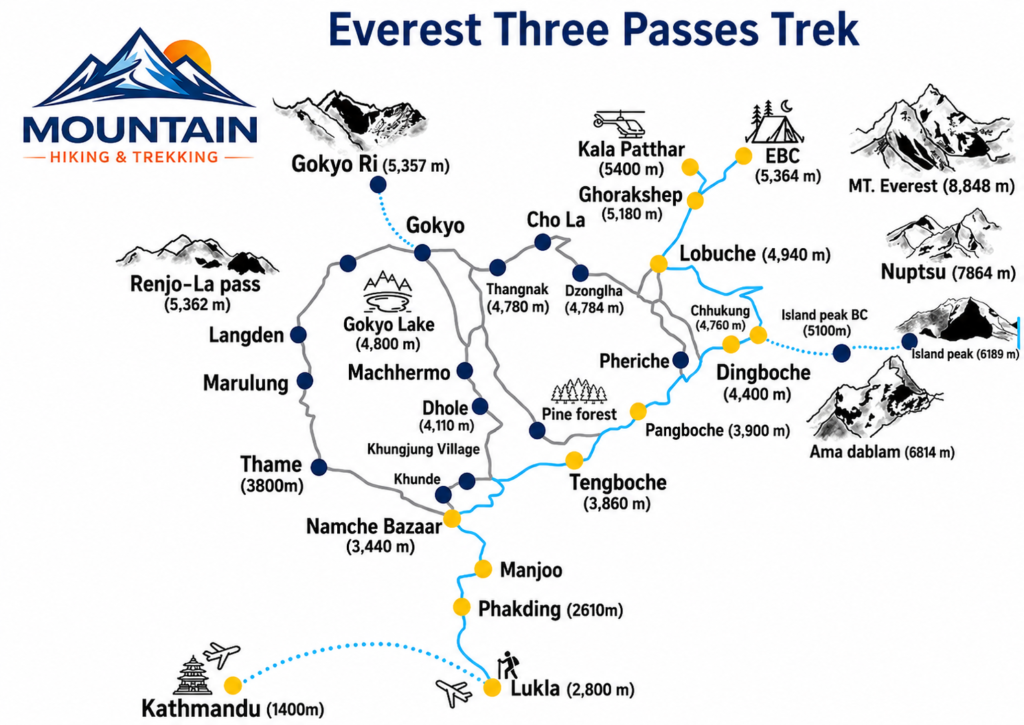
Everest Three Pass Treko Route Map
FAQs
What is the Everest Three Passes Trek?
The Everest Three Passes Trek is a challenging trekking route in Nepal that takes trekkers over three high mountain passes in the Everest region, including the Kongma La Pass, Cho La Pass, and Renjo La Pass. The trek offers stunning views of the Himalayas and is ideal for experienced trekkers who are looking for a more challenging adventure.
How long does the Everest Three Passes Trek take
The Everest Three Passes Trek typically takes around 16-21 days, depending on the route and itinerary chosen. The trek requires a good level of physical fitness and stamina, as it involves steep ascents and descents, high altitudes, and rugged terrain.
What is the level of difficulty of the Everest Three Passes Trek
The Everest Three Passes Trek is considered a very challenging trek and requires a high level of physical fitness and stamina. The trek involves steep ascents and descents, high altitudes, and rugged terrain. It is recommended that trekkers have prior experience trekking in the Himalayas before attempting this trek.
What is the best time of year to trek the Everest Three Passes Trek
The best time to trek the Everest Three Passes Trek is during the autumn months of September, October, and November and the spring months of March, April, and May. These months typically offer the best weather conditions and clear skies, making for optimal trekking conditions.
Do I need a guide or a porter for the Everest Three Passes Trek
While it is possible to trek the Everest Three Passes independently, it is recommended to hire a guide and/or porter for safety and convenience. A guide can provide valuable information about the trail, culture, and history of the region, while a porter can help carry your gear and lighten your load.
What equipment do I need for the Everest Three Passes Trek
The equipment needed for the Everest Three Passes Trek includes sturdy hiking boots, warm and waterproof clothing, a sleeping bag, a backpack, a headlamp, a first aid kit, and other trekking essentials. It is also important to pack for the high-altitude environment and to be prepared for changing weather conditions.
Do I need any permits to trek the Everest Three Passes Trek
Yes, trekking permits are required for the Everest Three Passes Trek. The permits can be obtained through a registered trekking agency in Nepal and are necessary to enter the Sagarmatha National Park, which is a protected area. Additionally, a TIMS card is required for trekking in the Everest region.
What is the Everest Three Passes Trek?
The Everest Three Passes Trek is a challenging trekking route in Nepal that takes trekkers over three high mountain passes in the Everest region, including the Kongma La Pass, Cho La Pass, and Renjo La Pass. The trek offers stunning views of the Himalayas and is ideal for experienced trekkers who are looking for a more challenging adventure.
How long does the Everest Three Passes Trek take?
The Everest Three Passes Trek typically takes around 16-21 days, depending on the route and itinerary chosen. The trek requires a good level of physical fitness and stamina, as it involves steep ascents and descents, high altitudes, and rugged terrain.
What is the best time of year to trek the Everest Three Passes Trek?
The best time to trek the Everest Three Passes Trek is during the autumn months of September, October, and November and the spring months of March, April, and May. These months typically offer the best weather conditions and clear skies, making for optimal trekking conditions
What is the level of difficulty of the Everest Three Passes Trek?
The Everest Three Passes Trek is considered a very challenging trek and requires a high level of physical fitness and stamina. The trek involves steep ascents and descents, high altitudes, and rugged terrain. It is recommended that trekkers have prior experience trekking in the Himalayas before attempting this trek.
What kind of accommodation is available on the Everest Three Passes Trek?
Accommodation on the Everest Three Passes Trek ranges from basic teahouses to more luxurious lodges. Teahouses are simple guesthouses that offer basic amenities such as a bed and meals, while lodges provide more comfortable rooms with attached bathrooms and hot showers.
Do I need a guide or a porter for the Everest Three Passes Trek?
While it is possible to trek the Everest Three Passes independently, it is recommended to hire a guide and/or porter for safety and convenience. A guide can provide valuable information about the trail, culture, and history of the region, while a porter can help carry your gear and lighten your load.
What equipment do I need for the Everest Three Passes Trek?
The equipment needed for the Everest Three Passes Trek includes sturdy hiking boots, warm and waterproof clothing, a sleeping bag, a backpack, a headlamp, a first aid kit, and other trekking essentials. It is also important to pack for the high-altitude environment and to be prepared for changing weather conditions.
Do I need any permits to trek the Everest Three Passes Trek?
Yes, trekking permits are required for the Everest Three Passes Trek. The permits can be obtained through a registered trekking agency in Nepal and are necessary to enter the Sagarmatha National Park, which is a protected area. Additionally, a TIMS card is required for trekking in the Everest region.